







Definition & Meaning of the 2-Q Form
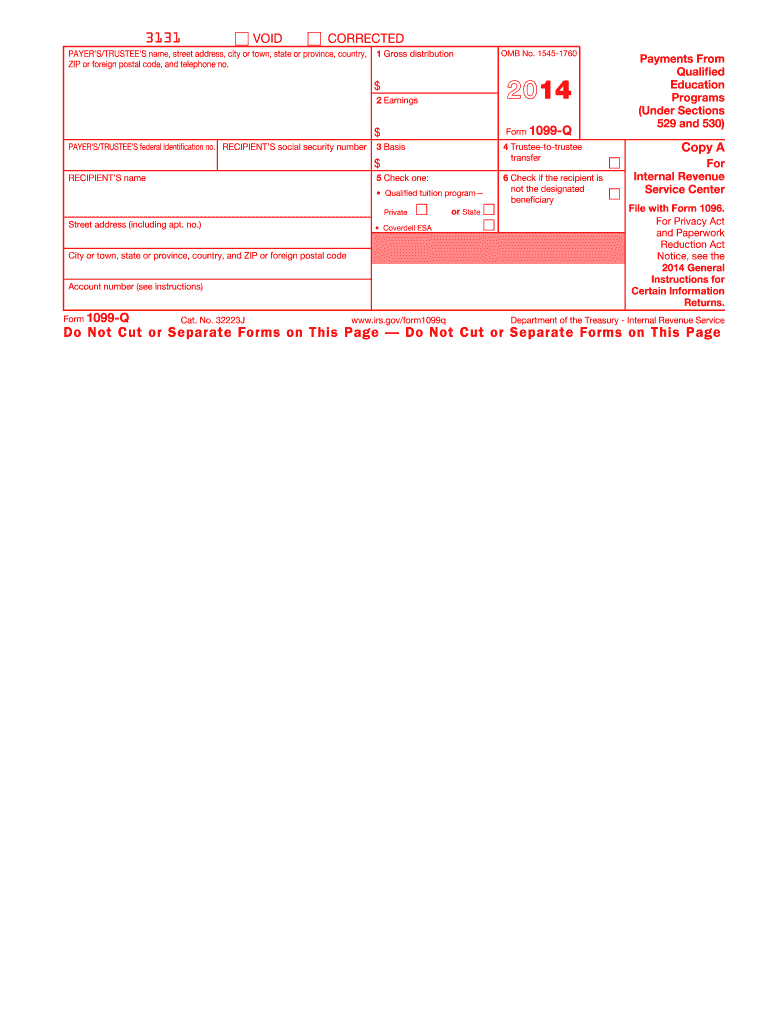
The 2-Q form is a tax document used to report distributions from qualified education programs as per Sections 529 and 530 of the Internal Revenue Code. These programs primarily involve education savings accounts and are often referred to as 529 plans. The form is issued to beneficiaries and payers whenever a distribution from these educational accounts occurs. It's critical for tax reporting as it helps recipients and trustees keep track of qualified educational expenses and any taxable earnings.
How to Use the 2-Q Form
To effectively utilize the 2-Q form, recipients should first review the form upon receipt to ensure accuracy in the details provided, such as their Social Security Number, account information, and distribution amounts. The form should then be used to prepare tax returns, ensuring that any distributed amounts are correctly reported. For tax purposes, distinguish between portions used for qualified educational expenses, which are typically tax-free, and non-qualified expenses that may incur taxes or penalties.
How to Obtain the 2-Q Form
Obtaining the 2-Q form involves contacting your educational savings account administrator or trustee. These entities are responsible for issuing the form to individuals who have received distributions during the tax year. Typically, it is sent by mail, but some providers offer electronic delivery through secure online platforms. Always ensure that your account details are up-to-date to avoid issues receiving your form.
Steps to Complete the 2-Q Form
- Verify Personal Information: Ensure that your name, address, and Social Security Number are correct.
- Check Distribution Amounts: Confirm that the total distribution and earnings are accurately reported.
- Distinguish Expenses: Separate qualified educational expenses from non-qualified expenses.
- Report on Tax Return: Use the information from the form to accurately fill out your tax return, especially if there are taxable portions of the distribution.
- Retain for Records: Keep a copy of the 1099-Q form with your tax records for future reference or verification.
Who Typically Uses the 2-Q Form
The primary users of the 2-Q form include students, parents, and guardians who have received distributions from educational savings accounts. Trustees and financial institutions also use this form to report distributions to the IRS. This includes anyone involved with managing or benefiting from Sections 529 and 530 plans. Understanding who uses this form is essential for accurate tax reporting and compliance.


IRS Guidelines for the 2-Q Form
The IRS provides clear guidelines on how the 1099-Q form should be used. Distributions must be reported in the tax year they are made, and the form must accurately reflect all distributions received. The IRS allows distributions used for tuition, fees, and other qualified educational expenses to be tax-free. However, distributions used for unqualified expenses may result in taxable income and potential penalties.
Penalties for Non-Compliance with the 2-Q Form
Non-compliance with IRS regulations regarding the 2-Q form can lead to significant penalties. Individuals who fail to report distributions accurately might face fines, tax liabilities, and interest on unpaid taxes. The IRS imposes penalties for underreporting income from non-qualified education distributions, making it crucial to adhere to all filing guidelines and deadlines.
Key Elements of the 2-Q Form
- Issuer Information: Details of the financial institution or trustee issuing the form.
- Recipient Information: Personal details of the account holder or beneficiary.
- Distribution Amounts: Total, taxable, and non-taxable distribution figures.
- Educational Expense Details: Information regarding the use of funds for education.
- Account Information: Specifics about the type of educational savings account.
Filing Deadlines and Important Dates for the 2-Q Form
The 2-Q form should be issued to recipients by January 31 of the following year. Tax returns incorporating this form must be filed with the IRS by April 15, unless an extension is granted. Adhering to these deadlines ensures compliance and prevents penalties associated with late filing. It's crucial to keep these dates in mind for seamless tax preparation.
Software Compatibility with the 2-Q Form
For effective tax preparation, the 2-Q form is compatible with various tax software packages like TurboTax and QuickBooks. These programs facilitate the importation of form data directly into tax returns, simplifying the reporting process. Those using online tax services can also easily integrate 1099-Q details for accurate and hassle-free filing.
Important Terms Related to the 2-Q Form
Understanding terminologies associated with the 2-Q form is essential. Terms such as "qualified educational expenses," "distribution," "beneficiary," and "trustee" play a crucial role. Recipients should familiarize themselves with these terms to understand their obligations and benefits fully. Misinterpretation of these terms could lead to errors in tax reporting.
Who Issues the 2-Q Form
The form is typically issued by the financial institution or trustee managing the education savings account. They are responsible for reporting all distributions to both the account holder and the IRS. Compliance with this requirement ensures accurate tracking of educational benefit distributions.




