







Definition & Meaning
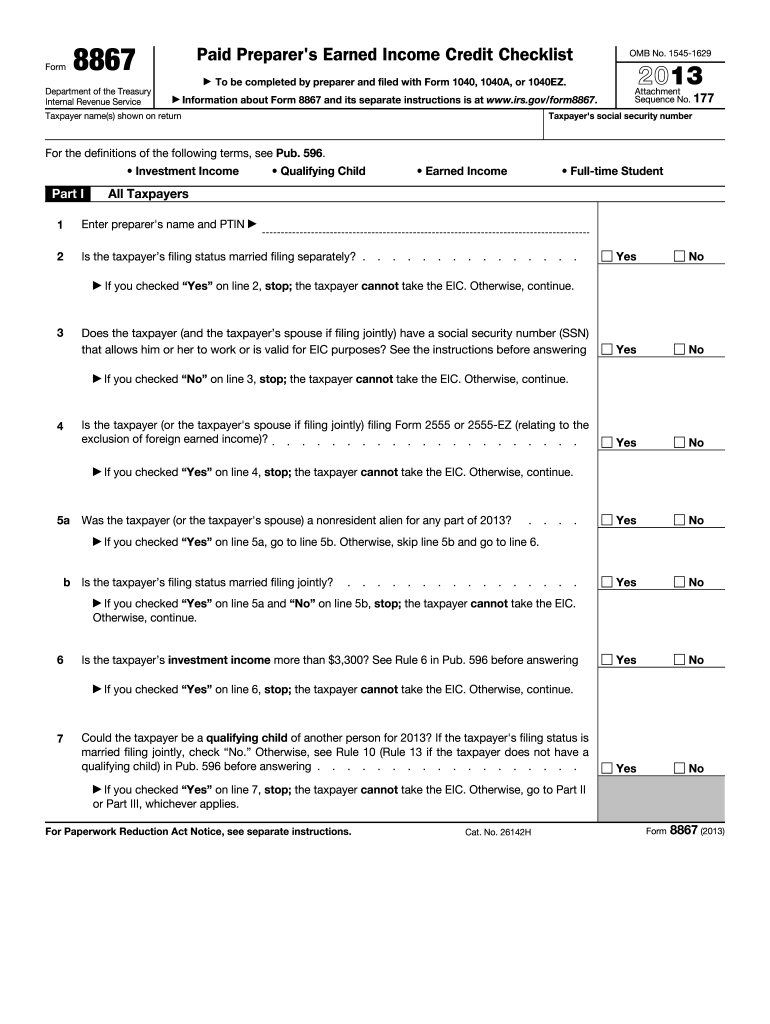
The 2013 Form 8867, also known as the Paid Preparer's Earned Income Credit (EIC) Checklist, is a document mandated by the IRS for tax preparers. It is designed to ensure due diligence when assisting clients in claiming the Earned Income Credit. The checklist includes critical questions about the taxpayer's filing status, income, and qualifying children. For tax preparers, accurately completing this form helps confirm that all requirements for the EIC are met and documented properly, thereby reducing potential errors or audits from the IRS.
How to Use the 2013 Form 8867
Using the 2013 Form 8867 requires careful attention to detail. Here’s how to use it effectively:
-
Review the Taxpayer's Situation: Before filling out the form, gather all relevant information about the taxpayer's financial and family situation. This includes their income sources, filing status, and details about any qualifying children.
-
Answer Checklist Questions: The form includes a series of questions designed to ascertain the taxpayer's eligibility for the Earned Income Credit. These questions cover various aspects such as age, residency, and relationship to the claimed children.
-
Document Responses: Make sure to document all relevant responses accurately. This may include making notes about any discrepancies or complex cases that require further clarification.
-
Submission: Once completed, the form should be attached to the taxpayer's tax return, whether filing electronically or on paper. Ensure all information is accurate to avoid delays or errors.
How to Obtain the 2013 Form 8867
The 2013 Form 8867 can be easily obtained through several channels:
-
Download from the IRS Website: The most direct method is downloading the form in PDF format from the IRS’s official website. This ensures that you have the most current version available for the tax year.
-
Tax Preparation Software: Many tax preparation software programs include Form 8867 as part of their package. This allows for seamless integration into the tax filing process.
-
Professional Tax Preparer: Engaging a professional tax preparer ensures that Form 8867 is used when necessary. Preparers have access to all required IRS forms and can help guide you through the process.
Steps to Complete the 2013 Form 8867
Completing the 2013 Form 8867 involves several steps that need to be followed precisely:
-
Begin with Preparer Information: Include all necessary preparer information, such as name, PTIN, and firm’s name.
-
Section I - Due Diligence Requirements: Complete the checklist questions in this section by assessing the taxpayer's eligibility for the Earned Income Credit based on income, dependents, etc.
-
Section II - Documentation: Ensure that all documentation supporting the taxpayer’s claims is collected and verified.
-
Final Review and Signature: Review all information for accuracy and completeness. The form needs to be signed by the tax preparer to confirm accuracy and adherence to IRS regulations.
-
Attach to Tax Return: Once completed, the form should be securely attached to the taxpayer's return when filed.
Who Typically Uses the 2013 Form 8867
The 2013 Form 8867 is primarily used by tax professionals. However, several key groups benefit from its use:
-
Professional Tax Preparers: As part of due diligence requirements, they are required to use this form whenever a client is claiming the Earned Income Credit.
-
Certified Public Accountants (CPAs): CPAs often use this form in their practice to ensure compliance with IRS guidelines.
-
Tax Consulting Firms: These firms use Form 8867 as part of their standard operating procedures when preparing tax returns that include EIC claims.


Key Elements of the 2013 Form 8867
Understanding the key elements of Form 8867 is crucial for proper compliance:
-
Preparer Information: The form begins with necessary information about the tax preparer.
-
Checklist Questions: A comprehensive list of questions that cover various eligibility criteria for EIC.
-
Documentation Requirements: Details about required documentation, emphasizing the need for accurate record-keeping.
-
Preparer Attestation: A section that requires the preparer's signature, confirming the accuracy of the information provided.
IRS Guidelines for the 2013 Form 8867
The IRS provides specific guidelines for completing Form 8867:
-
Due Diligence Obligations: Tax preparers must meet specific due diligence requirements when helping clients with EIC claims.
-
Mandatory Completion and Submission: The form must be completed and submitted with the taxpayer’s return in cases where EIC is claimed.
-
Potential Penalties: Failure to comply with these guidelines can result in penalties for tax preparers, underlining the importance of accuracy and completeness.
Eligibility Criteria for the Earned Income Credit
When dealing with Form 8867, understanding the eligibility criteria for the Earned Income Credit is essential:
-
Income Thresholds: Taxpayers must meet specific income limits to qualify for the credit.
-
Filing Status: Certain filing statuses, such as married filing jointly, may affect eligibility.
-
Qualifying Children: Taxpayers can claim one or more children if they meet the qualifying criteria regarding age, residency, relationship, and support.
-
Residency: The taxpayer and qualifying children must meet U.S. residency requirements.

Penalties for Non-Compliance with the 2013 Form 8867
There are potential consequences for not properly completing or filing Form 8867:
-
Monetary Fines: Tax preparers can face financial penalties if they fail to meet due diligence requirements.
-
Increased Audits: Incomplete or incorrect forms can lead to increased scrutiny and potential audits by the IRS.
-
Legal Repercussions: Serious non-compliance might result in further legal actions, making it crucial to adhere strictly to all requirements.




