Definition and Meaning of Late Rent Notice
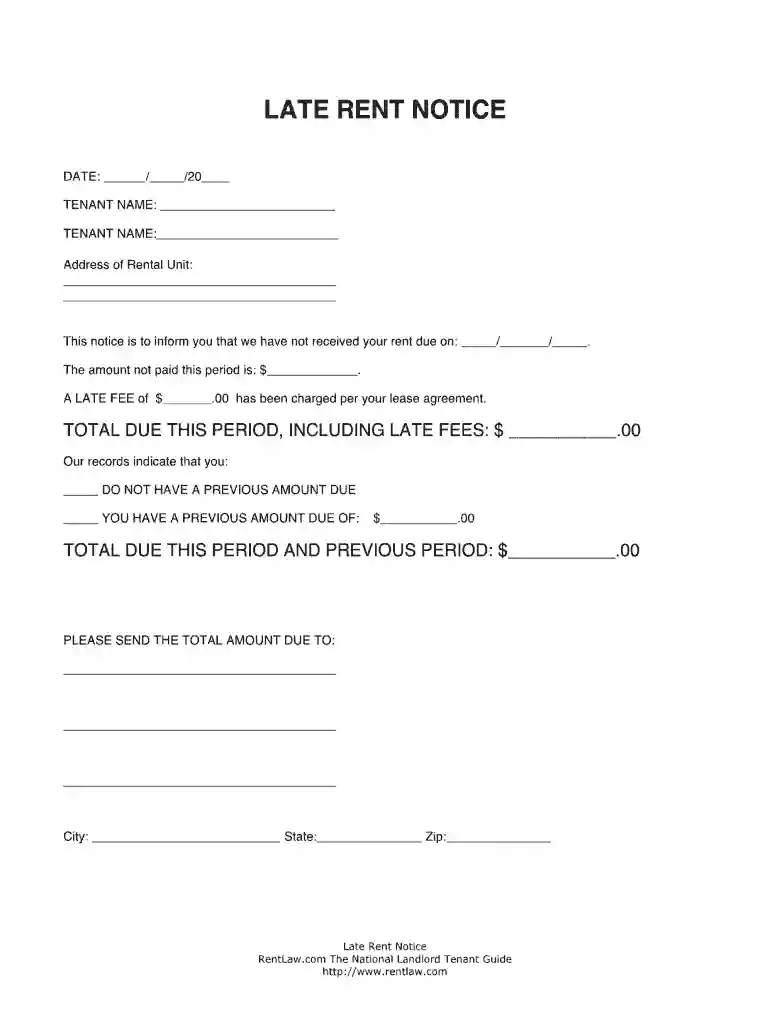
A late rent notice is a formal document issued by a landlord or property management to notify a tenant that their rent payment is overdue. This notice serves multiple purposes, including reminding the tenant of their obligation, outlining any potential late fees, and indicating further action that may be taken if the rent is not paid by a specified date. The intent is to prompt the tenant to pay the overdue rent to avoid escalation, such as eviction proceedings.
Key Components
- Tenant Information: Includes the tenant's name and address to clearly identify who the notice pertains to.
- Property Details: Specifies the property for which the rent is overdue, ensuring clarity.
- Due Date: States the original date when the rent was due to establish the timeline.
- Amount Owed: Lists the total amount that is overdue, including any late fees incurred.
- Response Deadline: Provides a specific date by which the tenant must rectify the overdue payment to avoid further action.
- Contact Information: Lists contact details for the landlord or property management in case the tenant needs to discuss the matter.
How to Use the Late Rent Notice
The late rent notice is used to formally document that a tenant's rent payment is overdue and to communicate necessary action steps to resolve the situation.
Practical Steps for Landlords
- Prepare the Notice: Fill out the required fields with accurate and up-to-date information, including tenant name, address, and amount owed.
- Choose a Delivery Method: Decide how to deliver the notice—this can be done via certified mail, in-person delivery, or digital methods such as email to ensure receipt.
- Track Communication: Keep a record of when and how the notice was sent, as this may be needed for future reference or legal proceedings.
- Follow Up: If the rent remains unpaid past the specified response deadline, consider further actions as indicated in the lease agreement, such as imposing additional fees or initiating eviction procedures.
Obtaining the Late Rent Notice
Obtaining a late rent notice can be straightforward, with several methods available.
Sources for Obtaining the Form
- Online Rent Management Platforms: Many property management software solutions offer templates for a late rent notice.
- Legal Form Websites: Various online resources provide free or paid templates that can be customized to individual needs.
- Housing Authorities: Local or state housing authorities might provide standard late rent notice templates.
Customization Tips
- Ensure that any template used complies with local laws and regulations, and consult with a legal professional if needed to make sure all terms align with the lease agreement.
Steps to Complete the Late Rent Notice
Completing a late rent notice involves accurately filling in all required information.
- Tenant Details: Enter the tenant's full name and rental property address.
- Rent Details: Specify the rent due date and the amount overdue.
- Fees and Penalties: Include any late fees applicable as per the lease terms.
- Deadline: Provide a clear deadline by when the payment should be made.
- Sign the Document: The notice should be signed by the landlord or an authorized representative.
- Delivery Method: Clearly state how the notice will be delivered.
Who Typically Uses the Late Rent Notice
This document is predominantly used by landlords, property management companies, and housing organizations to ensure timely rent collection. It enables property owners to officially address payment issues and helps in maintaining a record for any future legal actions.

Common Scenarios
- Residential Leases: Frequently used in residential property management to address overdue payments.
- Commercial Leases: In cases of commercial properties, business tenants may receive a late rent notice if their rental payments fall behind.
Legal Use of the Late Rent Notice
A late rent notice is a legally recognized document that must conform to both general legal standards and any specific state regulations regarding overdue rent notifications.
Legal Components
- Notice Period: Must adhere to the notice period requirements as stipulated by state law.
- Language Requirements: Should be clear and unambiguous to avoid any misinterpretation.
- Documentation: A copy should be retained for legal documentation and reference.
Compliance Considerations
- Local Laws: Ensure that any template aligns with state-specific laws concerning tenant-landlord communications.
- Fair Housing Act: The notice must not violate the Act or discriminate based on race, color, national origin, religion, sex, familial status, or disability.
Key Elements of the Late Rent Notice
The efficiency of a late rent notice relies on specific elements that aid in its clarity and enforceability.
Essential Features
- Clear Headers: Use clear titles like "Late Rent Notice" to immediately inform the tenant of the document's purpose.
- Legal Language: Include necessary legal jargon to match the lease agreement specifications.
- Next Steps: Inform the tenant of potential consequences if the payment remains outstanding, including possible eviction.
State-Specific Rules for the Late Rent Notice
Different states have varying requirements for issuing late rent notices, affecting what landlords must include or omit.
Key Considerations
- Grace Periods: Some states mandate a grace period before late fees can be applied.
- Notice Requirements: Notice delivery and content may be prescribed by state laws.
- Limitations on Late Fees: States may limit the percentage or amount that can be charged as late fees.
Examples of State Differences
- California: Requires a written notice that gives the tenant a minimum of three days to pay rent or quit.
- Texas: No statutory grace period, allowing late fees immediately under certain conditions.
By adhering to these guidelines, landlords can ensure the late rent notice is both legally compliant and an effective tool in managing rental payments.