




01. Edit your asq 48 months pdf online
Type text, add images, blackout confidential details, add comments, highlights and more.

Type text, add images, blackout confidential details, add comments, highlights and more.

Draw your signature, type it, upload its image, or use your mobile device as a signature pad.

Send asq48 via email, link, or fax. You can also download it, export it or print it out.
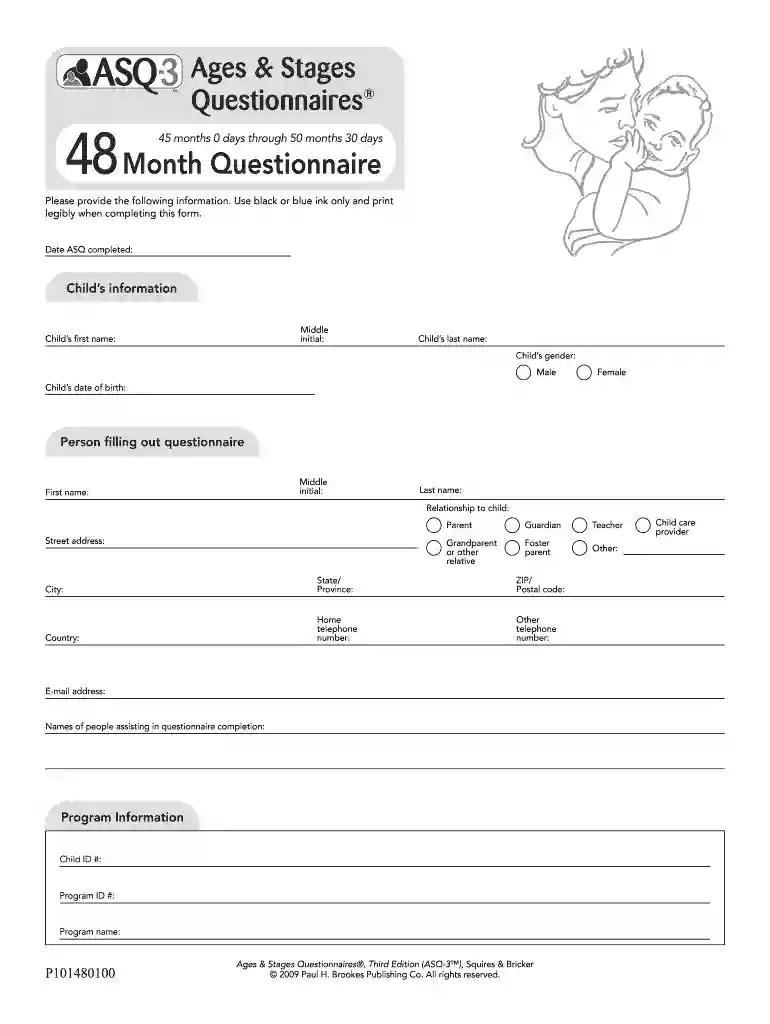
The 48 Month ASQ, also known as the Ages and Stages Questionnaire for children aged 45 to 50 months, is a critical developmental screening tool used to assess various milestones in early childhood. This questionnaire provides valuable insights into a child's growth across several vital areas, including communication, gross motor skills, fine motor skills, problem-solving abilities, and personal-social behavior.
The questionnaire is segmented into specific categories, each providing insights into different aspects of a child's development:
Communication Skills
Gross Motor Skills
Fine Motor Skills
Problem-Solving Skills
Personal-Social Skills
Scoring involves tallying points based on the child's responses. Each section is designed to gauge developmental progress:
Depending on the score, parents and caregivers should consider their next steps:
The 48 Month ASQ is available in various formats to accommodate different needs:
Utilizing the 48 Month ASQ is crucial in identifying potential developmental delays early on, thereby allowing for timely interventions. By offering a structured framework to evaluate development, caregivers can make informed decisions regarding children’s educational and health needs.
The ASQ is primarily intended for use by parents, caregivers, and pediatric healthcare providers. Early childhood educators and child development specialists may also employ this questionnaire to assess readiness for school or other activities. Its integration into regular health check-ups is vital for monitoring key developmental milestones in a child's early years.
Of course, you’ll find numerous apps for this on the web. Nonetheless, if you need to eSign your ages and stages 48 months without installing extra software, DocHub is the optimum choice you can make. This robust editor works on mobile devices just like on desktops. Open our editor in your preferred internet browser, register or log in to your account, and start managing your forms.
When you edit your asq questionnaire 48 months with DocHub, you simply will not need to look for other software or solutions to eSign it. An electronic signature is part of DocHub’s substantial editing toolset, which allows you to implement changes in your form without jumping between websites. Simply complete your form, double-check the correctness of the data and put your electronic signature at the end to make it submission-ready within a few minutes.
At DocHub, your data security is our priority. We follow HIPAA, SOC2, GDPR, and other standards, so you can work on your documents with confidence.
Use black or blue ink only and print legibly when completing this form. Date ASQ completed: 11/18/2008. Childs information. Childs first name:.Read more
On the following pages are questions about activities children do. Your child may have already done some of the activities described here,.Read more


