Definition and Purpose of the Blank Addendum Form
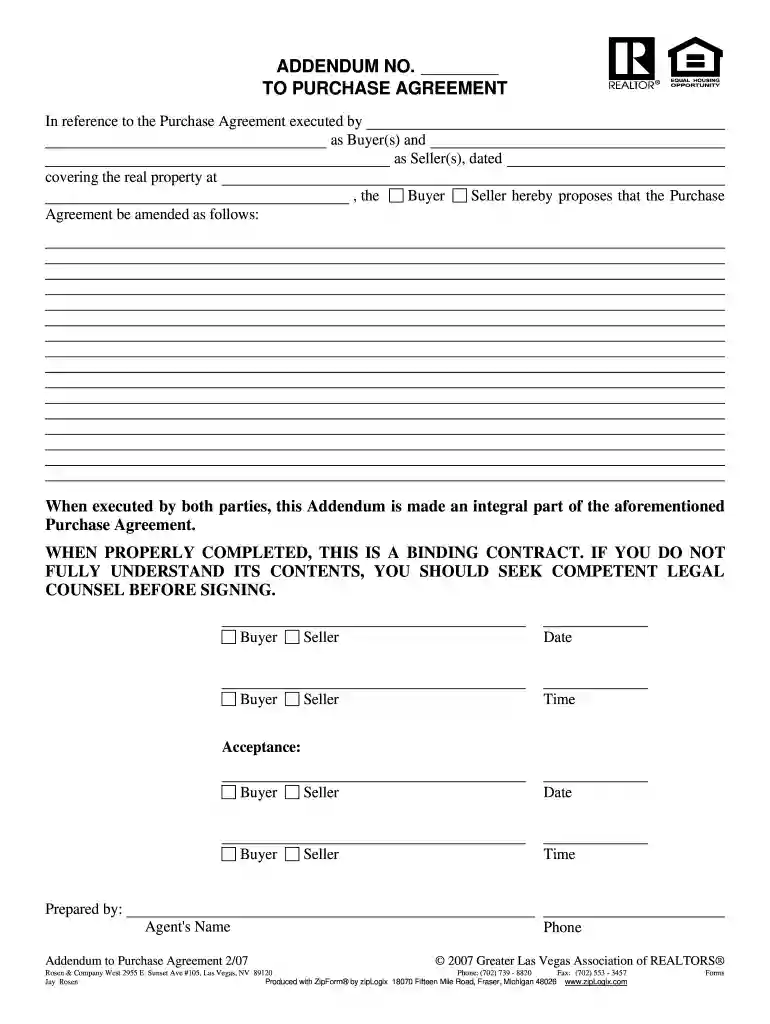
A blank addendum form serves as a supplement to an existing contract or agreement, primarily used to outline changes, additional terms, or specific adjustments required after the original document has been executed. This form is commonly utilized in real estate transactions, legal agreements, and business contracts to ensure that all parties acknowledge and consent to the modifications without the need to draft a new contract. By using an addendum, the original contract remains valid and legally binding, with the added terms seamlessly integrated.
Common Situations for Use
- Real Estate Transactions: Frequently used to add terms regarding repairs, financing conditions, or occupancy details in a purchase agreement.
- Service Contracts: Modifies service terms, pricing, or timeline without renegotiating the entire contract.
- Business Agreements: Adjusts partnership terms, profit-sharing ratios, or operational guidelines.
How to Use the Blank Addendum Form
To effectively use a blank addendum form, it's essential to follow a systematic approach ensuring clarity and mutual understanding among all involved parties.
- Identify the Original Contract: Clearly reference the core agreement by including details such as the title, date, and parties involved.
- Specify the Amendments: Detail the changes, specifying the clauses or terms being altered, added, or removed.
- Review and Approve: All parties should meticulously review the addendum to avoid misunderstandings, verifying each alteration aligns with their intentions.
- Signatures and Dates: Conclude with signatures from all parties, including the date of signing, to validate the addendum's legal standing.
Tips for Effective Use
- Precision: Use clear, concise language to avoid ambiguities or future disputes.
- Reference Numbers: If relevant, include references to specific sections or clauses of the original contract that the addendum affects.
Steps to Complete the Blank Addendum Form
Completing a blank addendum form requires attention to detail to ensure the amendments are legally enforceable and accurately presented.
- Obtain the Correct Form: Ensure you have the appropriate form relevant to the contract's jurisdiction and nature.
- Fill in Party Information: Enter the names and contact details of all parties involved.
- Detail Amendments: Clearly write out each amendment, using numerical or bullet points for clarity.
- Review for Accuracy: Cross-check all details against the original contract to ensure consistency.
- Sign and Date: Obtain signatures from the designated representatives or parties, alongside the date of execution.
Who Typically Uses the Blank Addendum Form
The blank addendum form is a versatile tool commonly used across different contexts and by various professionals.

- Real Estate Agents and Brokers: For updating terms in property purchase or lease agreements.
- Legal Practitioners: For adding specific clauses to ongoing litigation settlements or partnership agreemen
- Business Executives and Managers: For modifying employment contracts, vendor agreements, or partnership terms.
Use Cases in Specific Industries
- Education: Schools use addenda to update terms in student enrollment agreements.
- Healthcare: Hospitals may amend patient service agreements to reflect new policies or procedures.
Key Elements of the Blank Addendum Form
Understanding the core components of a blank addendum form ensures it serves its purpose effectively.
- Title and Date of Original Contract: Ensures clear linkage and reference to the base document.
- Detailed List of Amendments: Specifies the nature of each change with clarity and specificity.
- Signatures: Includes signatures from all relevant parties to confirm acceptance and consent to the changes.
Importance of Each Element
- Title and Date: Prevents confusion regarding which contract the addendum modifies.
- Signatures: Legally binds the parties to the new terms, maintaining the integrity of the agreement.
State-Specific Rules for the Blank Addendum Form
Certain states may impose additional requirements or have specific legislative stipulations regarding the use of addendums.
- Notarization Requirements: Some jurisdictions require addendums to be notarized for certain types of contracts.
- State-Specific Language: Incorporates language mandated by state laws, especially in real estate transactions or insurance policies.
Examples of State Variations
- California: Typically requires specific language regarding disclosures in real estate addendums.
- Florida: May necessitate additional parties' acknowledgment in certain business agreements.
Digital vs. Paper Version of the Blank Addendum Form
Both digital and paper versions of a blank addendum form serve similar purposes, yet they offer different advantages.
- Digital Form: Facilitates easier distribution, editing, and storage, often incorporating e-signature capabilities.
- Paper Form: Preferred for situations requiring physical signatures or when operating in areas with limited digital infrastructure.
Comparison of Both Formats
- Convenience: Digital forms offer convenience in editing and distribution, reducing the need for physical meetings.
- Security: While digital forms can be encrypted and password-protected, paper forms may require additional storage precautions to prevent unauthorized access.
Software Compatibility and Integration
Incorporating a blank addendum form into your workflow can be streamlined using compatible software solutions.
- Integration with Document Management Systems: Software like DocHub allows for easy editing, signing, and sharing of digital forms.
- Compatibility with Cloud Services: Using platforms like Google Drive enhances accessibility and collaboration among multiple users.
Examples of Compatible Software
- DocHub: Facilitates comprehensive editing and management of addendums.
- Adobe Acrobat: Used for secure document editing and annotation, compatible with various file types.