






Understanding the Staff Data Form
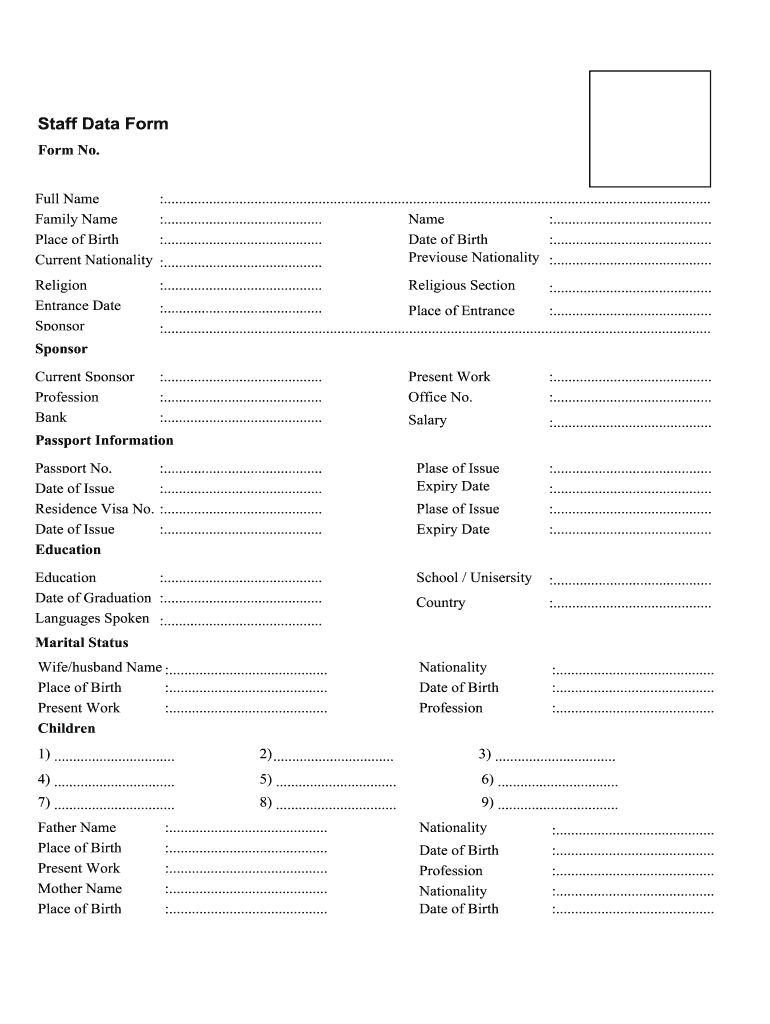
The staff data form serves as a crucial document for employers to collect essential information about their employees. It typically includes personal details, contact information, employment history, and demographic details, all of which are vital for human resource management. The staff data form may also be customized to include specific company policies or requirements unique to the organization.
Key Components of a Staff Data Form
The form generally comprises various sections, each focusing on different types of data:
- Personal Information: This section asks for the employee’s full name, date of birth, and Social Security number. Collecting this information helps in payroll processing and employee identification.
- Contact Details: Employees need to provide their home address, phone number, and email address. This information is essential for communication regarding employment matters.
- Employment History: This section gathers previous work experience, including job titles, employer names, and durations of employment. Reviewing this information is useful for assessing qualifications and work history.
- Emergency Contacts: Employees are required to list emergency contacts, including their names and phone numbers. This section ensures that the organization can reach someone quickly in case of an emergency involving the employee.
How to Create a Staff Data Form
Creating a staff data form can be accomplished in several ways:
- Using Templates: Many companies opt for ready-made templates. These templates ensure compliance with common requirements and make it easy to collect data. DocHub offers the ability to customize staff data form templates to meet organizational needs.
- Building from Scratch: For companies requiring unique information, building a form from scratch can be an option. Ensure it includes all necessary fields to capture essential data.
- Digital Forms: Utilizing platforms like DocHub allows you to create and manage digital staff data forms that can be filled out online, which enhances convenience for both employers and employees.
Best Practices for Collecting Staff Data
When administering the staff data form, consider the following best practices:
- Confidentiality: Ensure employees' personal information is handled securely and confidentially. Strong data protection measures, such as encryption, should be in place.
- Clarity: The form should be easy to understand. Using straightforward language will help prevent confusion and ensure accurate completion.
- Required Fields: Clearly mark mandatory fields so that employees understand what information is essential for processing.
- Review Process: Implement a system for reviewing completed forms promptly. This step ensures that any discrepancies can be addressed quickly.
Compliance and Legal Considerations
In the United States, compliance with various laws surrounding employment and data protection is vital:
- Fair Labor Standards Act (FLSA): Ensure compliance with laws regarding the recording of employee data and wages.
- Family Educational Rights and Privacy Act (FERPA): If your organization collects data from students, understanding FERPA guidelines is crucial.
- Health Insurance Portability and Accountability Act (HIPAA): If the form collects health-related information, ensure that all provisions of HIPAA regarding patient privacy are adhered to.
Variations of Staff Data Forms
Organizations may require different variants of the staff data form based on their industry or operational needs:
- HRMS Employee Data Form: This version often includes additional fields specific to employee management systems, facilitating integration with payroll and benefits systems.
- Staff Data Form for Regulatory Compliance: Certain industries may require forms that adhere to specific regulatory requirements.
- Customizable Forms: Organizations might develop unique forms with sections tailored to their internal policies or additional data collection needs.
Common Mistakes to Avoid
When working with the staff data form, recognize typical pitfalls to enhance accuracy and compliance:
- Inadequate Data Collection: Failing to gather necessary information can lead to legal complications and operational inefficiencies.
- Neglecting to Update Information: Outdated information can cause communication breakdowns and issues with payroll or benefits.
- Mismanagement of Sensitive Information: Poor handling of personal details increases the risk of data breaches or loss of trust among employees.
Conclusion
In conclusion, the staff data form is an essential tool for organizations to gather employee information efficiently. By understanding its components, ensuring legal compliance, and implementing best practices, employers can streamline their human resource processes and enhance data management.