




01. Edit your adp employee information form online
Type text, add images, blackout confidential details, add comments, highlights and more.

Type text, add images, blackout confidential details, add comments, highlights and more.

Draw your signature, type it, upload its image, or use your mobile device as a signature pad.

Send adp employee information form pdf via email, link, or fax. You can also download it, export it or print it out.
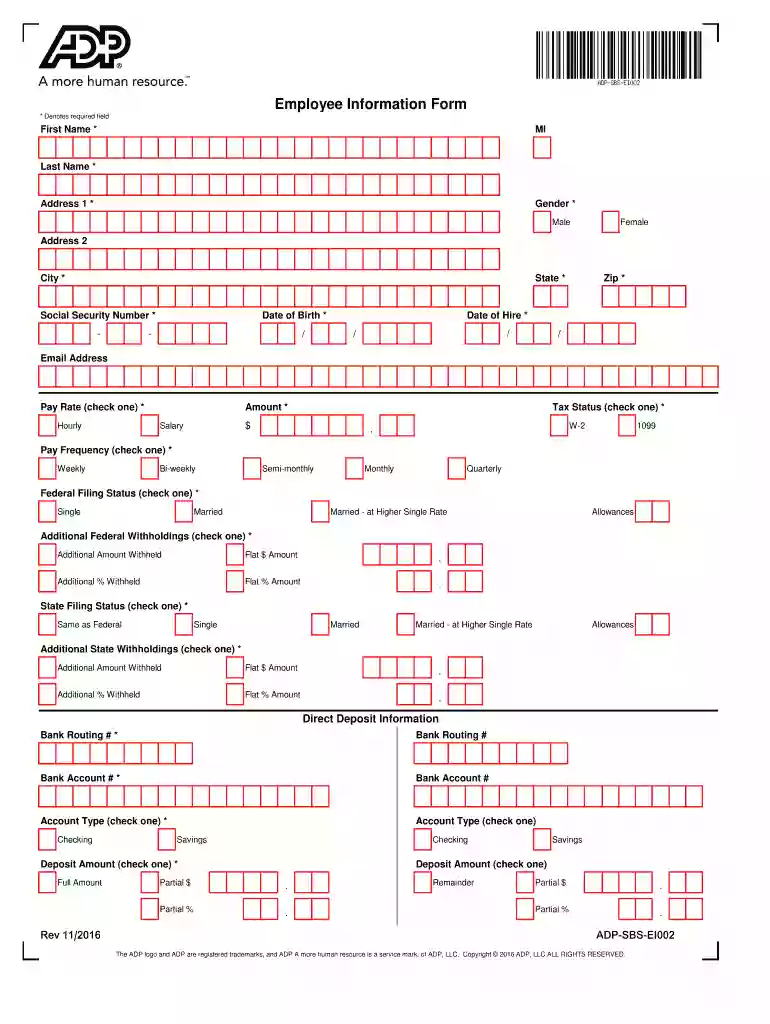
The ADP employee information form is a fundamental document utilized in the onboarding process of new employees. It serves to collect vital personal and employment-related details that a company needs to effectively manage payroll and tax reporting. Ensuring this form is accurately filled out is crucial for compliance with federal and state regulations.
The form typically requires the following critical information:
Completing the ADP employee information form requires attention to detail to ensure accuracy. Here are the steps to follow:
Filling out the ADP employee information form correctly is not just a formality; it is legally required. It aids in:
Organizations may utilize various forms based on their needs, including:
When filling out the ADP employee information form, employees may encounter challenges such as:
Several resources can assist employees in accurately completing the ADP employee information form:
Ensuring the accurate completion of the ADP employee information form is essential for new employees as they commence their employment journey. It supports not only payroll efficiency but also compliance with legal requirements critical for both employees and employers. By understanding the necessary steps and utilizing available resources, employees can effectively navigate this process.
At DocHub, your data security is our priority. We follow HIPAA, SOC2, GDPR, and other standards, so you can work on your documents with confidence.
ADP Portal Information Employee Information and Emergency Contact Form - provides us with general information about you as an employee and your emergencyRead more
Geauga County political subdivisions may request this service by filling out the form on geaugaconnected.com or by calling ADP at (440) 279-1345.Read more


