







Definition and Meaning of the Mandrel Form
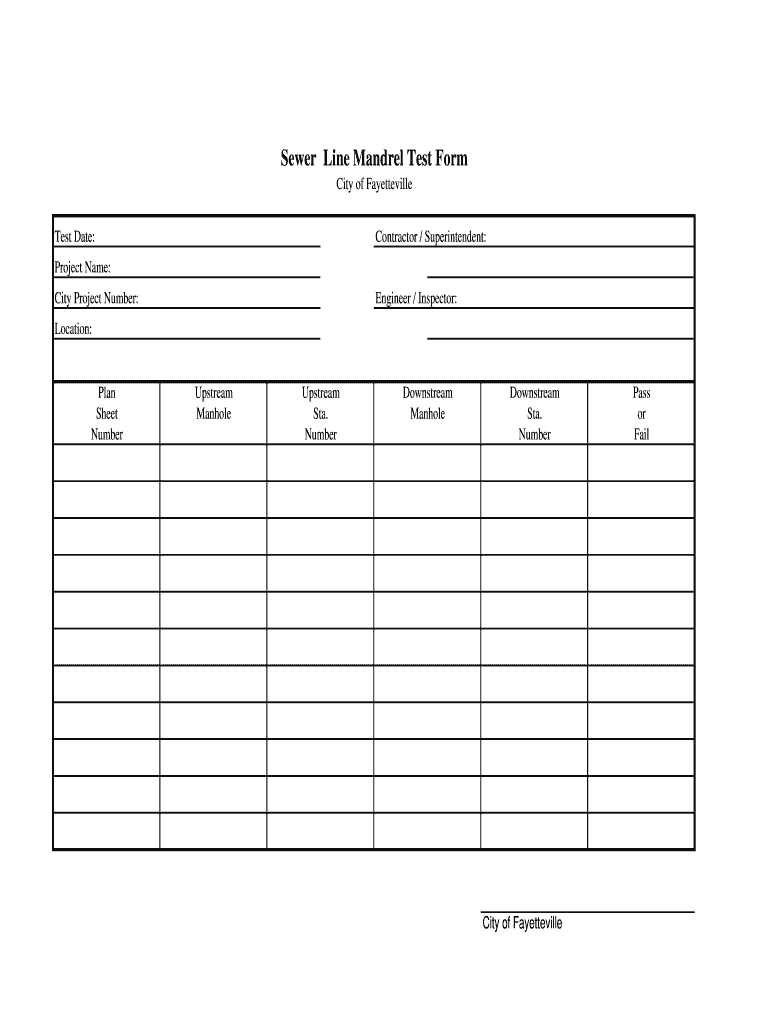
The mandrel form, specifically the sewer line mandrel test form, is a crucial document used in the construction and inspection of sewer lines. It serves to record the results of a mandrel test, which assesses the integrity of sewer lines by measuring their diameter and structural soundness. This test ensures that the lines meet specified standards and can effectively handle wastewater without blockage or failure.
Mandrel testing is carried out by inserting a calibrated mandrel—a cylindrical device—into the sewer line. The form captures essential data such as the test date, contractor details, the project name, and the results indicating whether the sewer line passed or failed the test. This documentation is vital for regulatory compliance and for maintaining records that can assist in future maintenance and inspections.
Overall, the mandrel form functions as an official record of testing activities and results, helping to ensure public safety and environmental protection by confirming that sewer systems are functioning correctly.
Steps to Complete the Mandrel Form
Completing the sewer line mandrel test form requires careful attention to detail to ensure accuracy. Below are the steps to complete this form effectively:
-
Gather Required Information: Before starting the form, collect all necessary details, including:
- Contract details of the contractor conducting the test.
- Project name or identifier.
- Engineering or inspection details.
-
Document Test Observations: As the test is conducted, note observations regarding the mandrel's passage, including:
- Diameter measurement and condition of the sewer line.
- Any obstructions or deviations in the line’s shape.
-
Record Results: Indicate whether the test result is a pass or fail. If the sewer line fails, include reasons for failure and proposed remediation actions.
-
Sign the Form: Once completed, ensure that the appropriate parties sign the form, verifying the accuracy of the information recorded.
-
Submit the Form: Submit the completed mandrel form to the relevant oversight authority, ensuring compliance with local regulations.
By following these steps, the mandrel form can be completed accurately, providing a reliable record of the sewer infrastructure's condition.
Who Typically Uses the Mandrel Form
The sewer line mandrel test form is primarily utilized by various professionals within the construction and municipal sectors. Key users include:
- Contractors: Those responsible for the installation or maintenance of sewer lines conduct mandrel tests to ensure that the infrastructure is built to specifications.
- Municipal Inspectors: Local government agents who oversee compliance with sewage regulations use the form to document test results and maintain public hygiene and safety.
- Engineers: Civil and environmental engineers who design sewer systems employ the results from mandrel tests to verify that their designs are feasible and effective.
- Environmental Agencies: State and federal bodies might use data from the form to uphold environmental regulations and ensure the safety of community water systems.
Each of these users relies on the information captured in the mandrel form to perform their duties effectively and ensure that sewer lines meet safety and functionality standards.


Key Elements of the Mandrel Form
Understanding the key elements of the sewer line mandrel test form is essential for proper usage. The following components are typically included:
- Test Date: The specific date on which the test was conducted, providing a timeline for the inspection.
- Contractor Information: Details regarding the contractor conducting the test, including name, contact information, and license number.
- Project Name or Identifier: A unique identifier for the project, facilitating easier tracking and reference.
- Engineer/Inspector Details: Contact information for the supervising engineer or inspector who oversees the project and verifies test results.
- Manhole Locations: Specific details of manhole locations associated with the sections being tested, aiding in logistics and documentation.
- Results Section: A section where the outcome of the test (pass or fail) is documented, along with any relevant comments or observations.
These elements provide comprehensive information necessary for understanding the test’s context, results, and any actions required moving forward.
Important Terms Related to the Mandrel Form
Familiarity with key terms related to the mandrel form enhances comprehension of its application and significance. Important terms include:
- Mandrel: A cylindrical tool used to assess the internal diameter and condition of sewer lines during testing.
- Sewer Line Integrity: The assurance that sewer lines are structurally sound and free from defects that could lead to failures.
- Pass/Fail Criteria: The standards used to determine whether a sewer line has met the necessary performance requirements during a mandrel test.
- Compliance: Adherence to local, state, or federal regulations regarding the construction and maintenance of sewer systems.
- Documentation: The process of recording essential details and results from the mandrel test for future reference and compliance checks.
Understanding these terms aids stakeholders in effectively navigating the testing process and ensuring accuracy and integrity in documentation.
Legal Use of the Mandrel Form
The sewer line mandrel test form carries significant legal implications for compliance with health and safety regulations. Legal use involves several considerations:
- Regulatory Compliance: The form must be filled out accurately to comply with local, state, and federal guidelines governing sewage systems. Failure to follow these regulations can result in legal repercussions.
- Documentation of Compliance: The completed form acts as a legal document that can be referred to in disputes or regulatory reviews, serving as proof that required testing has been conducted.
- Liability Considerations: Properly recorded test results protect contractors and municipalities from liability should issues arise related to sewage system failures or environmental damage.
- Public Disclosure: In some jurisdictions, completed mandrel forms may need to be submitted for public records, ensuring transparency and accountability in local infrastructure management.
Ensuring the legal integrity of the mandrel form enhances public trust and compliance with essential health regulations.




