







Definition and Meaning
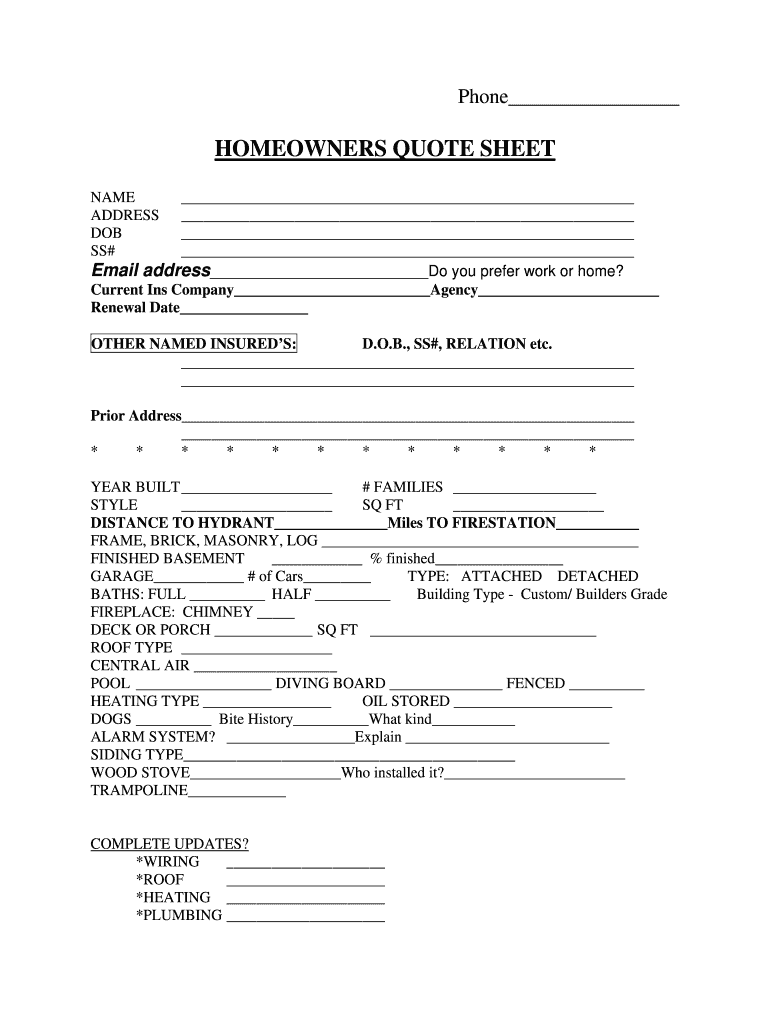
The homeowners quote sheet is a critical document utilized mainly for gathering essential information required by insurance companies to assess coverage needs and provide accurate quotes for homeowners insurance. This form consolidates various property-related details, including homeowner personal information, property characteristics, coverage options, and details on existing insurance policies.
With sections dedicated to identifying specific attributes of the property, the homeowners quote sheet typically includes:
- Homeowner's Personal Information: Name, address, and contact details to establish identity and location.
- Property Characteristics: Year of construction, property style (e.g., single-family home, townhouse), square footage, and other notable features such as pool or basement.
- Insurance Needs: Desired coverage levels, types of coverage (e.g., dwelling, personal property, liability), and any endorsements or additional protections that might be relevant.
This structured approach not only aids homeowners in understanding their insurance needs but also streamlines the process for insurance agents to provide tailored quotes based on key risk factors.
How to Use the Homeowners Quote Sheet
Using the homeowners quote sheet effectively involves a few straightforward steps that ensure comprehensive data collection for accurate insurance quotes.
- Collect Necessary Information: Begin by gathering all relevant information required to fill out the sheet. This may include personal identification details, property specifics, and existing insurance policy formats.
- Complete Each Section Thoroughly: The form is divided into sections such as personal information, property characteristics, and insurance requirements. Ensure that every field is filled accurately to avoid delays in receiving quotes.
- Review for Accuracy: Once completed, double-check all entries. Inaccuracies in the date of previous claims or property age can affect the quote. Pay special attention to details that might alter coverage needs.
- Submit to Insurance Agents: After confirming that the form is accurate, submit it to your preferred insurance company or agent to receive personalized homeowners insurance quotes.
By meticulously following these steps, you will enhance your chances of obtaining a quote that fits your needs while expediting the insurance underwriting process.
Key Elements of the Homeowners Quote Sheet
Understanding the fundamental components of the homeowners quote sheet is vital for the effective compilation of data needed for insurance quotes.
- Personal Details: This section includes the homeowner's name, contact information, and possibly marital status, which may influence coverage rates.
- Property Characteristics: Information here covers the type of home, age, square footage, number of stories, and any unique features like pools, fences, or recent renovations that might affect risk assessment.
- Coverage Requirements: Homeowners need to specify the level of dwelling coverage desired, personal property limits, and liability amounts. Furthermore, endorsements such as flood or earthquake insurance may also be indicated.
- Current Insurance Information: Any existing insurance policies, including details of prior claims and the names of previous insurers, must be documented. Past claims could impact the risk profile and the resulting quotes.
- Market Value and Mortgage Information: Understanding the market value of the home and associated mortgage details, if applicable, ensures that quotes reflect realistic coverage needs.
By accurately capturing each of these elements, homeowners can facilitate the provision of precise insurance quotes while better understanding their potential coverage options.
Steps to Complete the Homeowners Quote Sheet
Completing the homeowners quote sheet involves a systematic approach to ensure all necessary information is collected and filled in accurately.
- Gather Required Documentation: Collect any previous homeowners insurance policies, property appraisals, and pertinent legal documents.
- Fill Out Personal Information First: Write down your full name, address, and contact number in the designated section for easy identification.
- Detail Property Characteristics: Include specifics like the property's year built, square footage, and its unique features. Highlight any improvements or renovations that could affect valuation.
- Indicate Coverage Levels: Decide on the type of homeowners insurance you require, detailing preferred dwelling coverage and personal property limits. Include any specific needs such as liability inclusion or extra coverage for high-value items.
- Current Insurance and Claims History: Record all relevant information regarding previous insurance policies, including any claims made, which serve as indicators to potential insurers.
By meticulously following these steps, homeowners will ensure that all necessary information is correctly represented, aiding agents in providing accurate insurance quotes tailored to their requirements.
Examples of Using the Homeowners Quote Sheet
Practical examples of utilizing the homeowners quote sheet can illustrate its importance in various scenarios, such as:
- First-Time Homebuyers: A couple buying their first home uses the homeowners quote sheet to compare quotes from different insurers, helping them secure the best coverage tailored to their new property.
- Homeowners Upgrading Coverage: An established homeowner with an expanding family may need to revise their current coverage. By completing a new homeowners quote sheet, they can assess whether their existing policy still meets their evolving needs.
- Insurers Evaluating Risk: Insurance agents rely on the quote sheet to evaluate risk factors associated with a specific property, thereby determining the appropriate premiums based on the data submitted in the form.
- Property Investors: A real estate investor utilizing multiple properties can use the homeowners quote sheet for bulk quote comparisons across several insured properties, leading to cost-effective decisions on their insurance portfolios.
These examples demonstrate the versatility of the homeowners quote sheet in practical scenarios, illustrating its role in facilitating informed decision-making regarding homeowners insurance and ensuring comprehensive coverage.




