






Understanding the SBAR Template in Healthcare
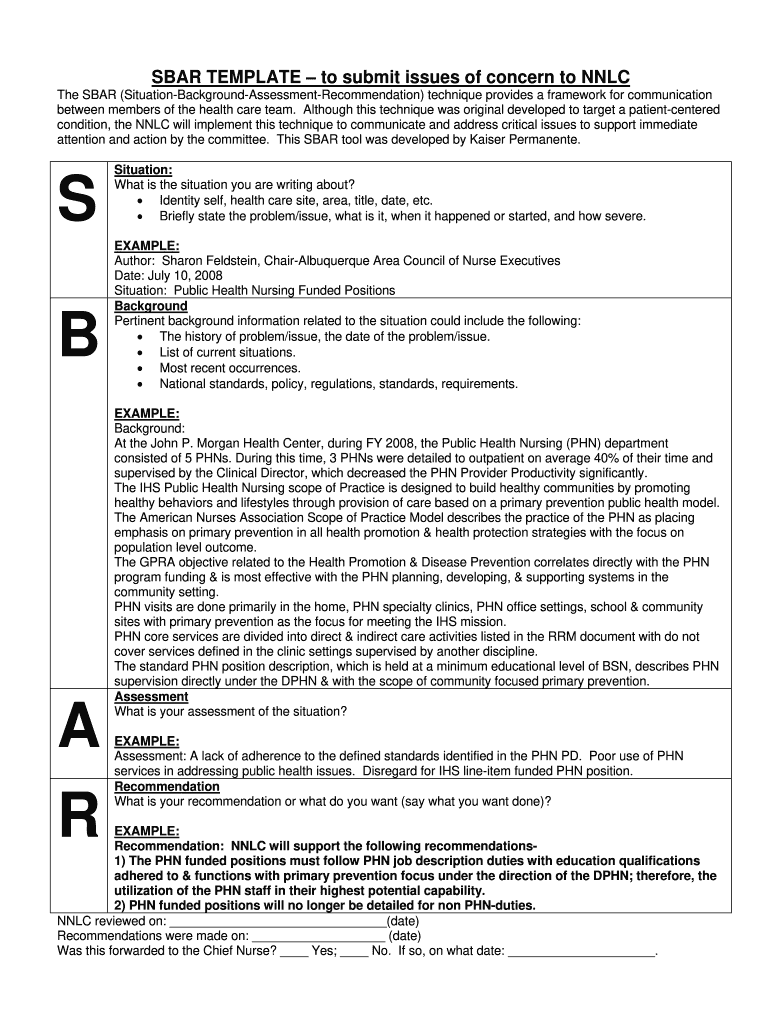
The SBAR (Situation-Background-Assessment-Recommendation) template is a standardized communication framework used extensively in healthcare settings. Its primary purpose is to streamline the reporting of critical information among healthcare professionals, ensuring that vital information is shared quickly and effectively, particularly in situations requiring immediate attention or intervention.
Key Components of the SBAR Template
Each section of the SBAR template serves a distinct purpose, facilitating a logical approach to communication.
-
Situation: This section outlines the current situation or problem that needs addressing. It should be concise and focused. For example, "Patient John Doe is experiencing shortness of breath and requires immediate evaluation."
-
Background: Here, relevant contextual information is provided to help the recipient understand the situation better. This may include the patient's medical history, recent changes in condition, or other factors that contribute to the current issue.
-
Assessment: This section conveys the evaluator’s conclusions regarding the situation based on their professional judgment. It should detail any observations, test results, or assessments that lead to current thinking.
-
Recommendation: The final part suggests a clear course of action. It should include specific requests or actions the team needs to take. For instance, "I recommend transferring the patient to the ICU for closer monitoring and intervention."
Benefits of Using SBAR Format
The use of the SBAR template enhances communication clarity, which is critical in high-pressure healthcare settings. Some notable benefits include:
-
Improved Efficiency: By structuring information consistently, healthcare professionals can relay essential details without ambiguity. This is particularly beneficial during handoffs or shift changes, where clear communication can impact patient safety.
-
Standardized Communication: The SBAR format promotes uniformity within teams, reducing misunderstandings and ensuring all necessary information is communicated effectively.
-
Enhanced Team Collaboration: With a clear framework, team members can collaborate more efficiently, as they know what to focus on during discussions.
Application of SBAR in Nursing
The SBAR template is particularly useful in nursing practice, helping nurses convey vital patient information to physicians and other healthcare team members. Nurses can utilize this template to provide structured updates during rounds or emergency situations.
Example Scenario Using SBAR
Consider a nurse needing to report a change in a patient's status:
-
Situation: "Mrs. Smith is on the surgical unit post-op and has developed a fever of 101°F."
-
Background: "She had a laparoscopic cholecystectomy 24 hours ago and has no prior history of fever or infection."
-
Assessment: "The incision site is warm and slightly swollen. I believe there might be a developing surgical site infection."
-
Recommendation: "I recommend obtaining a CBC and cultures, and starting the patient on a broad-spectrum antibiotic."
Real-World Examples of SBAR Template Usage
Various healthcare institutions adopt the SBAR template to streamline information-sharing processes. For instance:
-
Emergency Settings: In emergency departments, staff frequently use SBAR to quickly communicate critical patient information in life-threatening situations.
-
Interdisciplinary Rounds: During multidisciplinary team rounds, nurses and physicians leverage SBAR to provide updates on patient statuses, facilitating informed decisions.
Developing an SBAR Template for Your Practice
Creating a customizable SBAR template can enhance communication within your specific healthcare environment. When developing this template, consider:
-
Incorporating Additional Details: Depending on your practice, you might want to include sections for lab results or recent imaging findings.
-
Training Staff: Ensuring that all team members are trained on how to effectively use the SBAR format can significantly improve overall communication.
-
Continuous Feedback: Regularly soliciting feedback from staff about the utility of the SBAR template can help refine its use and applications.
By implementing the SBAR template across various disciplines within healthcare, teams can promote a culture of clear communication that ultimately leads to improved patient outcomes.