Definition & Meaning
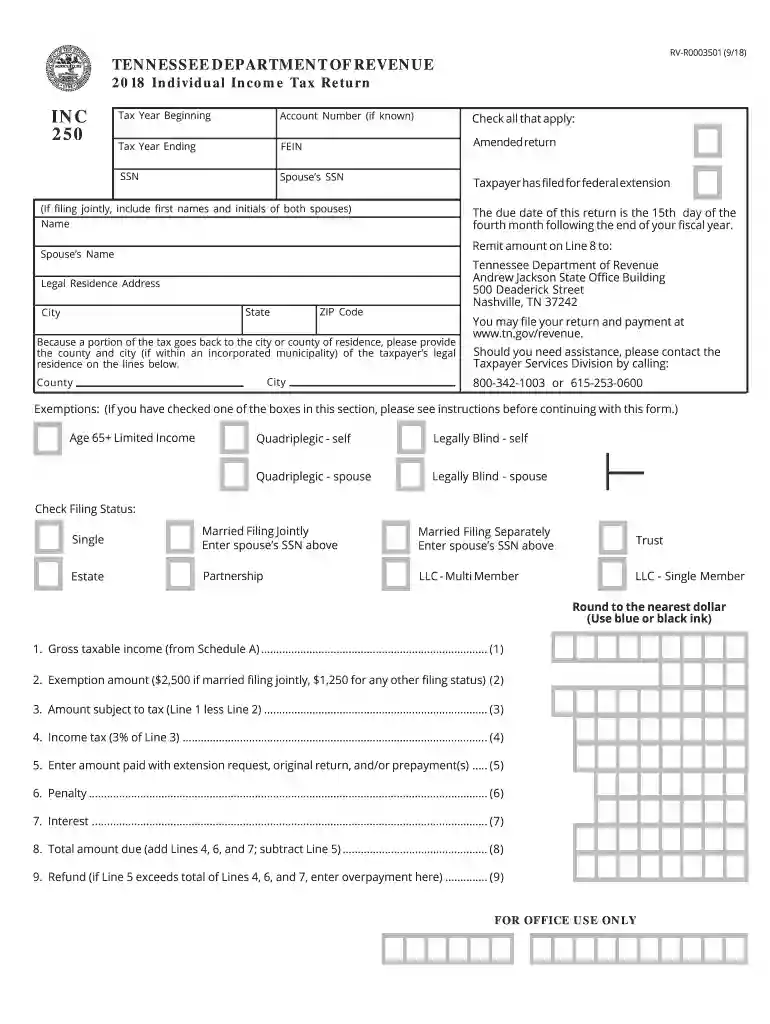
The "TN Form" refers to the Individual Income Tax Return form specific to the Tennessee Department of Revenue. This form is essential for residents and part-year residents of Tennessee who need to report their income and calculate their tax liability to the state. Unlike federal tax forms, Tennessee's tax forms focus on state requirements, which can include unique state-related deductions and credits. The "TN Form" ensures taxpayers meet their state tax obligations accurately, reflecting the state's tax regulations and guidelines effectively.
How to Obtain the TN Form
Obtaining the Tennessee Income Tax Return form is straightforward. Taxpayers can access the form through multiple avenues:
- Online Download: The Tennessee Department of Revenue provides downloadable versions of the tax forms on its official website. This option allows taxpayers to print a physical copy for manual filing or use online tools for electronic submission.
- Local Libraries and Post Offices: Some local libraries and post offices may offer physical copies of the form, especially during the tax season, for taxpayers without reliable internet access.
- Tax Preparation Software: Most tax preparation software includes versions of state-specific forms. These platforms guide users through the completion process and often support electronic submission.
Steps to Complete the TN Form
Completing the Tennessee Tax Return form involves several key steps:
- Personal Information: Begin by filling out personal details, including name, address, and social security number, ensuring all information matches official records.
- Income Reporting: Enter all sources of income relevant to the state of Tennessee. This includes wages, interest, and any other taxable forms of income according to state law.
- Deductions and Credits: List any deductions and tax credits that Tennessee allows. Be sure to have documentation ready, as this can affect your overall tax liability significantly.
- Calculations: Use the guidelines specified in the form’s instructions to properly calculate your taxable income and taxes owed.
- Review and Sign: Double-check all entries for accuracy before signing. Signatures are mandatory for the form to be legally binding.
Key Elements of the TN Form
The Tennessee Tax Return includes several critical sections:
- Personal Details: Necessary for identity confirmation and record-keeping.
- Income Sections: Detailed allocation for different income types to ensure comprehensive reporting.
- Exemptions: Details any state-specific exemptions applicable to the filer, affecting the taxable base.
- Optional Schedules: Accommodates additional state-specific calculations such as business income or specific deductions.
- Calculation Worksheets: These guide filers in computing taxes due or refunds accurately.
Filing Deadlines / Important Dates
Adhering to deadlines is crucial to avoid penalties:
- State Tax Submission: The Tennessee income tax return is typically due on April 15, mirroring the federal tax deadline.
- Extension Requests: Extensions might be available upon request but require submission before the original filing deadline.
- Amendments: There are specified periods for submitting corrected or amended returns which taxpayers must monitor closely.
IRS Guidelines
While the TN form is state-specific, IRS guidelines still play a relevant role, as they:
- Inform Taxable Income: Federal guidelines help determine portions of income subject to federal versus state taxes, providing a baseline for filers.
- Standard Deductions: Federal deduction guidelines can often influence state calculations, though Tennessee's form has its own specificity.
Required Documents
Preparing the Tennessee income tax return mandates various documents including:
- W-2 and 1099 Forms: To report income from employment and other sources.
- Receipts for Deductions: Ensure all deduction claims are supported by proper documentation.
- Last Year’s Tax Return: Useful for comparison and to indicate changes in income or deductions.
State-Specific Rules for the TN Form
Tennessee has distinct tax laws impacting the "TN Form":
- Tax-Free Income Brackets: Unlike some states, Tennessee might not tax certain types of income, aligning state-specific thresholds with federal laws.
- State Credits and Deductions: Tennessee-specific credits that might not be present or applicable on federal forms can decrease taxable income.
Penalties for Non-Compliance
Non-compliance can lead to financial repercussions:
- Late Submission Fees: Missing deadlines can result in fines or interest on payable taxes.
- Audit Risks: Incomplete or inaccurate returns heighten the risk of state audits, leading to potential additional fines.
- Income Misreporting: Incorrect income declarations can incur stiff penalties, so accuracy is essential.
Important Terms Related to TN Form
Understanding the terminology used on the form enhances clarity:
- Resident vs. Non-Resident: Determines which tax form or part of the form applies.
- Adjusted Gross Income (AGI): A key metric dictating overall tax liability.
- Tax Credits: Reductions applied directly to the tax payable, making them crucial for tax saving strategies.
This structured, in-depth content covers essential aspects of the "tn form," ensuring readers understand its purpose, procedures, and key elements thoroughly.