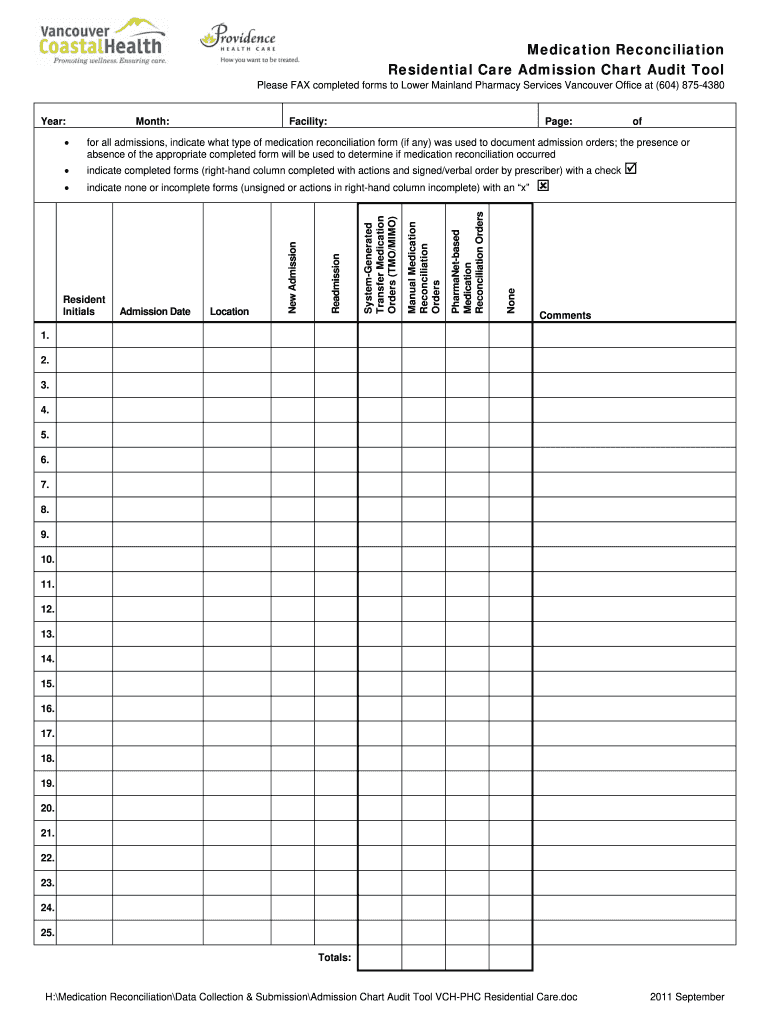







Definition and Meaning of the Residential Care Admission Chart Audit Tool
The Residential Care Admission Chart Audit Tool is a specialized instrument designed for evaluating and ensuring compliance in the admissions processes of residential care facilities. This tool serves as a critical resource for healthcare providers, enabling them to systematically audit charts associated with resident admissions to confirm that all necessary documentation is accurately completed and adheres to regulatory requirements. In essence, it provides a structured format for reviewing medication orders and other essential information that must be collected and verified during the admission process.
Purpose of the Audit Tool
The paramount aim of using the audit tool is to promote accountability and improve the quality of care provided in residential settings. By employing this chart audit tool, facilities can:
- Ensure proper documentation of medication orders.
- Verify the completion status of required forms.
- Enhance the overall efficiency of the admissions process.
Steps to Complete the Residential Care Admission Chart Audit Tool
Completing the Residential Care Admission Chart Audit Tool requires careful attention to detail and adherence to established procedures. Below are the key steps involved in effectively utilizing the tool:
-
Gather Necessary Documents
- Collect all relevant admission documents, including assessment forms and medication reconciliation reports.
- Ensure that each document is current and accurately reflects the resident's needs and preferences.
-
Review Admission Records
- Examine each resident's admission record to identify completed sections and any missing information.
- Pay close attention to medication orders, ensuring they align with physician guidelines.
-
Use the Audit Checklist
- Employ the chart audit checklist to systematically verify that all required elements are present. This checklist should include items such as:
- Verification of physician orders.
- Completion of initial assessment forms.
- Documentation of the level of care needed.
- Employ the chart audit checklist to systematically verify that all required elements are present. This checklist should include items such as:
-
Document Findings
- Record any discrepancies or areas requiring correction. This documentation is essential for ongoing quality improvement and compliance audits.
- Use clear language to describe findings, making it easier for subsequent reviewers to understand any issues identified.
-
Follow Up on Corrections
- Work collaboratively with healthcare teams to address any deficiencies noted during the audit.
- Set timelines for corrections and reassess the admission chart following updates.
Important Elements of the Residential Care Admission Chart Audit Tool
Key components of the Residential Care Admission Chart Audit Tool are instrumental in facilitating an effective audit process. These elements include:
- Assessment Forms: Comprehensive forms that capture the resident's medical history and current level of care requirements.
- Medication Reconciliation Forms: Documents that list all medications prescribed upon admission, including dosages and potential interactions.
- Chart Audit Checklist: A structured list of items to verify during the audit process, ensuring compliance with regulations.
- Level of Care Documentation: Details about the specific needs of the resident, which inform care plans and staffing requirements.
Features of Each Element
- Assessment Forms: Typically include sections for health history, physical assessments, and psychosocial evaluations.
- Medication Reconciliation Forms: Ensure that new admissions receive appropriate medication management tailored to their health status.
- Chart Audit Checklist: Helps reduce errors and omissions that could lead to compliance risks or negatively impact resident care.
Examples of Using the Residential Care Admission Chart Audit Tool
Application of the Residential Care Admission Chart Audit Tool can be illustrated through various scenarios. Here are a few examples where the tool plays a vital role:
-
New Resident Admission
- When a new resident enters a facility, staff utilize the tool to verify that all admission forms are correctly filled out and signed. For instance, ensuring that all medications listed on the reconciliation form correspond with prescriber orders can prevent potential medication errors.
-
Quality Assurance Audits
- During regular quality assurance audits, the tool is employed to assess compliance across multiple resident charts. This helps identify trends that may indicate systemic issues needing resolution, such as recurrent omissions in documentation.
-
Training and Development
- As part of ongoing staff training, the audit tool serves as an educational guide for new employees. By familiarizing staff with the audit process, the facility promotes a culture of compliance and high-quality care right from the start.
State-Specific Rules for the Residential Care Admission Chart Audit Tool
Within the United States, healthcare regulations vary widely by state, impacting how the Residential Care Admission Chart Audit Tool is implemented. Understanding these local nuances is essential for compliance:
- Licensure Requirements: Different states may have varying licensure requirements for residential care facilities, influencing the documentation needed during audits.
- Compliance Standards: Some states implement stricter compliance standards regarding medication management and documentation processes. Facilities must ensure they meet these standards to avoid penalties.
Variances to Consider
- California may require additional health assessments compared to a state like Texas, where regulations could be less stringent.
- Facilities should remain informed about their state-specific rules and incorporate these into their chart audit processes to ensure compliance.
Legal Use of the Residential Care Admission Chart Audit Tool
The legal framework surrounding the use of the Residential Care Admission Chart Audit Tool is crucial for maintaining compliance with healthcare regulations. Key considerations include:
- Documentation Retention: Facilities must keep audit documentation for a specified duration, typically in accordance with state laws and federal guidelines.
- Confidentiality Standards: As the records reviewed can contain sensitive information, it’s vital to comply with HIPAA regulations and ensure that all data is stored securely.
- Compliance with Federal and State Regulations: Facilities must be familiar with both federal standards set by agencies like CMS (Centers for Medicare & Medicaid Services) and respective state regulations governing residential care.
Ensuring adherence to these legal requirements can mitigate risks associated with non-compliance, such as heavy fines or penalties. Facilities should regularly review their practices against the current legal landscape to maintain compliance.