
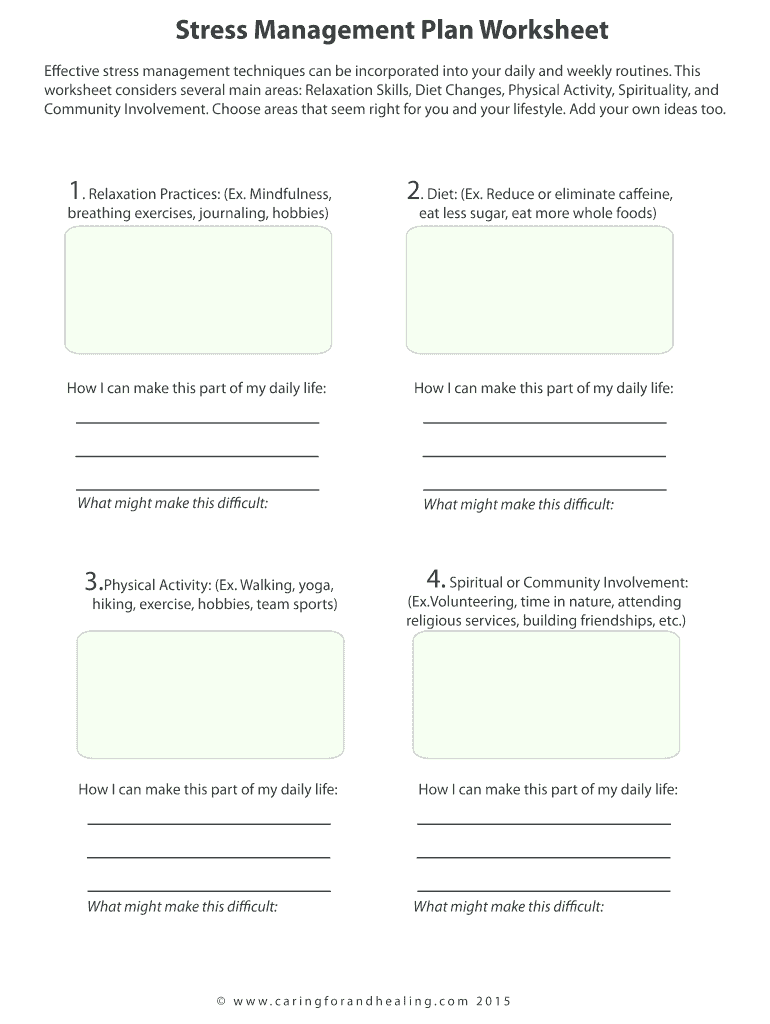







Definition and Meaning of the Stress Management Plan Worksheet
The stress management plan worksheet is a structured document designed to help individuals identify, assess, and manage their stress levels. This tool typically incorporates a variety of techniques and tactics tailored to personal preferences and lifestyles. It serves as a practical guide for individuals seeking to enhance their well-being through effective stress management strategies.
- Purpose: The worksheet aims to facilitate personal reflection on stressors in one's life, encouraging proactive coping strategies.
- Components: It usually includes sections for identifying stressors, evaluating physical and emotional responses, and listing coping techniques.
- Target Audience: Anyone experiencing stress—be it students, professionals, or parents—can benefit from using this worksheet. It is suitable for both individual use and in therapeutic settings.
How to Use the Stress Management Plan Worksheet
Effectively utilizing the stress management plan worksheet involves a few steps that guide users in a comprehensive review of their stressors and coping mechanisms.
- Assessment of Stressors: Begin by identifying specific stressors in your life. This could include work-related pressures, personal relationships, or health issues.
- Evaluation of Responses: For each identified stressor, reflect on your emotional and physical responses. This helps in understanding the impact of stress on your day-to-day activities.
- Identifying Coping Strategies: List down techniques that work for you or have worked in the past. Possible strategies include exercise, meditation, or engaging in hobbies.
- Implementation Plan: Develop a plan on how and when to implement these strategies into your daily routine. The worksheet may include a schedule for practicing these techniques.
- Review and Adjust: Regularly revisit the worksheet to assess your progress and adjust strategies as necessary. This promotes continuous personal development and stress management.
Key Elements of the Stress Management Plan Worksheet
A comprehensive stress management plan worksheet typically contains several essential elements that contribute to effective stress management.
- Stress Identification: A section dedicated to listing personal stressors such as deadlines, financial concerns, or family obligations.
- Response Evaluation: Space for detailing reactions to stress, including feelings of anxiety, fatigue, or physical symptoms like headaches.
- Coping Techniques: A proven set of strategies designed to help manage stress, such as relaxation techniques, routine physical activity, or seeking social support.
- Goal Setting: Define specific, measurable goals related to stress management, which can lead to enhanced commitment and accountability.
- Monitoring Progress: A method for tracking the effectiveness of chosen coping strategies over time, ensuring adaptability and responsiveness to changing circumstances.
Who Typically Uses the Stress Management Plan Worksheet
The stress management plan worksheet can be beneficial for a variety of individuals seeking to manage their stress levels more effectively.
- Students: High school and college students often face academic pressures that can lead to stress; this worksheet offers them a way to manage their workload.
- Working Professionals: Many adult professionals experience workplace stressors that this tool can help address through structured coping strategies.
- Parents: Balancing family demands and personal responsibilities can be stressful, prompting parents to use this worksheet to regain control.
- Mental Health Counselors: Therapists may incorporate this tool in sessions to help clients develop personalized strategies for dealing with stress.
- Individuals in Transition: Those undergoing significant life changes—like relocating, changing jobs, or experiencing a relationship shift—can utilize the worksheet to cope with the anxiety that accompanies these transitions.

Examples of Using the Stress Management Plan Worksheet
Implementing the stress management plan worksheet in real-life scenarios can significantly enhance its effectiveness. Here are some examples of how individuals might use it.
-
Example 1: A College Student: A student preparing for final exams may identify workload and performance anxiety as stressors. They could list study blocks, relaxation techniques, and peer study groups as coping strategies within the worksheet.
-
Example 2: A Working Parent: A parent may experience stress from balancing work commitments and family responsibilities. Their worksheet could include time management techniques, scheduled family outings for relaxation, and strategies for effective communication with their partner about stressors.
-
Example 3: Professionals in High-Stress Fields: Healthcare workers may use the worksheet to identify emotional exhaustion as a stressor. They might incorporate regular breaks, stress-relief activities, and peer support groups as part of their coping techniques listed in the plan.
Through these examples, it's clear that the stress management plan worksheet offers customizable strategies that can adapt to various life situations.




