






Definition and Purpose of the Prioritizing Tasks Worksheet
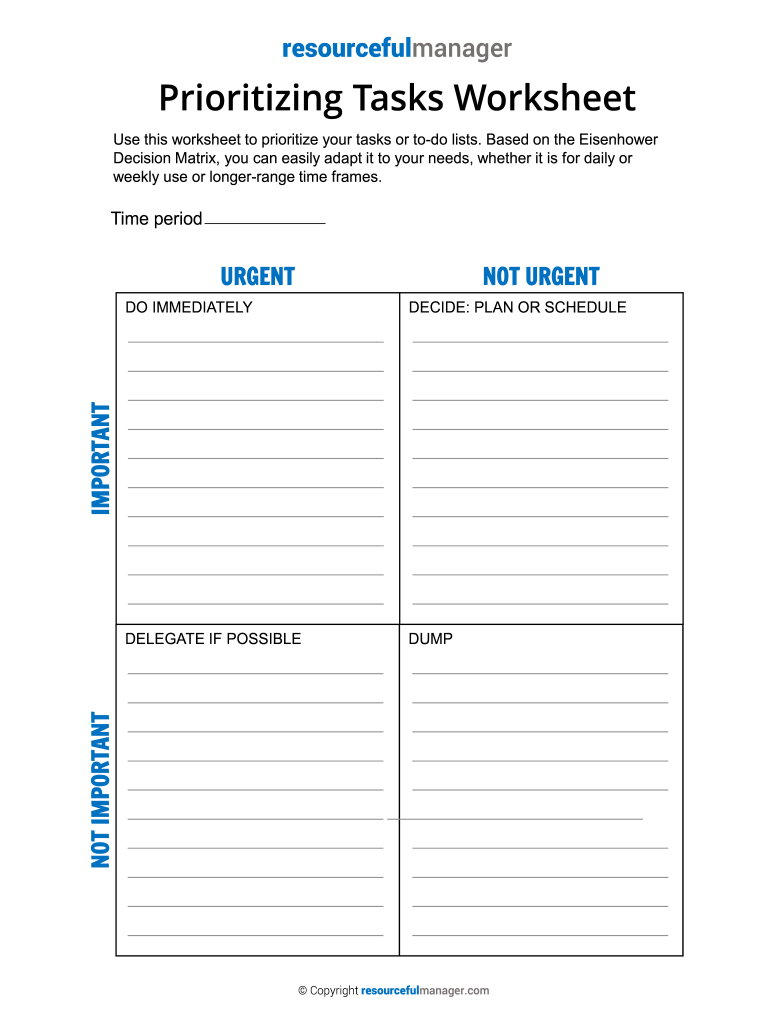
A Prioritizing Tasks Worksheet is a practical tool designed to help individuals categorize and prioritize their tasks effectively. This form is based on the Eisenhower Decision Matrix, which distinguishes tasks by urgency and importance. The primary objective is to enable users to allocate their time more effectively by identifying which tasks require immediate attention and which can be scheduled for later.
Key Features
- Urgency vs. Importance: The worksheet allows users to assess tasks based on their pressing deadlines compared to their significance in broader goals.
- Categorization: Users can sort tasks into four quadrants, helping them visualize which tasks to execute first, delegate, or postpone.
- Flexibility: The structure of the worksheet can accommodate various task types, making it suitable for personal, academic, or professional use.
How to Utilize the Prioritizing Tasks Worksheet Effectively
Using the Prioritizing Tasks Worksheet involves several steps to ensure optimal outcomes. Begin by listing all tasks that require attention. Next, evaluate each task based on its urgency and importance.
Steps for Effective Usage
- List all tasks: Write down everything you need to complete, no matter how small.
- Assign categories: Utilize the four quadrants of the Eisenhower Matrix:
- Quadrant 1: Urgent and Important (Do these tasks immediately)
- Quadrant 2: Important but Not Urgent (Schedule these tasks)
- Quadrant 3: Urgent but Not Important (Delegate these tasks if possible)
- Quadrant 4: Neither Urgent nor Important (Eliminate these tasks)
- Review and adjust: Conduct regular reviews of your tasks to ensure alignment with changing priorities and goals.
Example Scenario
Consider a student preparing for final exams. The worksheet may reveal that studying for the most challenging subject (important and urgent) should take precedence over organizing study materials (important but not urgent).
Steps to Complete the Prioritizing Tasks Worksheet
Completing the Prioritizing Tasks Worksheet is a straightforward process that can be broken down into manageable steps.
Detailed Breakdown
- Gather Necessary Information:
- Compile all assignments, tasks, and projects due.
- Analyze Each Task:
- Determine urgency and importance for each item on your list.
- Fill Out the Worksheet:
- Place each task into one of the four quadrants based on your analysis.
- Develop an Action Plan:
- Assign deadlines and action steps for tasks in Quadrants 1 and 2, while creating reminders for those in Quadrant 3.
- Utilize Regular Reviews:
- Schedule time to check your worksheet weekly or bi-weekly to update and shift tasks as necessary.
Practical Example
If a health professional needs to complete patient documentation, the Prioritizing Tasks Worksheet can help prioritize tasks like urgent follow-ups (urgent and important) versus routine paperwork (not urgent but important).
Key Elements of the Prioritizing Tasks Worksheet
Understanding the functionality of the Prioritizing Tasks Worksheet can significantly enhance its effectiveness.
Core Components
- Task List: A comprehensive listing of all tasks to be evaluated.
- Eisenhower Matrix Quadrants: Sections to categorize tasks based on urgency and importance.
- Action Items: Designated next steps for each task based on its category.
- Deadline Sections: Space to record due dates, ensuring accountability for timely completion.
Contextual Application
In a corporate setting, team leads might use this worksheet to assign projects to team members based on urgency, ensuring high-impact tasks receive immediate focus while less critical activities are scheduled for later.
Examples of Using the Prioritizing Tasks Worksheet
To fully grasp the utility of the Prioritizing Tasks Worksheet, consider various scenarios across different contexts where this tool can be applied.
Scenarios
- Students: To manage exam preparation and assignment deadlines effectively, helping them balance study topics based on their difficulty and upcoming due dates.
- Project Managers: To streamline the workflow of an ongoing project, ensuring essential tasks that impact project success are prioritized.
- Home Organization: Individuals may use the worksheet to tackle household chores, determining which tasks are crucial for maintaining a tidy home environment versus routine upkeep.
Legal Use of the Prioritizing Tasks Worksheet
The Prioritizing Tasks Worksheet does not typically have specific legal implications as it is primarily a productivity tool. However, using it effectively can ensure compliance with deadlines that may have legal consequences in professional settings.
Importance in Professional Settings
In many professions, missing deadlines can lead to financial penalties or regulatory issues. Using the worksheet helps professionals meet obligations by clearly prioritizing tasks that influence compliance and operational success.
Example
A lawyer might use the Prioritizing Tasks Worksheet to ensure that court filing deadlines and client meetings are managed correctly, emphasizing tasks that hold legal significance over routine paperwork.
Importance of the Prioritizing Tasks Worksheet
Implementing a Prioritizing Tasks Worksheet is vital for anyone looking to enhance their productivity and efficiency, particularly in high-pressure environments.
Benefits
- Enhanced Efficiency: By clearly distinguishing urgent tasks, individuals can focus efforts more effectively.
- Reduced Stress: Improved task management leads to greater control over workloads, decreasing anxiety associated with deadlines.
- Goal Alignment: Encourages users to focus on tasks that align with their long-term objectives, fostering a sense of accomplishment and direction.
Case Study
In a research team, adopting a Prioritizing Tasks Worksheet guided members in aligning their tasks with project milestones, thus enhancing collaboration and overall project success.