
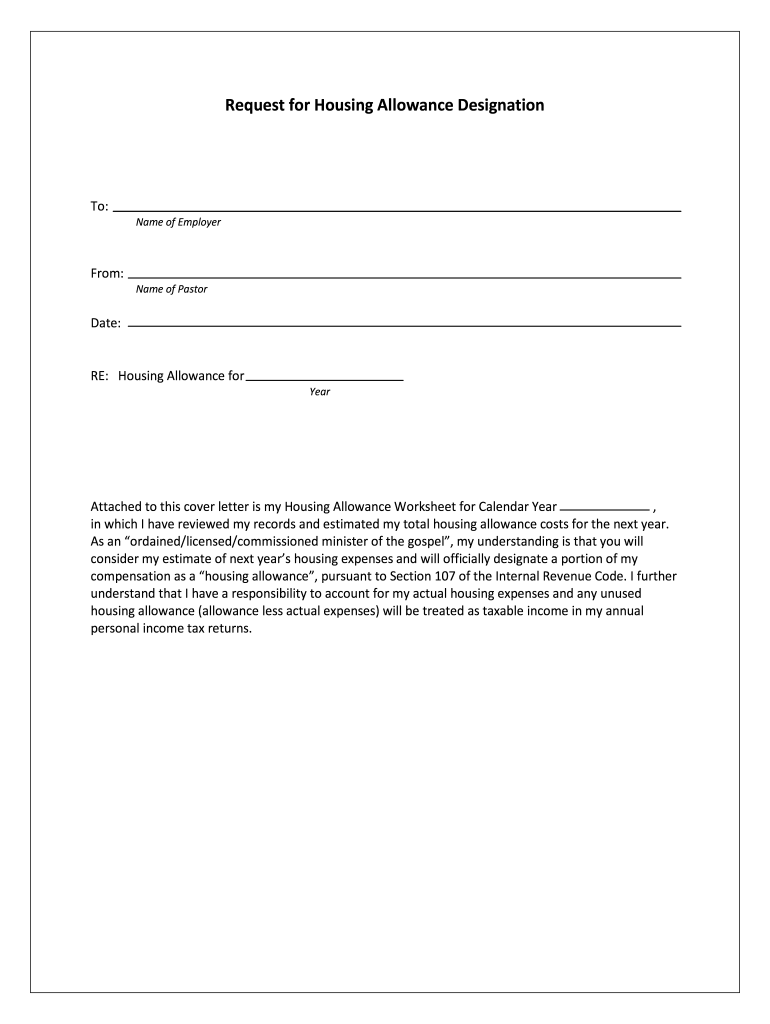







Definition and Meaning of Request for Allowance
The request for allowance is a formal document utilized by individuals, typically in employment contexts, to formally request financial support or compensation for specific expenses incurred during their job duties. This document can encompass various types of allowances such as housing, transportation, or accommodation.
In a wider context, the request for allowance may also serve as a means of ensuring that employees are compensated fairly for expenses that are integral to performing their roles. For example, a pastor may submit a housing allowance letter to their employer, detailing the expected tax implications under Section 107 of the Internal Revenue Code. This regulation allows for certain housing expenses to be excluded from the employee's taxable income, provided they meet specific criteria.
In essence, the request for allowance is not merely a request for funds but a means of establishing clear communication regarding the financial needs of employees and how these align with both organizational and legal requirements.
How to Use the Request for Allowance
Understanding how to properly utilize a request for allowance can significantly impact the approval process. The following steps outline the effective use of this document:
-
Identify the Need: Evaluate the specific expenses that necessitate a request for allowance. This may include housing costs, travel expenses, or other relevant expenditures.
-
Gather Documentation: Compile all necessary documents that support the request, including receipts, invoices, or any relevant proof of payment. For example, if requesting a housing allowance, collect details of rents paid or appropriate housing expenses.
-
Draft the Request: Clearly articulate your request in a formal letter or specified template. Be concise and ensure that you outline the purpose of the request, the amount sought, and any pertinent financial details.
-
Submit the Request: Send the request to the appropriate authority, typically your HR department or direct supervisor. Ensure that you are aware of the submission protocols, whether that be via email, in person, or through an online portal.
-
Follow Up: After submitting the request, follow up with the recipient to confirm receipt and inquire about the status of your application.
By properly adhering to these steps, the likelihood of approval enhances significantly, ensuring that the allowance requested is aligned with both personal and organizational needs.
Steps to Complete the Request for Allowance
Completing a request for allowance involves several important steps that ensure clarity and efficiency throughout the process. Here is a detailed breakdown:
-
Preparation of Required Information: Identify the type of allowance you are requesting. This may include completing a housing allowance letter to employer or a transportation allowance request letter sample. Gather all necessary personal and financial details relevant to your request.
-
Filling Out the Form: Many organizations provide specific forms for submitting allowance requests. Ensure you fill out each section accurately. It might include:
- Personal information (name, position, department).
- Detailed breakdown of the allowances requested.
- Justification for the allowance based on duties or expenses related to your role.
-
Submitting Supporting Documentation: Include any required documentation that backs your request. This may be:
- Receipts for previous housing payments or travel expenditures.
- A completed Housing Allowance Worksheet that showcases your understanding of the tax implications as per IRS guidelines.
-
Reviewing for Accuracy: Before submission, carefully review the entire request for any inaccuracies or incomplete information. Double-check for clarity and that all required sections are filled out.
-
Submission: Once verified, submit the request through the designated method. This can include online submissions through integrated HR platforms or traditional mail.
-
Monitoring Response: Keep track of your request, including any communications from your employer. Document interactions, especially if reminders or follow-ups become necessary.
Each of these steps is essential for fostering a transparent and efficient process when requesting allowances, ultimately benefiting both the employee and employer.
Important Terms Related to Request for Allowance
Understanding key terminology related to requests for allowance is crucial for navigating the process effectively. Some important terms include:
-
Allowances: Monetary compensation provided by an employer, covering costs associated with job responsibilities. This could relate to housing, transportation, or other related expenses.
-
Housing Allowance Worksheet: A document used to detail the housing expenses and relevant figures needed for the calculation of tax exemptions under specific IRS provisions.
-
Tax Implications: Refers to the potential tax responsibilities or benefits associated with the allowances granted, particularly how they affect taxable income.
-
Employer Policies: The rules and guidelines an organization has in place regarding the approval and distribution of allowances.
-
ESIGN Act Compliance: Ensures that electronic signatures and documents (such as allowance requests) meet legal standards, providing legitimacy to digital transactions.
Understanding these terms allows for a more informed approach when engaging with the request for allowance, providing clarity and ensuring compliance with necessary regulations.
Legal Use of the Request for Allowance
Legal implications play a significant role in the request for allowance, especially regarding compliance with tax regulations and employment laws.
-
IRS Regulations: Understanding IRS guidelines is paramount for allowances, particularly housing allowances. Under Section 107, specific stipulations define how housing allowances can be structured to avoid taxation.
-
Employment Agreements: Employees should be aware that their employment contracts or organizational policies may have explicit provisions regarding allowances. Non-compliance with these agreements can result in the denial of requests or potential legal ramifications.
-
Documentation Requirements: Maintaining proper paperwork, such as receipts and the Housing Allowance Worksheet, bolsters your position when making a request and provides protection in case of audits.
-
State-Specific Laws: Different states may have unique laws governing allowances. Employees should familiarize themselves with local regulations that might affect the request process or outcome.
Understanding the legal framework surrounding requests for allowance empowers employees to navigate the process effectively, ensuring compliance and safeguarding their rights within the workplace.




