






Definition and Meaning of Hot Holding Temperatures
Hot holding temperatures refer to the specific range of temperatures at which cooked foods must be maintained to ensure safety and prevent bacterial growth. The USDA Food Safety and Inspection Service stipulates that hot-held foods must be kept at a minimum internal temperature of 135°F (57°C). This temperature is crucial for preventing foodborne illnesses by inhibiting the growth of harmful microorganisms that thrive in the temperature danger zone, which is generally considered to be between 41°F (5°C) and 135°F (57°C).
Importance of Maintaining Hot Holding Temperatures
- Food Safety: Ensuring food is held at safe temperatures reduces the risk of foodborne pathogens multiplying.
- Quality Preservation: Maintaining the right temperatures not only protects health but also preserves the taste and quality of food.
- Compliance with Regulations: Adhering to USDA guidelines helps establishments avoid legal consequences associated with food safety violations.
Minimum Temperature Requirements for Hot Holding
The USDA guidelines specify that the minimum temperature for hot holding foods is 135°F. It's important for operators to frequently monitor the temperature of hot-held foods to ensure compliance.
Monitoring Procedures
- Use of Thermometers: Regular checks with calibrated thermometers should be performed to ensure food maintains the required temperature.
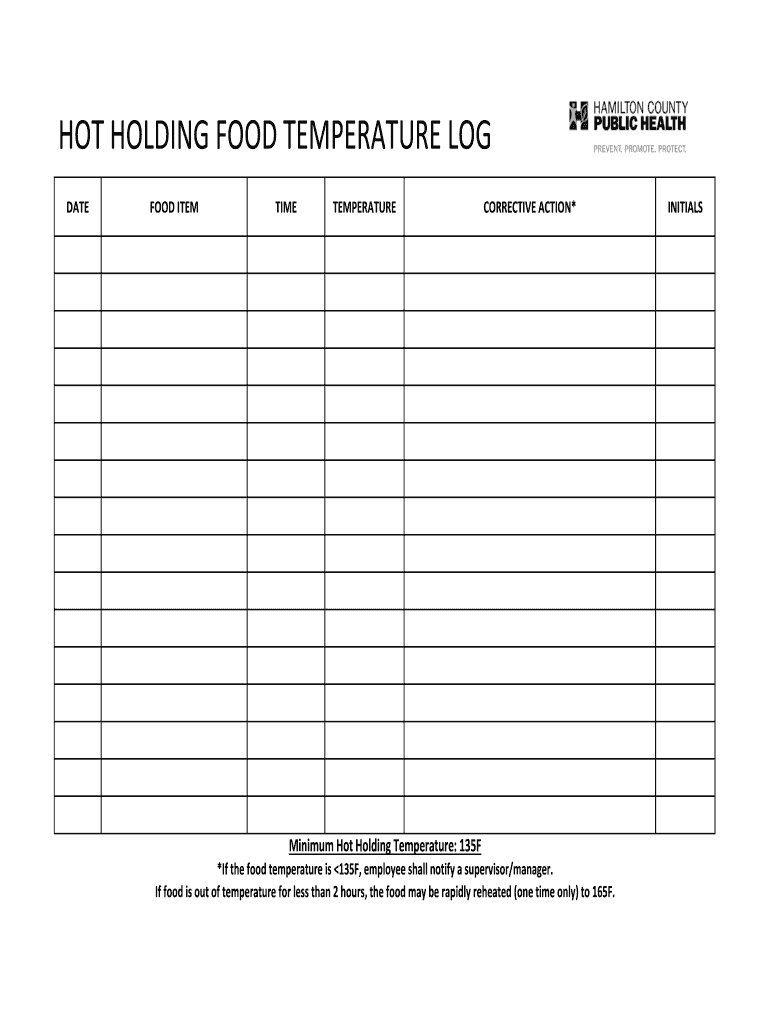
- Documentation: Keeping a food temperature log is essential for tracking adherence to safety standards. This log should include:
- Date
- Food items
- Times checked
- Temperatures recorded
Corrective Actions for Temperature Violations
If a hot-held food item drops below the critical threshold of 135°F, corrective actions must be immediately implemented.
Immediate Steps to Take
- Reheating Strategy: If food has been out of temperature for less than two hours, it can be rapidly reheated to the required temperature of 165°F.
- Notify Supervisor: It is crucial to inform a supervisor of any temperature breaches to ensure proper safety protocols are adhered to and to assess further preventive measures.
Hot Food Holding Temperature Log Sheet Template
Implementing a structured log sheet helps streamline the recording process of hot holding temperatures.
Key Features of the Log Sheet
- Fields for Data Entry: Essential fields should include:
- Date and time
- Food item description
- Recorded temperature
- Initials or signatures of the person checking
- Visual Management: A simple and clear layout allows staff to quickly fill in the required fields, enhancing compliance.
Frequency of Temperature Checks in Hot Holding Stations
Regular monitoring of temperatures is critical in hot food holding contexts, such as steam tables or warming drawers.
Recommended Frequency
- Every Two Hours: The USDA recommends checking temperatures at least every two hours to ensure food safety.
- Best Practices: Establish a routine that includes set times for temperature checks and designate specific staff responsible for monitoring to maintain accountability.
Signs of Food in the Temperature Danger Zone
Understanding when food is not being held safely requires vigilance and awareness of potential signs that food may enter the danger zone.
Common Indicators
- Temperature Readings: If temperatures dip below 135°F, action must be taken immediately.
- Behavioral Observations: Look out for staff errors, such as frequently opening hot holding units, which can lead to temperature fluctuations.
Legal Implications of Non-Compliance
Failure to adhere to hot holding temperature regulations can result in several consequences for food service establishments.
Possible Legal Outcomes
- Fines and Penalties: Non-compliance with USDA guidelines may lead to monetary penalties.
- Health Inspections: Repeated violations can trigger health inspections, increasing scrutiny on the establishment.
- Business Reputation Risks: Public knowledge of food safety violations can severely damage a restaurant's reputation and customer trust.
Conclusion on Hot Holding Temperature Practices
It is vital for all food service establishments to maintain a clear understanding of hot holding temperature requirements as outlined by the USDA. Establishments must implement strict adherence to these guidelines—not only to ensure customer safety and food quality but also to comply with legal standards. Regular checks and documentation, comprehensive training for staff, and immediate corrective actions in case of temperature violations form the foundation of a successful food safety program.