




01. Edit your administrative assistant contract template online
Type text, add images, blackout confidential details, add comments, highlights and more.

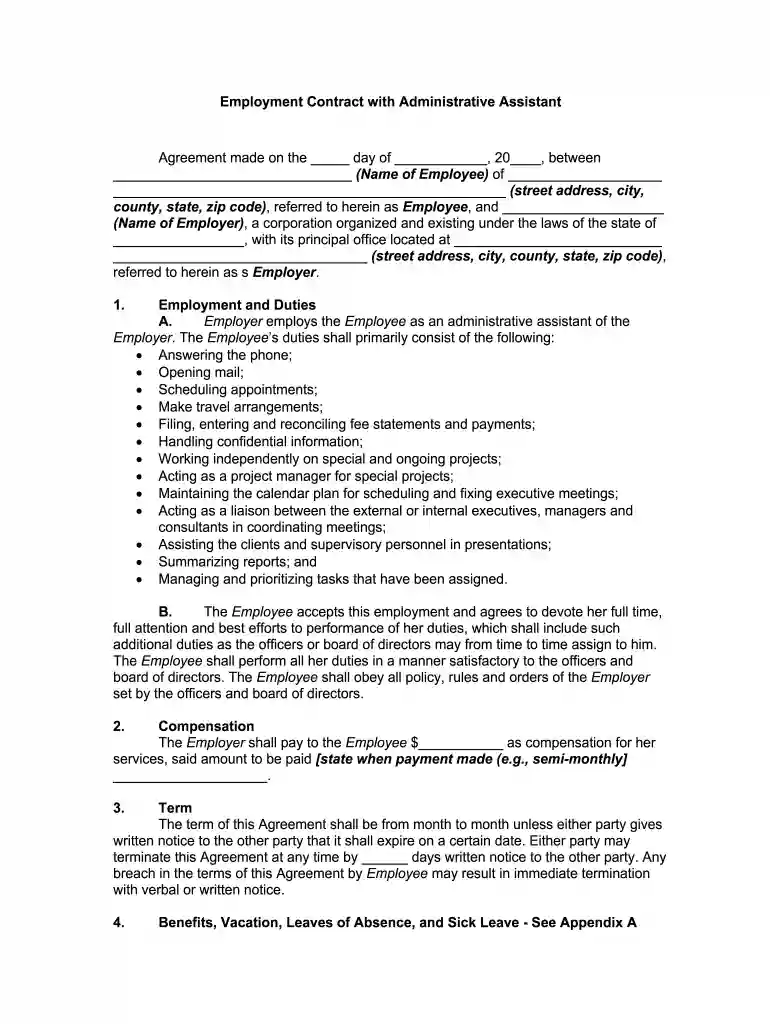
Type text, add images, blackout confidential details, add comments, highlights and more.

Draw your signature, type it, upload its image, or use your mobile device as a signature pad.

Send administrative assistant contract via email, link, or fax. You can also download it, export it or print it out.
An employment contract is a pivotal document that delineates the rights, responsibilities, and expectations between an employer and an employee. This legally binding agreement establishes the framework for the employment relationship, safeguarding both parties’ interests while outlining the terms of employment.
Job Title and Responsibilities: This section specifies the employee's role and the duties to be performed. Clearly defined responsibilities help in setting performance expectations. For instance, an administrative assistant's contract may enumerate tasks such as managing schedules, handling correspondence, and organizing office events.
Compensation and Benefits: The contract details the employee’s salary or hourly wage, including information about bonuses, commissions, and benefits such as health insurance, retirement plans, and paid time off. An executive assistant contract might also include clauses around annual salary reviews and performance bonuses.
Term of Employment: This outlines the duration of employment, whether it is indefinite, fixed-term, or project-based. Understanding the duration helps employees gauge job stability and aids employers in planning workforce needs.
Termination Conditions: This section covers the grounds for terminating the employment relationship, detailing procedures for both voluntary resignations and involuntary dismissals. It might address notice periods required by either party and conditions that warrant immediate termination, such as misconduct or breach of contract.
Confidentiality Obligations: Many employment contracts include confidentiality clauses, particularly for roles involving sensitive information. These clauses specify that employees must protect confidential business information during and after their employment.
Dispute Resolution: Contracts often contain provisions detailing how disputes will be resolved. This may include arbitration agreements or mediation processes, which can streamline conflict resolution while avoiding lengthy court procedures.
Modification of the Agreement: Clear guidelines should outline how any changes to the contract can be made. This protects both parties by ensuring that amendments are mutually agreed upon and documented.
Full-Time Employment Contracts: Typically provide comprehensive benefits and are suited for roles requiring significant commitment from both employer and employee.
Part-Time and Temporary Contracts: These contracts are generally used for positions that do not require a full-time commitment. They often have different benefits and conditions compared to full-time agreements.
Freelance and Independent Contractor Agreements: Such contracts specify project-based work where the contractor is not a traditional employee but instead offers services independently. They typically outline payment terms and project deliverables without the employer-employee relationship.
Employment contracts play a critical role in protecting employee rights. They offer clarity about what to expect from the employer and what the employer expects in return. By having definitive terms laid out, employees gain confidence in their job security and benefit entitlements.
Employers must adhere to specific laws regarding employment contracts to avoid potential legal challenges. This includes ensuring that contracts comply with federal and state labor laws, regulations regarding discrimination, and statutes governing wages and hours worked. Failure to comply may result in fines or legal action against the employer.
When creating an employment contract, precision and clarity are paramount. Contracts should be written in simple, clear language to ensure mutual understanding. It is advisable to review contracts with a legal professional familiar with labor law to ensure compliance and protect the interests of both the employer and employee.
In summary, an employment contract is more than just a document; it is the foundation of a professional relationship that establishes expectations, responsibilities, and protections for all parties involved.
At DocHub, your data security is our priority. We follow HIPAA, SOC2, GDPR, and other standards, so you can work on your documents with confidence.
An employment contract outlines the terms and conditions of a job agreement between an employer and employee. Relevance to HR Compliance. Supports legal and
Download Word Format (docx) [83 KB] Download a model contract for domestic workers to use with their employers. Learn moreRead more
Sep 8, 2025 A contract offers the advantage of providing additional employment security to those employees who seek that in their employment relationship.Read more


