




01. Edit your form 4626 online
Type text, add images, blackout confidential details, add comments, highlights and more.

Type text, add images, blackout confidential details, add comments, highlights and more.

Draw your signature, type it, upload its image, or use your mobile device as a signature pad.

Send amt depreciation tables irs via email, link, or fax. You can also download it, export it or print it out.
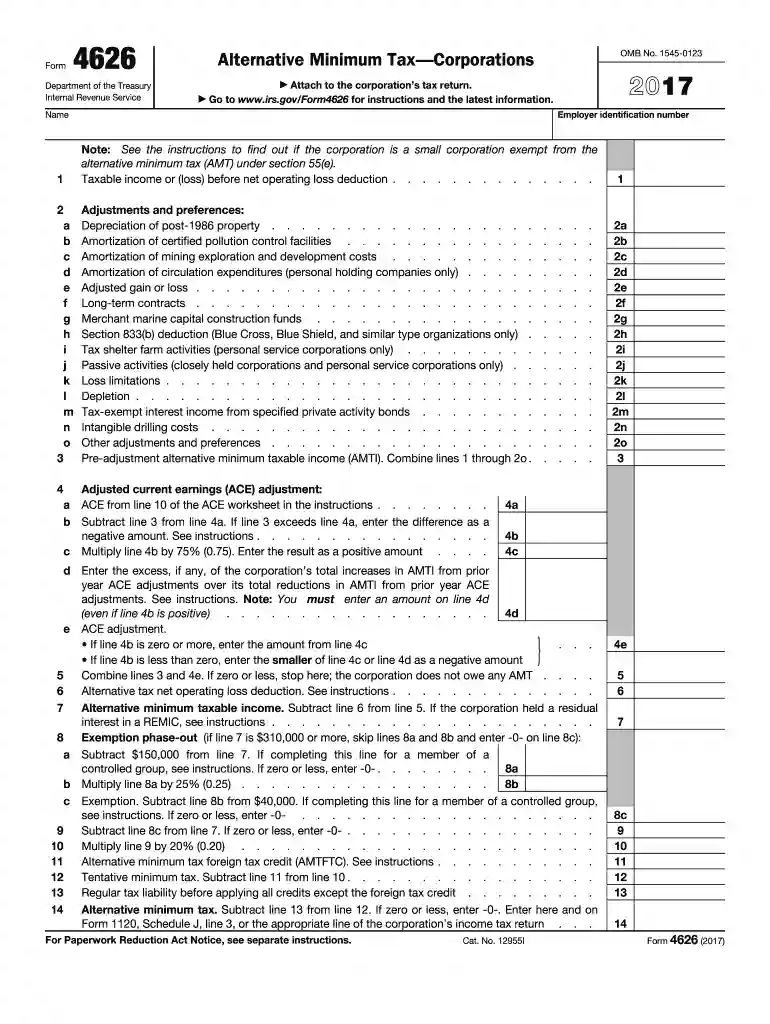
Form 4626, also known as the Alternative Minimum Tax (AMT) form for corporations, is a critical tax document used by businesses to determine their AMT liability. Originally implemented to ensure that profitable corporations pay a minimum level of tax, the form requires corporations to calculate an alternative tax base. This is done by adjusting the regular taxable income with specific preferences and adjustments unique to the AMT system. It serves as a safeguard to prevent corporations from paying disproportionately low taxes through various deductions and credits.
Form 4626 includes several sections crucial for the calculation of the AMT. Key components encompass:
Completing Form 4626 involves a meticulous process to ensure compliance with tax obligations:
Corporation A, which benefits substantially from the accelerated depreciation on equipment, computes its taxable income as $2 million. However, due to these deductions, its AMTI exceeds that amount. By completing the Form 4626, the corporation uncovers an additional $50,000 in taxes owed as AMT.
Tax professionals often use software solutions compatible with AMT worksheets to automate intricate calculations and reduce the risk of errors, showcasing the form's crucial role in responsible corporate tax management.
The IRS mandates specific guidelines for filing Form 4626, focusing on:
To simplify the filing process, corporations should gather the following documents:
Corporations have multiple options for submitting Form 4626:
Non-compliance with Form 4626 requirements can lead to significant repercussions:
By understanding and diligently applying the unique aspects of Form 4626, corporations can manage their tax liabilities effectively, maintain compliance with regulatory expectations, and contribute to the equitable distribution of the national tax burden.
We've got more versions of the form 4626 form. Select the right form 4626 version from the list and start editing it straight away!
| Versions | Form popularity | Fillable & printable |
|---|---|---|
| 2025 | 4.3 Satisfied (50 Votes) | |
| 2024 | 4.6 Satisfied (51 Votes) | |
| 2023 | 4.5 Satisfied (35 Votes) | |
| 2017 | 4.8 Satisfied (216 Votes) | |
| 2016 | 4.4 Satisfied (476 Votes) | |
| 2015 | 4.1 Satisfied (29 Votes) | |
| 2014 | 4 Satisfied (59 Votes) | |
| 2013 | 4 Satisfied (58 Votes) | |
| 2012 | 4.2 Satisfied (65 Votes) | |
| 2011 | 4.1 Satisfied (42 Votes) | |
| 2010 | 4 Satisfied (20 Votes) |
At DocHub, your data security is our priority. We follow HIPAA, SOC2, GDPR, and other standards, so you can work on your documents with confidence.
ERC-4626 is a standard protocol for tokenized vaults on the Ethereum blockchain, aimed at unifying technical parameters and facilitating interoperability.
Corporations use this form to determine whether the corporation is an applicable corporation under section 59(k) and to calculate corporate alternative minimumRead more
No person shall be required to move from his dwelling on account of any program or project undertaken by a Federal agency or with Federal financial assistance,Read more


