





Understanding the Influenza (Flu) Vaccine Consent Form
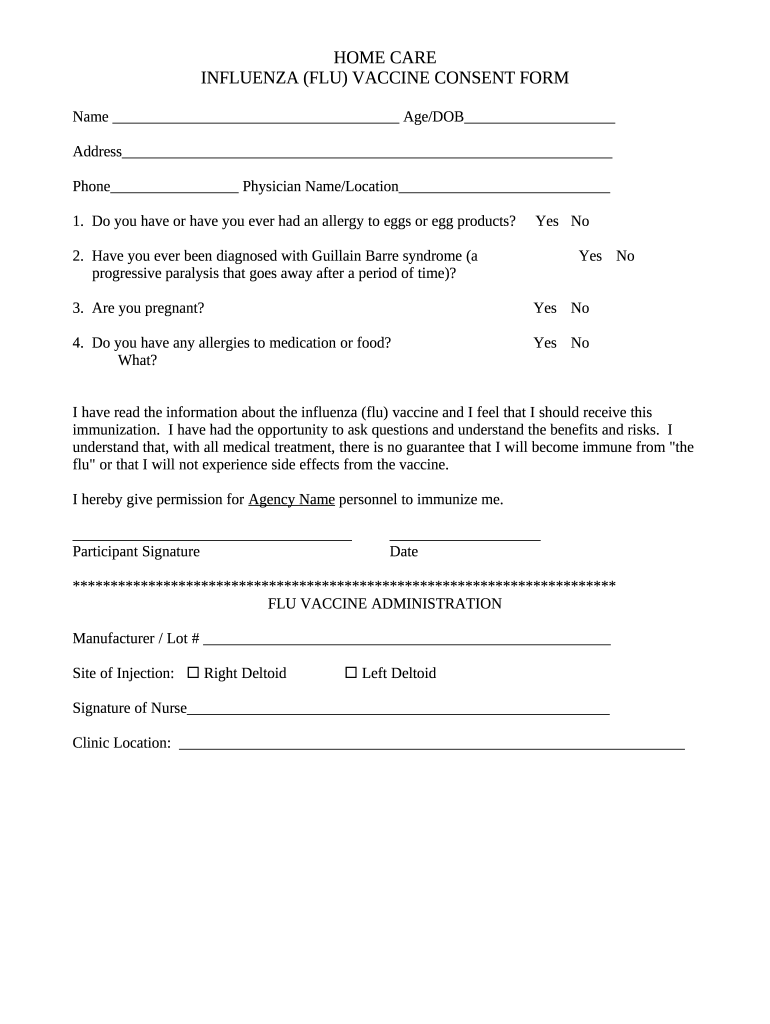
The Influenza (Flu) Vaccine Consent Form is a critical document that facilitates the vaccination process against the flu. This form is designed to gather necessary personal information and health history from individuals receiving the vaccine. It includes essential sections that ensure informed consent and proper documentation. Below is a comprehensive breakdown of its key elements, procedures, and considerations.
Key Elements of the Influenza Vaccine Consent Form
-
Personal Information: The form typically requests details such as the individual’s name, date of birth, contact information, and emergency contact. This information is crucial for maintaining accurate medical records.
-
Health History: Recipients must provide information regarding allergies, previous vaccination reactions, and existing medical conditions. This section is vital to assess if the individual is suited for the vaccine, ensuring their safety during administration.
-
Acknowledgement of Risks and Benefits: The consent form includes a section in which individuals acknowledge that they understand both the benefits and potential risks associated with receiving the influenza vaccine. This ensures that the recipients are well-informed before proceeding.
-
Signature Line: A signature is required to confirm consent for the vaccination. This legal acknowledgment is essential for the healthcare provider, reinforcing that the recipient accepts the vaccine and any potential associated risks.
-
Vaccination Details: After administration, the form captures critical information regarding the flu shot, including the date of vaccination, the type of flu vaccine received, and the administering healthcare provider’s information. This documentation is important for tracking immunization records.
Steps for Completing the Influenza Vaccine Consent Form
-
Gather Personal Information: Start by filling in your personal details accurately. Check for completeness to prevent errors down the line.
-
Review Health History: Reflect on any past allergies, hospitalizations, or adverse reactions to vaccines. This information will be instrumental in the decision-making process regarding your vaccination eligibility.
-
Read the Acknowledgement of Risks and Benefits: Take time to understand the implications of receiving the flu vaccine. The form will usually lead you through the associated risks versus the benefits of becoming vaccinated.
-
Sign the Form: After reviewing all sections, provide your signature and the date. This formalizes your consent and allows the healthcare provider to proceed with the vaccination.
-
Document the Administration: Ensure that vaccination details are filled in by the healthcare provider afterward. Retain a copy for your records, which can be beneficial for future medical visits or work requirements.
Importance of the Influenza Vaccine Consent Form
The consent form plays a vital role in public health efforts to maintain high vaccination rates against influenza. Key reasons for its importance include:
-
Legal Protection: It helps protect healthcare providers from liability by demonstrating that recipients have been informed and consented to the vaccine.
-
Facilitating Health Tracking: The documented information assists public health authorities in monitoring vaccination rates and effectiveness, leading to improved health outcomes.
-
Promoting Informed Decisions: By acknowledging the risks and benefits, individuals can make informed choices about their health, which may lead to increased vaccine acceptance.
Common FAQs About the Influenza Vaccine Consent Form
-
Is it mandatory to fill out the consent form?
- Yes, filling out the consent form is generally mandatory before receiving the flu vaccine, as it ensures informed consent.
-
Where can I obtain a copy of the influenza vaccine consent form?
- The form is typically available through healthcare providers, clinics, or public health departments. Many also have printable flu vaccine consent form versions online.
-
What should I do if I have questions while completing the form?
- It is advisable to ask your healthcare provider for clarification on any part of the form that may be unclear. They can provide guidance based on your individual health history.
Security and Confidentiality Considerations
When completing the influenza vaccine consent form, it is crucial to ensure that the data is handled securely. Key points to consider include:
-
Data Protection: Personal information collected may be subject to privacy laws that protect health information from unauthorized access or disclosure.
-
Secure Storage: Consent forms should be stored securely in accordance with healthcare regulations, ensuring that only authorized personnel have access.
-
Electronic Versions: Many clinics offer electronic submission options for the consent form, which can streamline the process while ensuring data security through encryption and secure authentication measures.
This comprehensive overview of the Influenza (Flu) Vaccine Consent Form outlines its essential components, the steps to complete it, the importance of informed consent, and considerations regarding security and confidentiality, providing essential insights for individuals preparing to receive the flu vaccine.