




01. Edit your vehicle handover letter format in word online
Type text, add images, blackout confidential details, add comments, highlights and more.

Type text, add images, blackout confidential details, add comments, highlights and more.

Draw your signature, type it, upload its image, or use your mobile device as a signature pad.

Send vehicle handover letter format in word free download via email, link, or fax. You can also download it, export it or print it out.
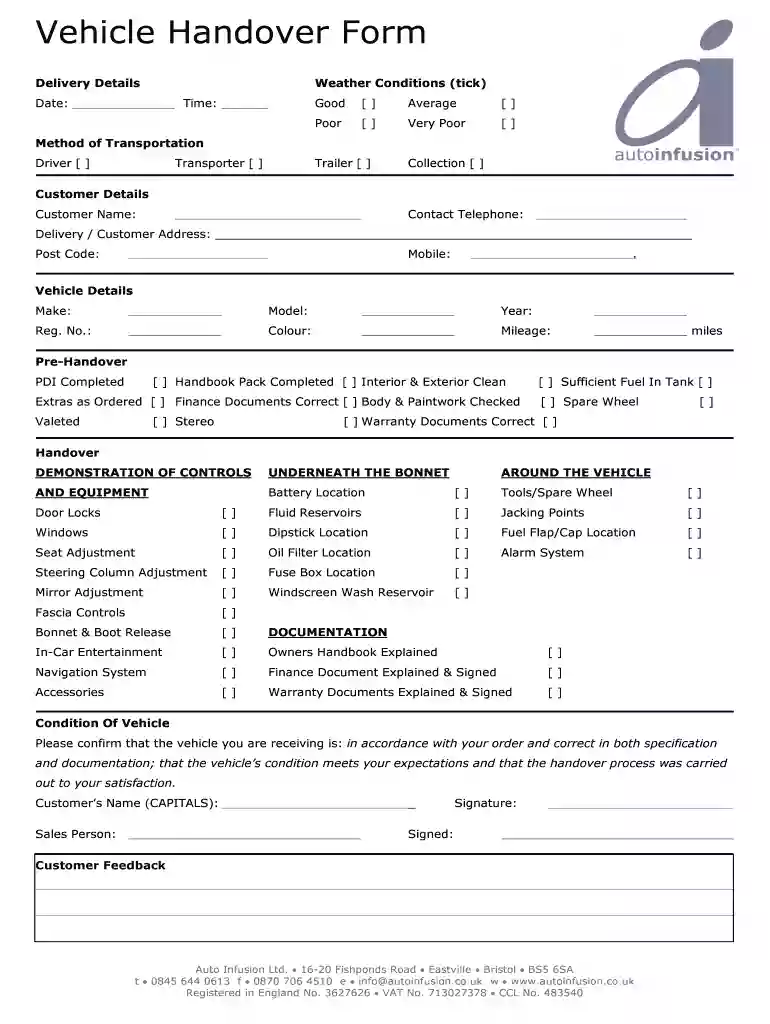
A Vehicle Handover Form is a crucial document utilized in the process of transferring vehicle ownership or possession from one party to another. This form serves to outline the specifics of the handover, including critical information that both the seller and buyer or employer and employee need to ensure a smooth transition. Typically, it will capture essential details like the vehicle's make, model, VIN, mileage at the time of transfer, and any conditions attached to the handover.
The essence of the form is to provide a written record that can prevent disputes or misunderstandings regarding the vehicle's condition and ownership status. Both parties sign the document, signifying their agreement on the terms of the handover, thus making it a legally binding agreement. This form is particularly important in business contexts, where vehicles are often handed over from employer to employee or when dealerships transfer vehicles to customers.
Key aspects of a Vehicle Handover Form include:
By detailing these elements, the Vehicle Handover Form facilitates clarity in the vehicle transfer process and ensures that both parties have a mutual understanding of their responsibilities.
Completing a Vehicle Handover Form requires careful attention to detail to ensure that all necessary information is accurately captured. Following a systematic approach can streamline the process. The steps to accomplish this are as follows:
Gather Necessary Information: Collect all required documents, including the vehicle's registration details and the previous owner's information. Ensure you have the VIN, make, model, year, and mileage readily available.
Fill in Party Details: Clearly write in the names, addresses, and contact information of both parties involved in the handover. This section solidifies the identities of the individuals involved in the transaction.
Document Vehicle Details: Enter the make, model, year, color, and VIN of the vehicle. It's crucial to verify these details against official documents to avoid discrepancies.
Assess the Vehicle Condition: Conduct a thorough inspection of the vehicle and note its condition in the form. Include any pre-existing damages or issues that might affect the vehicle's performance or value.
Review Additional Notes and Legal Requirements: Identify any additional documents that need processing, such as a bill of sale or any specific terms agreed upon between the parties, such as warranties or return policies.
Sign and Date the Form: Both the giver and the receiver should sign and date the form. This step formalizes the agreement and makes it legally binding.
Distribute Copies: Provide copies of the signed Vehicle Handover Form to both parties. It might also be prudent to keep a digital record for added security.
By following these steps, parties can ensure that the vehicle handover is conducted smoothly and all necessary legalities are adhered to, minimizing the risk of future disputes.
Utilizing a Vehicle Handover Form has significant legal implications that both parties should understand. Here are some essential legal considerations to keep in mind:
Legal Ownership Transfer: The Vehicle Handover Form serves as a declaration of transfer of ownership. Once signed, it indicates that the giver has relinquished all rights to the vehicle.
Conditional Terms: If there are specific conditions under which the vehicle is being transferred—such as warranties or usage agreements—these should be clearly outlined in the document to avoid confusion later.
Record Keeping: Maintaining a copy of the signed form is vital for legal and tax purposes. Should disputes arise, this document can serve as proof of ownership and condition at the time of transfer.
State Laws Compliance: Different states have varying laws governing vehicle transfers. Parties should be aware of and comply with these regulations, which might require additional documentation or notifications to state authorities.
Liability Issues: If the vehicle is not in the agreed-upon condition or there are undisclosed issues, liability for any damage or accidents that occur post-handover may fall upon the seller or lender unless explicitly stated otherwise in the agreement.
Disclosure Requirements: Depending on state laws, sellers may be obligated to disclose specific information about the vehicle, particularly related to safety, odometer readings, and any known defects.
Understanding these legal intricacies can help both parties navigate the complexities of vehicle ownership transfer effectively and ensure that their rights are protected.
A well-structured Vehicle Handover Form should encompass several key elements to facilitate an effective transfer of vehicle ownership. These elements combine to ensure clarity and legal compliance:
Parties' Information: Details of the buyer and seller are crucial. This should include full names, addresses, phone numbers, and if applicable, company names for corporate transactions.
Vehicle Identification: Comprehensive data such as the vehicle make, model, VIN, year of manufacture, and color should be included to avoid identification errors.
Odometer Readings: An accurate reading of the odometer is important for determining mileage, which can influence the vehicle's value and inform the new owner of its usage history.
Condition Report: A section detailing the current condition of the vehicle is critical. This includes descriptions of any damages, modifications, or repairs conducted prior to the handover.
Documentation Checklist: An area to account for all accompanying documents, such as registration papers, insurance documents, and maintenance records, ensures completeness of the transfer.
Terms of the Transfer: Conditions regarding warranties, payment methods, or other specifics should be outlined clearly to minimize misunderstandings.
Signature and Date Fields: Spaces for signatures from both parties, along with the date of the transfer, are essential to finalize the document legally.
These key elements provide a comprehensive framework that safeguards the interests of both parties involved in a vehicle handover transaction.
Using a Vehicle Handover Form can vary significantly based on different scenarios, illustrating its versatility in various contexts. Here are some examples:
Private Sale Between Individuals: A seller wishes to transfer ownership of their used car to a friend. The Vehicle Handover Form helps document the transaction, confirming the condition and details of the car, thus protecting both parties from potential disputes.
Company Vehicle Transfer: An employer is handing over a company vehicle to a newly hired employee. The Vehicle Handover Form includes specific terms regarding vehicle usage and maintenance responsibilities, ensuring the new employee understands their obligations.
Dealership Transactions: A car dealership uses standardized Vehicle Handover Forms when delivering newly purchased vehicles to customers. This form details the vehicle's specifications, warranty terms, and customer acknowledgments of the vehicle’s condition.
Rental Agency Usage: A car rental agency may also utilize a Vehicle Handover Form when a customer rents a vehicle. This form can highlight insured conditions and restrictions, ensuring customers understand their liabilities during the rental period.
Corporate Fleet Management: Businesses managing a fleet of vehicles may require their internal Vehicle Handover Forms to track who has which vehicle, maintenance schedules, and any conditions for vehicle transfers among staff members.
Each of these scenarios illustrates how a Vehicle Handover Form is an essential tool for documenting and validating the terms of a vehicle transfer. By doing so, it helps avoid potential conflicts and ensures a clear understanding between both parties involved.
At DocHub, your data security is our priority. We follow HIPAA, SOC2, GDPR, and other standards, so you can work on your documents with confidence.


