
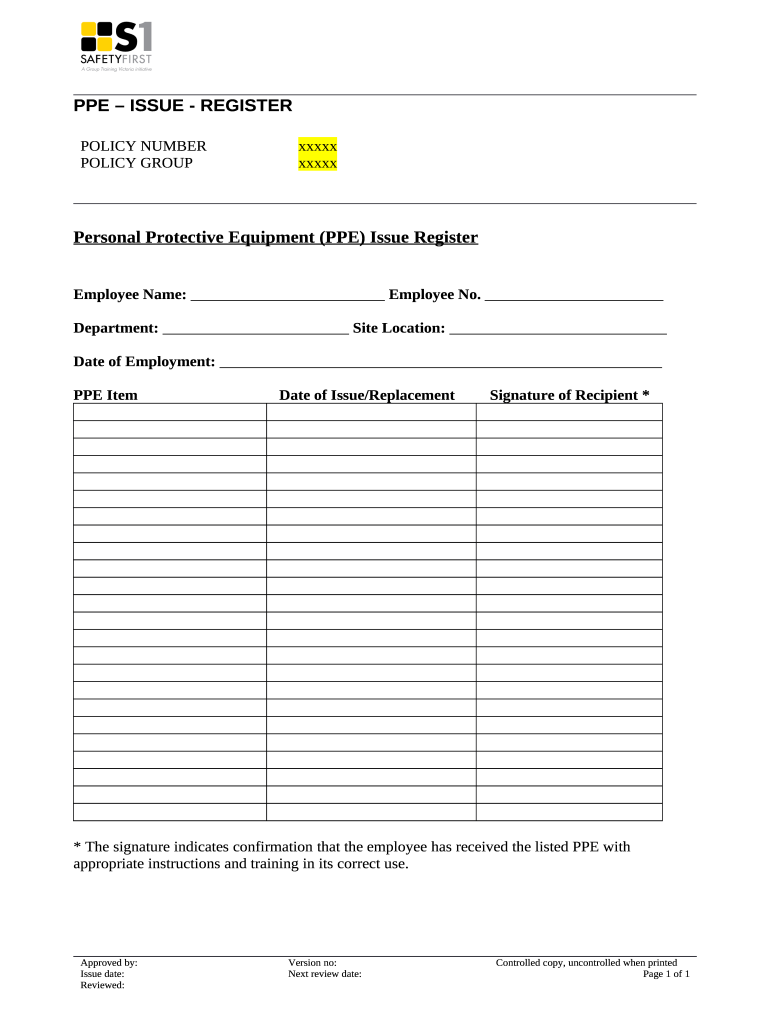







Definition and Meaning of the PPE Training Register
The Personal Protective Equipment (PPE) Training Register is a formal document utilized in various industries to track employee training concerning the use and handling of PPE. This register is essential for ensuring that workers are adequately informed about the types of safety equipment required for their specific roles, how to use the equipment correctly, and the protocols for maintaining and replacing PPE. Effective management of PPE requirements helps organizations comply with occupational safety regulations and promote a culture of safety in the workplace.
Key Functions of the PPE Training Register
-
Documentation of Training: The register serves as an official record that employees have received training on PPE. It indicates the dates of training sessions, the type of PPE taught, and the signatures of both trainers and employees as confirmation of completion.
-
Compliance with Regulations: Many industries, notably construction, manufacturing, and healthcare, are governed by regulations requiring employers to provide training on PPE. The register acts as evidence of compliance during safety audits and inspections.
-
Tracking PPE Issuance: In addition to training, the PPE training register often records the issuance of PPE items, ensuring that all employees have the necessary gear to perform their duties safely.
How to Use the PPE Training Register Effectively
The effectiveness of a PPE training register depends on how it is utilized within an organization. Here's a comprehensive guide to maximizing its utility:
Setting Up the Register
-
Choose a Format: The PPE training register can be implemented as a digital document or a paper form. Digital formats can streamline data entry and reporting, while paper forms may be easier for some organizations to manage.
-
Include Essential Fields: Create specific fields for employee names, job titles, types of PPE, training dates, trainer details, signatures, and notes on any certifications.
Maintaining the Register
-
Update Regularly: Ensure that the register is updated immediately after any training session. New employees should be added promptly, and records of PPE types should reflect any changes in company policy or equipment.
-
Conduct Regular Reviews: Regularly review the register to identify gaps in training or compliance. This can aid in scheduling follow-up trainings and ensuring that all employees remain informed of best practices regarding PPE use.
Steps to Complete the PPE Training Register
Completing the PPE training register involves a series of structured steps that should be followed to ensure accuracy and compliance:
-
Identify Employees Needing Training: Assess which employees require PPE training based on their job functions and potential exposure to hazards.
-
Organize Training Sessions: Schedule training sessions with qualified trainers who can provide comprehensive instruction on PPE usage.
-
Conduct Training: During the training, cover all necessary topics, including the importance of PPE, proper usage, maintenance, and limitations of the equipment.
-
Document Completion: After training, have both the trainer and the employee sign the register, confirming the completion of the training and the date it occurred.
-
Store the Register Securely: Maintain secure storage for the PPE training register to ensure easy access during safety audits or regulatory inspections.
Importance of the PPE Training Register
The PPE training register is crucial for various reasons:
-
Enhanced Workplace Safety: By documenting training, employers reinforce the importance of PPE, thereby reducing the likelihood of accidents and injuries.
-
Legal Protection: A well-maintained register can protect employers from legal ramifications in the event of a workplace injury, demonstrating compliance with safety regulations.
-
Improved Culture of Safety: The presence of a training register signals to employees that safety is a priority, fostering an environment where everyone feels responsible for their safety and that of their coworkers.
Key Elements of the PPE Training Register
When creating a PPE training register, it is important to include specific key elements that enhance its functionality:
-
Employee Information: Capture comprehensive details about each employee, including name, job title, department, and contact number.
-
PPE Details: List the types of PPE covered in the training, such as helmets, gloves, visors, respiratory equipment, etc.
-
Training Date and Duration: Document the dates on which training occurred, along with the duration of each session to track compliance with ongoing training requirements.
-
Trainer Credentials: Include information regarding the qualifications of the trainer to assure that the training is being conducted by someone with the appropriate expertise.
-
Follow-Up Training: Note any required periodic retraining sessions to maintain up-to-date knowledge regarding PPE and any changes in regulations or equipment.
Examples of Using the PPE Training Register
The PPE training register can be employed in various contexts to ensure effective training and compliance. Here are some practical scenarios:
-
Construction Sites: On a construction site, workers can be required to attend training sessions before starting a project. The training register will log attendance and be reviewed by safety officers during site audits.
-
Manufacturing Plants: In a chemical manufacturing environment, workers may receive specialized training on handling hazardous materials and the associated PPE. The training register ensures that all personnel are informed and prepared.
-
Healthcare Settings: Healthcare workers need ongoing training on PPE due to the evolving nature of infectious diseases. The register helps in tracking completions of sessions on new protocols around PPE, particularly during a health crisis.
Using the PPE training register in these examples not only facilitates compliance but reinforces safety as a core value within the organization.




