





Definition and Meaning of eClinicalWorks Flowsheets
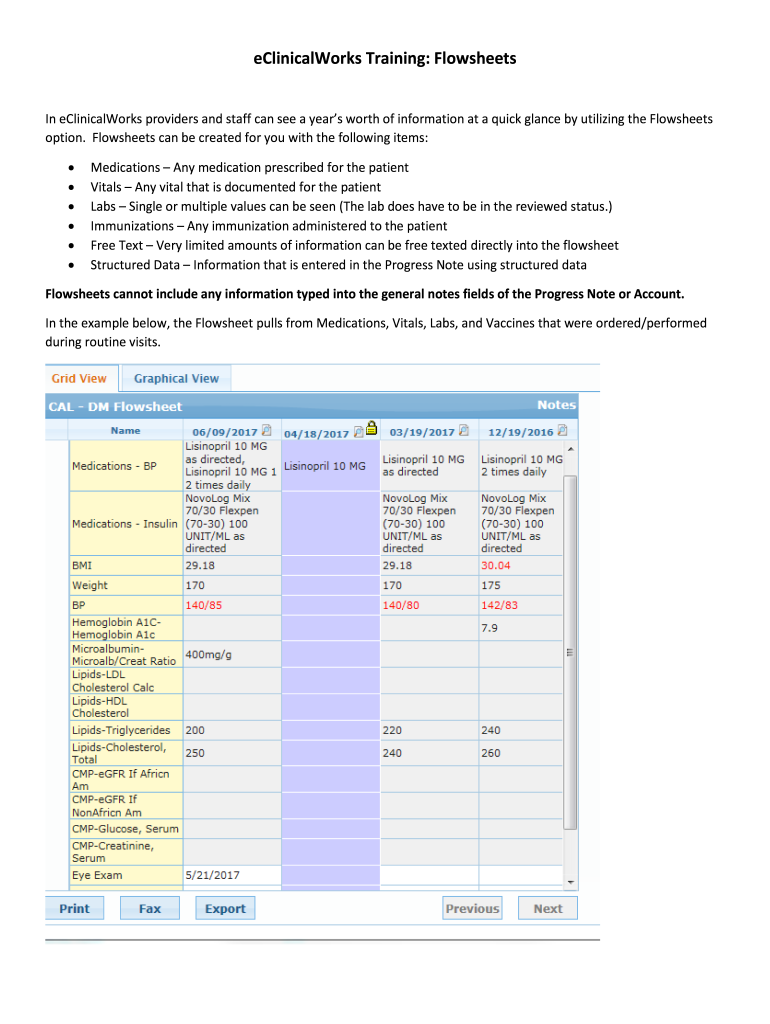
eClinicalWorks Flowsheets are an essential feature within the eClinicalWorks electronic health record (EHR) system, primarily designed to streamline patient data management. Flowsheets function as comprehensive graphical representations of patient data over time, enabling healthcare providers to view and monitor a year's worth of critical patient information at a glance.
- Purpose: The primary goal of flowsheets is to enhance patient care quality by providing a visual summary of relevant clinical information, such as medications, vital signs, lab results, and immunizations. This consolidated view simplifies tracking vital trends and patterns in individual patient health.
- Data Types: Commonly included data types in flowsheets encompass:
- Medications prescribed to the patient
- Vital signs recorded during visits
- Laboratory test results
- Immunization records
- Any additional free text or structured data relevant to patient care
How to Use eClinicalWorks Flowsheets
Using eClinicalWorks Flowsheets effectively requires knowledge of navigating the Patient Dashboard and understanding how to customize flowsheet views for individual patient needs. By integrating flowsheet data into daily practice, healthcare providers can enhance their clinical decision-making processes.
-
Accessing Flowsheets:
- Log in to the eClinicalWorks system.
- Navigate to the Patient Dashboard for a specific patient’s record.
- Locate the Flowsheets section to view available data.
-
Customizing Views:
- Select relevant modules to display specific data, such as lab results or vitals.
- Adjust timeframes to focus on particular periods, enhancing the granularity of the data presented.
-
Advanced Features:
- Utilize color coding for quick visual feedback on patient progress.
- Input new data points directly into the flowsheet during patient visits for real-time updates.
Examples of Practical Applications
- Monitoring Chronic Conditions: A practitioner can review trends in a diabetic patient’s blood glucose levels over the last year, enabling targeted interventions based on observable patterns.
- Vaccination Compliance: Flowsheets can provide an organized overview of immunizations administered, ensuring that all required vaccines are up-to-date for each patient.
Key Elements of the eClinicalWorks Flowsheets
Understanding the key elements of eClinicalWorks Flowsheets can help staff maximize the benefits of using this tool in a clinical setting. The effectiveness of flowsheets relies on several core components.
- Data Entry: Accurate and timely data entry is crucial. Providers must ensure that all relevant data is included in the flowsheet to maintain comprehensive records.
- User-Friendly Interface: The interface allows for straightforward navigation and quick access to various data types, enhancing the user experience.
- Integration: Flowsheets are integrated with other parts of the eClinicalWorks EHR system, allowing for seamless updates and retrieval of patient information.
Important Considerations
- Training and Familiarity: Professionals should receive appropriate training to fully leverage the functionalities of flowsheets in eClinicalWorks.
- Data Accuracy: Maintaining the integrity of the data is vital for effective patient monitoring and decision-making.
Steps to Complete the eClinicalWorks Flowsheets
Completing the eClinicalWorks Flowsheets requires the integration of various patient data inputs and understanding how to generate the flowsheet effectively. Here are the primary steps involved:
- Initiate Patient Display: Select the patient from the dashboard.
- Access Flowsheet Module: Click on the Flowsheets tab to open the relevant interface.
- Choose Data Types: Identify which data points (e.g., vitals, medications) you wish to include and add them to the flowsheet.
- Input New Data: Enter any new patient information directly in the flowsheet during consultations.
- Review and Save: After entering the necessary data, review for accuracy before saving the updated flowsheet.
Detailed Breakdown of Steps
- Documenting Vitals: Ensure to record vital signs like blood pressure and heart rate correctly as they directly impact patient assessment.
- Adding Lab Results: When incorporating lab results, ensure that the most recent tests are reflected accurately in the flowsheet.
Who Typically Uses eClinicalWorks Flowsheets?
The primary users of eClinicalWorks Flowsheets include a variety of professionals within healthcare settings, all of whom leverage this tool to enhance patient care and streamline record-keeping.
- Healthcare Providers: Physicians, physician assistants, and nurses primarily use flowsheets to track patient history and current health metrics effectively.
- Care Coordinators: These professionals utilize flowsheets to monitor patient compliance and follow up on care plans, ensuring all needed interventions are addressed.
- Administrative Staff: Administrative personnel may also refer to flowsheets during patient intake processes to ensure database accuracy.
User Scenarios
- Primary Care Providers: Could use flowsheets to review a patient’s overall health status during routine checkups.
- Specialists: For instance, endocrinologists may utilize them for analyzing the long-term effects of diabetes management on patients.
Important Terms Related to eClinicalWorks Flowsheets
Recognizing essential terminology associated with eClinicalWorks Flowsheets promotes a better understanding of how to navigate and utilize the system effectively.
- EHR (Electronic Health Record): The comprehensive digital record of a patient’s health information.
- CHARTS (Clinical Health Record Tools): A feature within eClinicalWorks that includes flowsheets for data visualization.
- Patient Dashboard: The primary interface where providers access a patient's complete health record, including flowsheets.
- Data Integration: Refers to the seamless connection between flowsheets and overall patient records in eClinicalWorks.
Glossary of Relevant Terms
- Data Entry: The act of inputting patient data into the system, essential for maintaining accurate records.
- Monitoring: The process of observing patient health trends through data displayed in flowsheets to inform clinical decisions.