




01. Edit your traditional wedding vows online
Type text, add images, blackout confidential details, add comments, highlights and more.

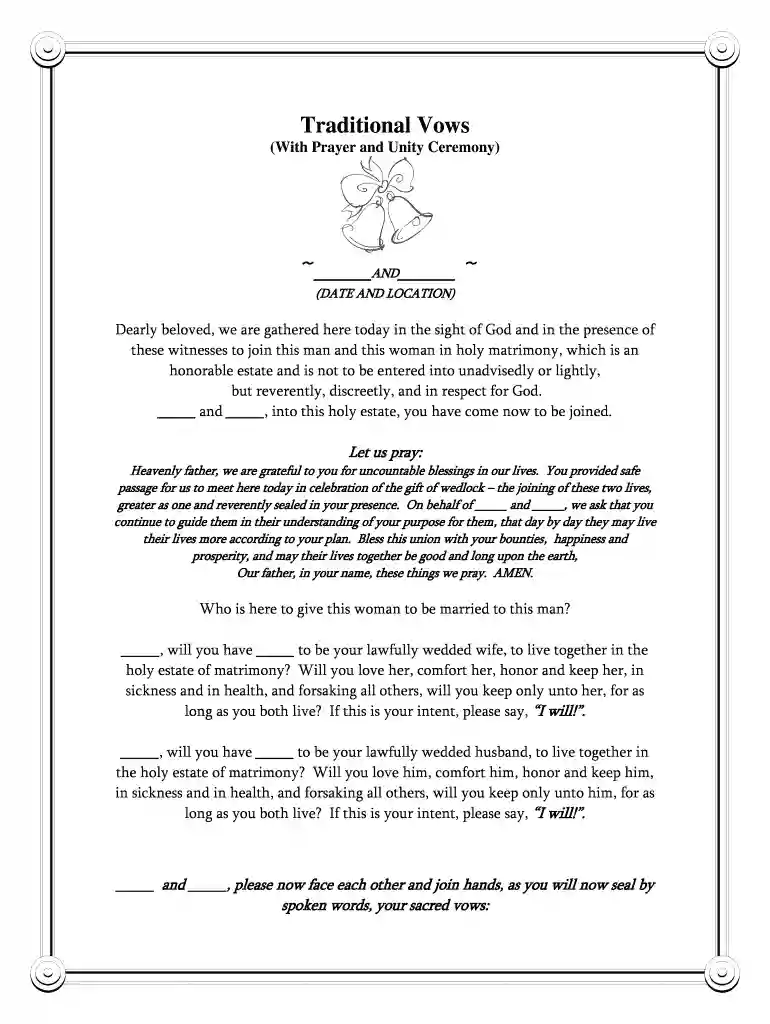
Type text, add images, blackout confidential details, add comments, highlights and more.

Draw your signature, type it, upload its image, or use your mobile device as a signature pad.

Send wedding vows traditional via email, link, or fax. You can also download it, export it or print it out.
Traditional vows are formal promises exchanged during a wedding ceremony, embodying the commitment between two partners. They serve as a declaration of love, fidelity, and shared goals for the future. These vows often draw from historical and cultural practices, reflecting the values and beliefs of the couple and their families. In many instances, traditional wedding vows may include references to faith, devotion, and partnership, highlighting the sacredness of the marital bond.
The significance of traditional vows extends beyond the mere words spoken; they represent a deeply personal commitment that shapes the couple's relationship. The content of these vows can vary based on religious or cultural backgrounds. For example, traditional baptist wedding vows typically include specific biblical references and emphasize the sanctity of marriage. In contrast, classic wedding vows might focus on love, support, and mutual respect.
Understanding the meaning behind traditional vows is essential, as it helps couples personalize their commitments while respecting the customs that shape their union.
The structure of traditional vows typically incorporates several key elements, which may vary based on specific religious or cultural practices. Commonly, these elements include:
Different cultures and religions have unique interpretations of these elements, which may include:
Exploring these variations allows couples to align their vows with personal beliefs and traditions, enhancing the meaning and depth of their ceremony.
Incorporating traditional vows into a wedding ceremony involves several thoughtful steps. Couples often select vows that resonate with their values and beliefs, ensuring that the language reflects their unique love story. Here are practical ways to utilize these vows effectively:
By carefully planning the integration of traditional vows, couples can foster a memorable and heartfelt moment during their wedding ceremony.
Traditional wedding vows come in various formats. Here are some commonly used examples across different contexts:
“I, [Name], take you, [Name], to be my wedded spouse, to have and to hold from this day forward, for better or worse, for richer or poorer, in sickness and in health, to love and to cherish, until we are parted by death.”
“Before God and these witnesses, I take you, [Name], to be my wedded partner. I promise to love and cherish you, to honor and support you, in good times and bad, as long as we both shall live.”
These examples illustrate how traditional vows encapsulate essential promises of love, fidelity, and partnership while allowing couples to express their unique sentiments.
Understanding the terminology associated with traditional vows can aid couples in navigating their wedding planning. Key terms include:
Being familiar with these terms can facilitate smoother interactions with wedding professionals and enhance the overall process of planning a traditional wedding.
When planning a wedding involving traditional vows, it is crucial to be aware of state-specific regulations that may affect the ceremony. Each state in the U.S. has unique legal requirements pertaining to marriage, including:
Engaging with local authorities or wedding planners can ensure couples navigate these requirements effectively, enabling a seamless wedding experience.
We've got more versions of the traditional wedding vows form. Select the right traditional wedding vows version from the list and start editing it straight away!
| Versions | Form popularity | Fillable & printable |
|---|---|---|
| 2008 | 4.3 Satisfied (31 Votes) |
At DocHub, your data security is our priority. We follow HIPAA, SOC2, GDPR, and other standards, so you can work on your documents with confidence.
Nov 3, 2024 Stivs Wedding Vows contain hopes and dreams.
by DG Van Slyke 2010 Wedding Rites: A Complete Guide to Traditional Vows, Music, Ceremonies,. Blessings, and Interfaith Services proceeds to present texts and ceremonies with whichRead more
We are gathered here in the presence of this witness (these witnesses) to join. (full name) and. (full name) together in matrimony. The contract of marriageRead more


