
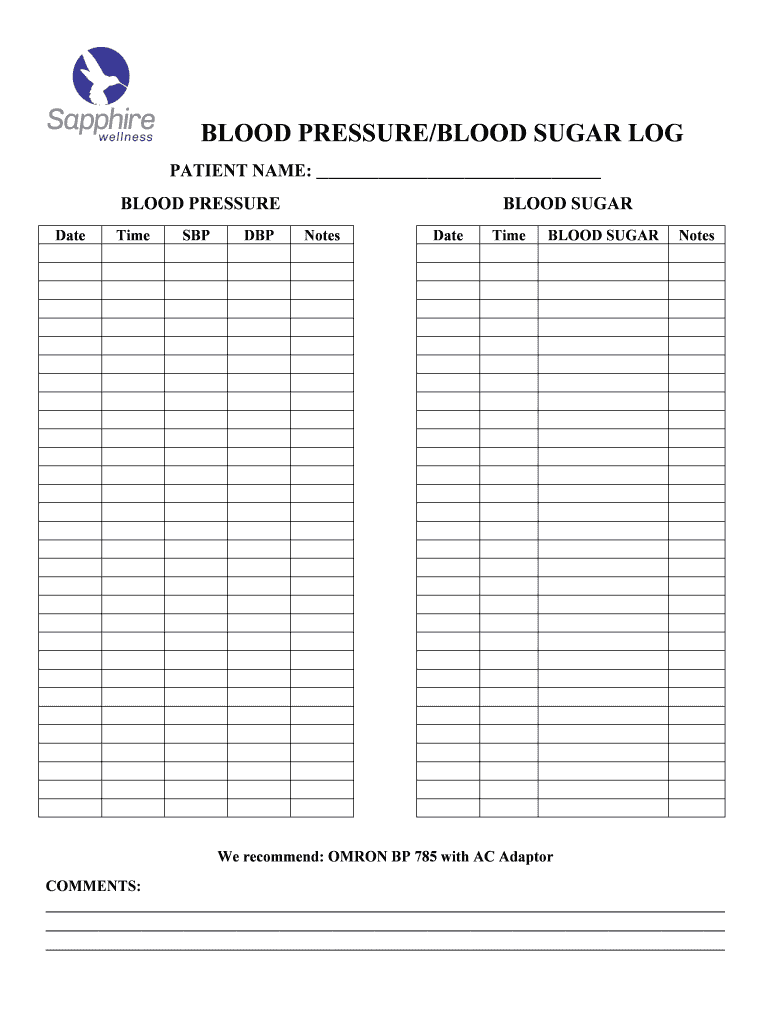







Definition and Purpose of the Blood Pressure and Blood Sugar Log
A Blood Pressure and Blood Sugar Log serves as a crucial tool for individuals monitoring their health metrics. This log allows users to record vital health indicators including systolic and diastolic blood pressure readings, as well as blood sugar levels throughout the day. It typically includes several categories for data input:
- Patient Information: Name, age, and any specific medical conditions that may affect readings.
- Date and Time: Recording these details is essential for analyzing changes over time.
- Readings: Specific spaces for both blood pressure (systolic/diastolic) and blood sugar levels (mg/dL).
- Notes: Users can record meals, medications, or physical activities that could influence their metrics.
By keeping accurate logs, users can share their information with healthcare providers, aiding in diagnosis and treatment planning.
How to Utilize the Blood Pressure and Blood Sugar Log Effectively
Using a Blood Pressure and Blood Sugar Log is straightforward but requires consistency for effective monitoring.
- Select a Template: Users can choose between a physical log or a digital version, depending on preference. Free printable blood pressure and blood sugar log sheets are widely available in PDF and Excel formats.
- Establish a Routine: It's beneficial to measure blood pressure and blood sugar at the same times daily, such as before meals and before bed.
- Record Readings: Ensure that each value is entered accurately. For blood pressure, record both numbers (systolic over diastolic).
- Add Context: Utilize the notes section to provide context. This may include any changes in routine, illness, or dietary adjustments.
- Review Regularly: Set aside time weekly or monthly to review the log. Look for trends that may indicate health changes, such as consistently high readings.
Regular use of the log fosters improved health monitoring and can illuminate patterns that might be significant for treatments.
Steps to Complete the Blood Pressure and Blood Sugar Log
Completing a Blood Pressure and Blood Sugar Log requires careful attention to detail to ensure accuracy and consistency. Users should follow these steps:
- Gather Supplies: Obtain a reliable blood pressure monitor and a glucose meter. Ensure you also have your log sheet ready.
- Prepare for Measurement: Rest for at least five minutes before taking readings. Sit comfortably with your arm supported at heart level for blood pressure readings.
- Take Measurements:
- Blood Pressure: Follow the manufacturer's instructions for your monitor. Take readings as often as your healthcare provider recommends.
- Blood Sugar: Use the glucose meter according to the manufacturer’s guidelines, often before and after meals.
- Record Data: Immediately log the recorded figures in the relevant sections of your log sheet while ensuring clarity.
- Review and Reflect: At regular intervals, review your log entries alongside advice from your healthcare provider. This aids in making necessary adjustments to your health plan.
These steps are crucial for maintaining accurate health records that can inform medical decisions.
Importance of Maintaining a Blood Pressure and Blood Sugar Log
Keeping a Blood Pressure and Blood Sugar Log is vital for several reasons:
- Health Monitoring: Regular tracking of these metrics helps in identifying trends that may indicate the need for lifestyle changes or medical intervention.
- Diabetes Management: For diabetic patients, monitoring blood sugar levels can prevent complications and guide treatment decisions.
- Preventative Care: Early detection of hypertension or abnormal blood glucose levels can lead to proactive management, reducing the risk of severe health issues.
- Communication with Health Providers: Sharing your log with healthcare professionals provides them with valuable insights into your health status, enabling better care plans.
- Motivation and Accountability: Tracking provides a visual representation of health progress, which can motivate individuals to adhere to recommended lifestyle changes or treatment plans.
Engaging with a log can transform health management from a reactive to a proactive approach.
Key Elements of the Blood Pressure and Blood Sugar Log
A well-designed Blood Pressure and Blood Sugar Log should contain essential components to ensure thorough documentation:
- Date and Time: Crucial for identifying the timing of readings, which can vary with meals or activities.
- Blood Pressure Readings: Include two values—systolic (the top number) and diastolic (the bottom number).
- Blood Sugar Levels: Typically measured in milligrams per deciliter (mg/dL) before and after meals.
- Notes Section: Space for personal observations, including symptoms experienced, medication taken, or significant lifestyle changes.
- Signature/Initials: Some logs also include a section where users can sign or initial for accountability, especially in electronic formats.
These elements help ensure that the log is comprehensive and can be effectively used for health optimization over time.




