
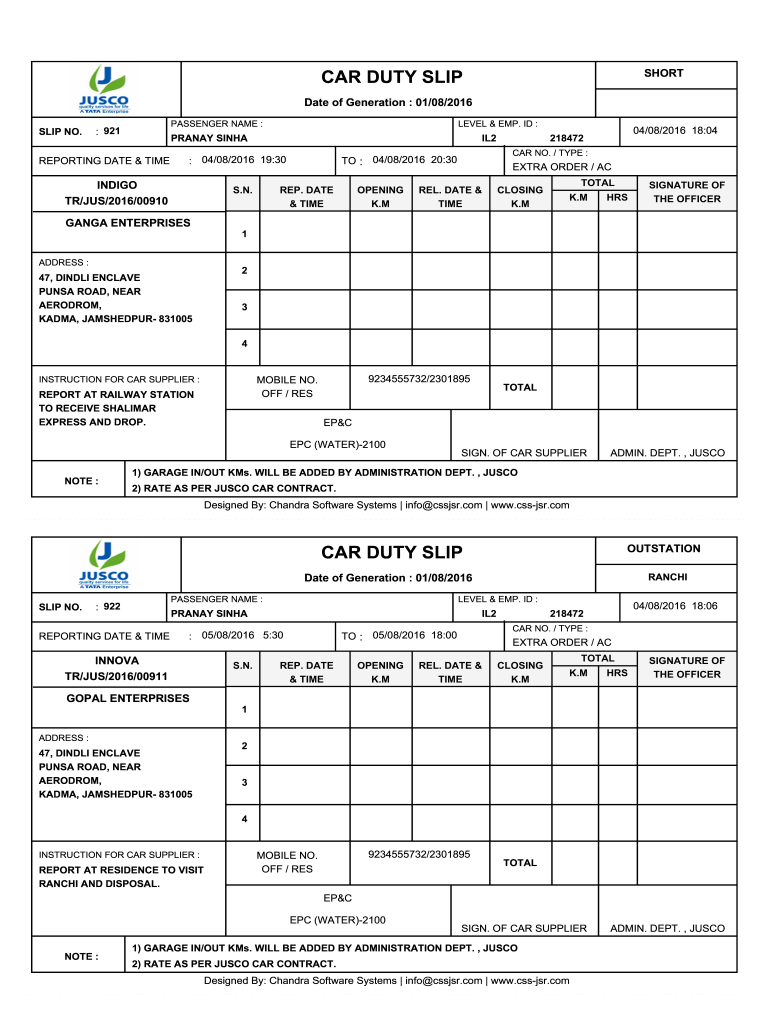







Definition and Meaning of the Taxi Duty Slip Format
A taxi duty slip format is a structured document used by taxi services to track vehicle usage, record details about passenger trips, and maintain an organized system of transportation records. It includes critical information such as passenger names, contact details, destination, fare information, and specific instructions for drivers or dispatchers. Understanding this format is essential for both taxi operators and drivers to comply with service requirements and regulatory mandates.
Importance of the Taxi Duty Slip Format
- Record Keeping: It helps taxi companies maintain accurate records of each journey, which aids in both operational efficiency and accountability.
- Billing and Payment: By outlining the fare and any additional charges, the duty slip assists in clear billing processes, ensuring that passengers can verify costs.
- Compliance: Many municipalities require taxis to maintain specific documentation, making a well-structured duty slip format crucial for legal compliance.
Key Elements of the Taxi Duty Slip Format
The taxi duty slip format comprises several essential elements that ensure comprehensive tracking of each trip. Key components typically include:
- Passenger Information: Name, contact number, and sometimes email for communication.
- Driver Details: Name and identification number of the driver assigned to the trip.
- Trip Details:
- Pickup Location: Specific addresses or landmarks where passengers are to be picked up.
- Drop-off Location: Destination details to finalize the trip.
- Departure and Arrival Times: Documenting when a journey starts and concludes.
- Fare Structure: Clearly outlines the base fare, distance traveled, and any additional surcharges (like tolls or night charges).
- Vehicle Information: Including the vehicle identification number (VIN) and license plate number for identification and accountability.
Steps to Complete the Taxi Duty Slip Format
Completing the taxi duty slip involves a systematic approach to ensure all necessary information is accurately captured. Follow these steps:
- Gather Required Information: Collect details about the passenger, the driver, and the trip.
- Fill Out Passenger Information:
- Input the passenger's full name and contact details.
- Document Driver and Vehicle Information:
- Enter the driver’s name and ID number and record vehicle specifics, including license plate and VIN.
- Specify Trip Details:
- Write down the pickup and drop-off locations, including any special instructions for the driver.
- Log the start and end times of the trip.
- Calculate and Record Fare:
- Detail the fare structure, including the base fare, any additional charges, and the total fare due.
- Sign Off: Ensure both the driver and the passenger sign to acknowledge the details are correct.
How to Obtain the Taxi Duty Slip Format
Obtaining the taxi duty slip format can be done in various ways, depending on whether you prefer digital or printed versions:
- Downloadable Templates: Many taxi service management software platforms provide downloadable templates in formats like PDF or Word. These templates often come pre-filled with standard fields.
- Creating Custom Templates: If a customized approach is needed, taxi services can develop their formats tailored to their operational requirements using document creation tools.
- Consulting Industry Associations: Many taxi industry associations offer standardized formats for member companies, ensuring compliance with local regulations.
- Software Integration: Utilizing taxi management software can streamline the creation of duty slips, with automated data inputs reducing the likelihood of errors.
Legal Use of the Taxi Duty Slip Format
The legal use of the taxi duty slip format is paramount for both taxi providers and passengers. Adhering to established templates ensures that all parties have clear expectations and outlines rights regarding service provision. Key legal aspects include:
- Regulatory Compliance: Many states and municipalities require specific documentation for taxi operations, making adherence to a defined slip format essential for legal compliance.
- Evidence in Disputes: In cases of fare disputes or service challenges, having a properly completed duty slip serves as a critical piece of evidence to resolve issues.
- Tax Compliance: Accurate documentation of fares and trips helps taxi operators comply with tax regulations, ensuring that income is reported correctly.
Examples of Using the Taxi Duty Slip Format
Practical scenarios illustrate the importance of properly utilizing the taxi duty slip format:
- Routine Maintenance Records: A taxi company uses the duty slip format to log routine checks and repairs, maintaining a comprehensive history for each vehicle that supports both compliance and operational efficiency.
- Passenger Surveys: After completing a trip, drivers may ask passengers to provide feedback directly on the duty slip, capturing essential customer service insights alongside operational data.
- Dispute Resolution: A passenger disputes a fare. The duty slip records the trip's details, allowing both the taxi company and the passenger to clarify any misunderstandings and resolve the issue amicably.
These examples underscore the multi-faceted role of the taxi duty slip in daily operations, compliance, and customer relations in the taxi industry.




