
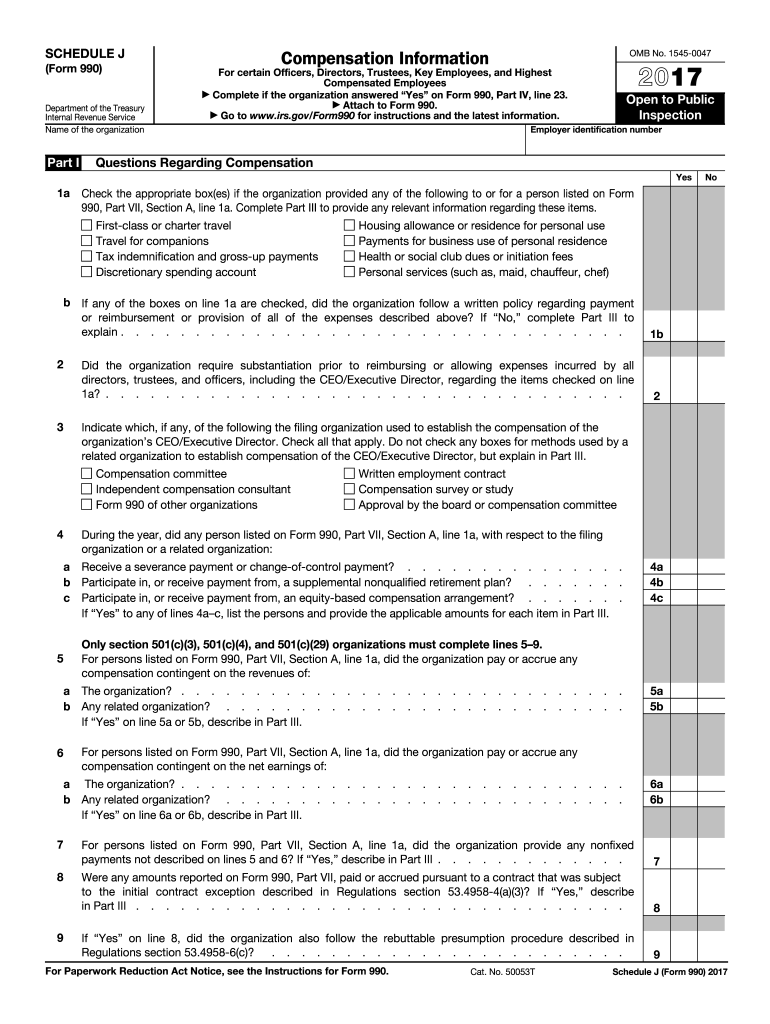







Definition and Purpose of the 2017 Schedule J Form
The 2017 Schedule J Form is an integral part of Form 990, used by tax-exempt organizations to disclose compensation details of their top officials. This document ensures transparency and compliance with IRS regulations concerning the organization's officers, directors, trustees, key employees, and the highest compensated individuals. Its primary purpose is to reveal financial compensations, potential conflicts of interest, and adherence to written policies that govern these payments. Organizations benefit from completing this form accurately, as it reflects transparency in their financial practices and compensation strategies.
How to Obtain the 2017 Schedule J Form
To access the 2017 Schedule J Form, visit the IRS official website, where it is available as a downloadable PDF. You can also obtain a copy through authorized tax-preparation software providers, which may integrate this form as part of their suite for tax-exempt organizations. These platforms often include helpful tools for importing necessary data and automatically updating the form to ensure compliance with current guidelines. Alternatively, you can request a physical copy directly from the IRS by calling their forms order number or visiting a local IRS field office for assistance.
Steps to Complete the 2017 Schedule J Form
-
Identify the Organization's Top Officials: Collect information about individuals occupying pivotal roles such as officers, directors, trustees, and key employees.
-
List Compensations and Benefits: Provide detailed data regarding salaries, bonuses, and fringe benefits for each individual. Incorporate values for non-cash benefits to offer a comprehensive view of compensations.
-
Answer Questionnaire: Complete the questions related to compensation policies and practices, including governance measures and substantiation processes for benefits provided.
-
Verify Information: Ensure all data entered aligns accurately with the organization's internal records and IRS requirements. Cross-check for completeness and accuracy of the reported figures.
-
Review and Sign: After thorough review, the form should be signed by an authorized officer, evidencing the accuracy of the information.
-
Attach to Form 990: Once completed, Schedule J should be filed alongside Form 990 when submitted to the IRS, either electronically or via mail, depending on filing preferences.
Key Elements of the 2017 Schedule J Form
- Compensation Details: Specifics on salary structures, including bonuses and deferred compensation, must be clearly documented for each official listed.
- Non-Cash Benefits: Report any additional benefits such as housing allowances, club memberships, and personal services.
- Written Policy Requirement: Evaluate whether the organization maintains a documented policy on compensations and benefits.
- Performance-Based Pay Systems: Information on whether compensation is linked to organizational performance metrics should be included.
- Governance Disclosure: Details on how compensation decisions are made, often requiring documentation of board approvals or third-party compensation studies.
IRS Guidelines for the 2017 Schedule J Form
The IRS mandates specific criteria for the completion of Schedule J, emphasizing transparency in compensations reported. Organizations must follow detailed guidelines, specifying how data should be structured and the importance of accurate figure documentation. The IRS outlines frequent mistakes organizations make, ensuring correct interpretations of what constitutes compensation and benefits. Following these guidelines not only ensures compliance but also helps prevent audits or penalties due to inconsistencies or omissions in reported data.
Deadlines and Important Dates
The deadline for filing the 2017 Schedule J Form coincides with the filing date of the organization's Form 990. Typically, this is the 15th day of the 5th month after the end of the organization's fiscal year. Organizations should plan ahead to gather necessary data well in advance of this deadline. If an extension is required, it coincides with an extension for filing Form 990 and should be requested promptly to avoid penalties.
Legal Usage and Compliance
Using the 2017 Schedule J Form legally entails disclosing all required compensation and benefits information in accordance with the IRS's transparency expectations. Organizations that fail to comply with these requirements may face penalties or sanctions, resulting in revoked tax-exempt status. Legal compliance also includes adhering to established compensatory policies stated within governance practices and documenting any deviations or special arrangements that might affect disclosure or reporting obligations.
Filing Variations and Submission Methods
The 2017 Schedule J Form, like Form 990, can be submitted electronically or via traditional mail. Many organizations prefer electronic filing due to its efficiency and reduced likelihood of errors. Authorized e-file providers often facilitate the submission, ensuring your data meets the IRS's formatting standards. For those who choose to file by mail, scrutinizing all entries for accuracy before sending the form to the IRS is essential to avoid processing delays.
Penalties for Non-Compliance
Failure to complete or inaccurately filing the 2017 Schedule J Form can result in substantial penalties. The IRS imposes fines for late submissions, inaccuracies, or failing to include necessary details. Organizations may be subject to fines per day for as long as the information remains unresolved or incorrectly reported. This highlights the importance of meticulous documentation and timely submission to avoid these financial and operational repercussions.




