
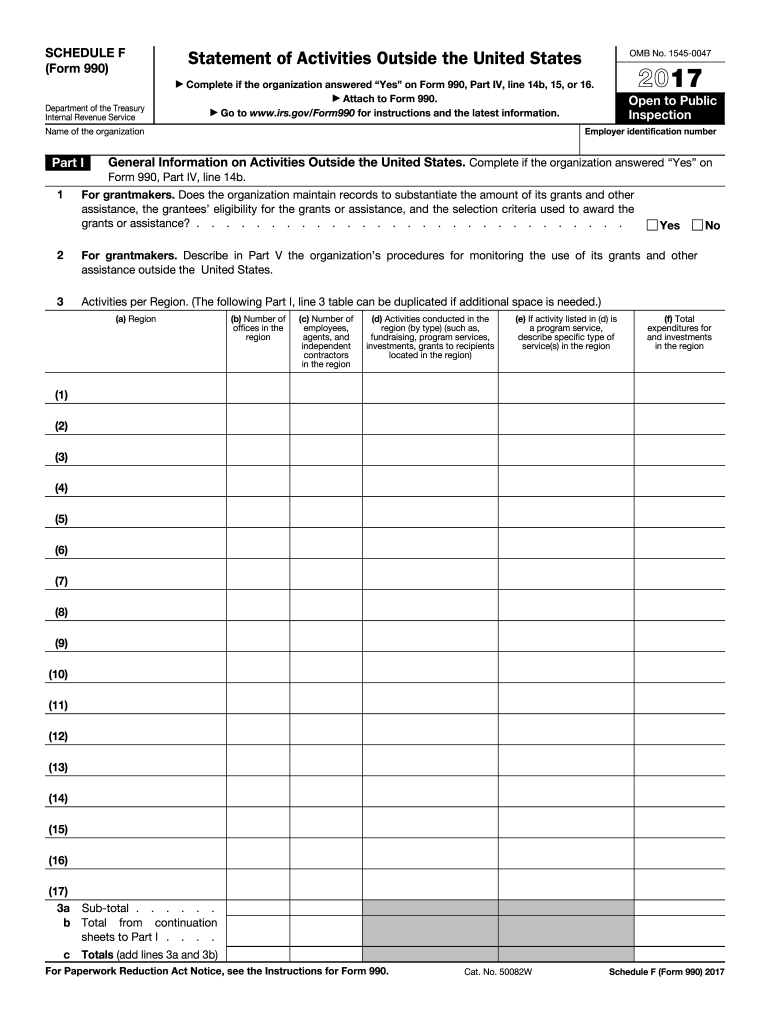







Definition and Purpose of the IRS Schedule F 2017 Form
The IRS Schedule F 2017 form is an essential component of the Form 1040 series used by farmers to report their income and expenses from farming activities. This form is crucial for taxpayers engaged in farming to accurately document their financial activity and attribute necessary deductions. By offering detailed records of farm income and expenses, the form assists in determining the taxable income specific to farm operations. The Schedule F thus provides transparency and accountability in reporting farm-related financial transactions to the IRS.
How to Use the IRS Schedule F 2017 Form
Initiating the Process
Start by collecting all your financial records related to your farming operation for the year. This includes income from selling products and expenses incurred in the process. Proper documentation is imperative to ensure that all entries in Schedule F are accurate and comply with IRS regulations.
Completing Part I and II
- Part I: Farm Income or (Loss) – This section requires you to list all the income received from the farming business. This includes sales of livestock, produce, grains, and other products.
- Part II: Farm Expenses – Record every deductible expense related to farm operations such as supplies, feed, seeds, and labor costs. Carefully note each category as it will affect your overall taxable income from farming.
Steps to Complete the IRS Schedule F 2017 Form
- Gather Financial Information: Collect all records of income and expenses related to farm operations throughout the tax year.
- Report Income: Enter details of all income sources under Part I, ensuring accurate figures for gross income calculations.
- List Expenses: Itemize all qualifying expenses in Part II, providing detailed descriptions and amounts to support each entry.
- Calculate Total Profit or Loss: Subtract total expenses from total income to determine your net profit or loss.
- Transfer Information: Once completed, integrate the results of Schedule F into your overall Form 1040 submission.
Who Typically Uses the IRS Schedule F 2017 Form


Primary Users
- Individual Farmers: Small-scale and family-based farmers regularly use this form to report their financial activities.
- Agricultural Operations: Larger agricultural businesses, including corporate farms, utilize Schedule F to document their comprehensive operational finances.
Specific Scenarios
- Part-Time Farmers: Individuals engaged in farming as a secondary income source also complete this form.
- Essential Partnerships: When partnerships specifically focus on agricultural production, each partner must comprehend and include pertinent data in their returns.
Key Elements of the IRS Schedule F 2017 Form
Income Categories
- Sales of Livestock: Includes cattle, hogs, and other animals raised primarily for sale.
- Product Revenue: Earnings from crops, dairy, or other farm products sold.
Expense Deductions
- Operating Costs: Detailed area for operational expenditures like vehicle costs, utilities, and repairs.
- Labor Expenses: Entries for wages paid to farm laborers and hired help.
IRS Guidelines and Compliance
Understanding IRS guidelines is crucial when filling out the Schedule F form. The IRS provides specific instructions for completing each line of the form. Following these guidelines meticulously can prevent errors and potential audits. Noncompliance or inaccuracies can lead to penalties, additional scrutiny, or corrective measures by the IRS.
Filing Deadlines and Important Dates
The Schedule F form must be completed and submitted as part of your annual tax return, typically due on April 15. However, if you require an extension, it is essential to apply promptly to avoid penalties. Keeping track of these deadlines ensures timely filing and compliance with tax obligations.
Form Submission Methods: Online vs. Mail
- Electronic Submission: Utilizing online platforms like DocHub or IRS-enabled e-filing services assures quicker processing with reduced error rates.
- Physical Mailing: Alternatively, completing a paper version and mailing it directly to IRS addresses remains a valid option for those who prefer traditional methods.
By understanding the nuances of filing the IRS Schedule F 2017 form, taxpayers in the agricultural sector can ensure they meet all financial reporting obligations accurately and efficiently, thereby maintaining compliance and avoiding potential penalties.




