



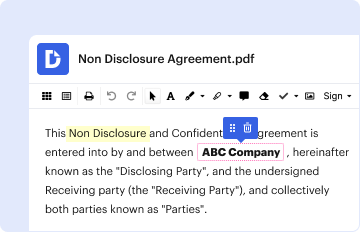
01. Edit your 2015 form 1120 online
Type text, add images, blackout confidential details, add comments, highlights and more.

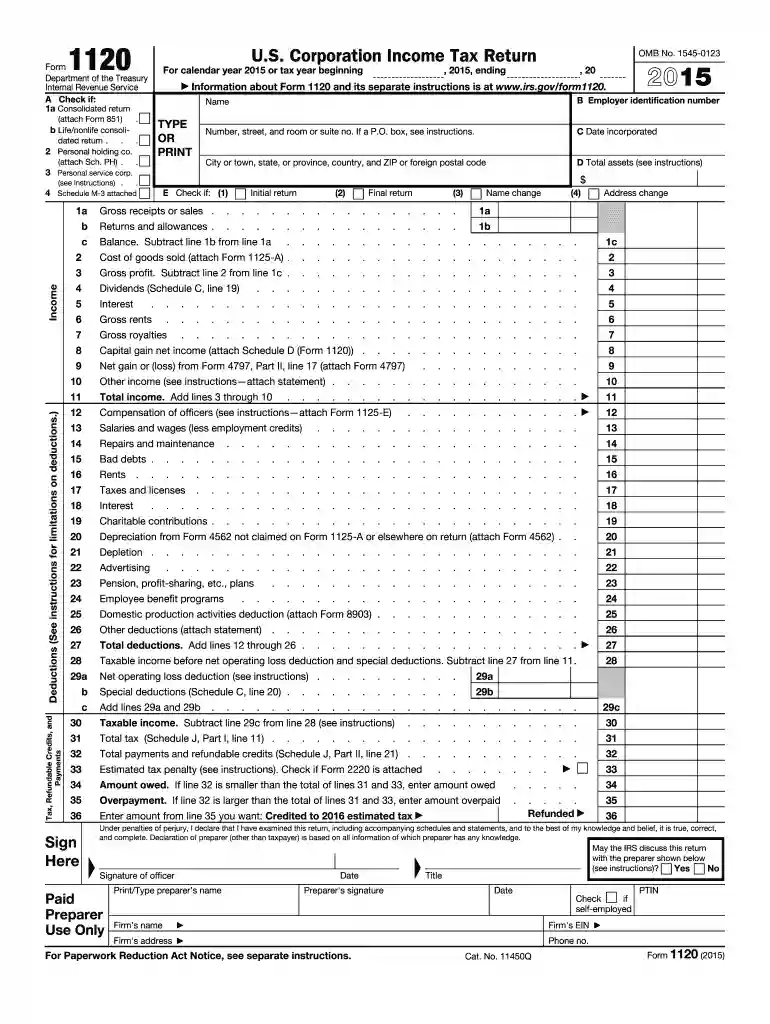
Type text, add images, blackout confidential details, add comments, highlights and more.
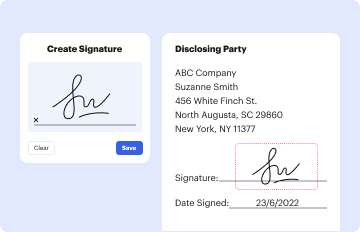
Draw your signature, type it, upload its image, or use your mobile device as a signature pad.

Send form 1120 2015 via email, link, or fax. You can also download it, export it or print it out.
The "1120 form 2015" refers to the U.S. Corporation Income Tax Return Form 1120, specifically used for the tax year 2015. This form is essential for corporations to report their income, deductions, and tax liabilities to the Internal Revenue Service (IRS). It plays a critical role in ensuring that corporations comply with federal tax regulations by accurately capturing all pertinent financial data.
Completing the 1120 form for 2015 involves several crucial steps to ensure compliance and accuracy.
Gather Required Information:
Calculate Gross Income:
Determine Deductions:
Compute Taxable Income:
Calculate Tax Liability:
Complete Additional Schedules:
The "1120 form 2015" is available through multiple channels to ensure accessibility and convenience for corporations.
Adhering to legal requirements is fundamental when handling the 1120 form for 2015.
The IRS provides comprehensive guidelines to assist corporations in completing the 1120 form for the year 2015 correctly.
Corporations must adhere to strict deadlines when filing the 1120 form to avoid penalties.
The compatibility of the form with various software applications can streamline the preparation and filing process.
Understanding which business entities are required to file the 1120 form is crucial.
We've got more versions of the 2015 form 1120 form. Select the right 2015 form 1120 version from the list and start editing it straight away!
| Versions | Form popularity | Fillable & printable |
|---|---|---|
| 2025 | 4.4 Satisfied (37 Votes) | |
| 2024 | 4.6 Satisfied (32 Votes) | |
| 2023 | 4.2 Satisfied (33 Votes) | |
| 2022 | 4.8 Satisfied (59 Votes) | |
| 2021 | 4.8 Satisfied (80 Votes) | |
| 2020 | 4.3 Satisfied (37 Votes) | |
| 2019 | 4.4 Satisfied (228 Votes) | |
| 2018 | 4.3 Satisfied (133 Votes) | |
| 2017 | 4.3 Satisfied (98 Votes) | |
| 2016 | 4.4 Satisfied (267 Votes) | |
| 2015 | 4.3 Satisfied (34 Votes) | |
| 2014 | 4.2 Satisfied (35 Votes) | |
| 2014 | 4 Satisfied (59 Votes) | |
| 2013 | 4 Satisfied (42 Votes) | |
| 2013 | 4.8 Satisfied (25 Votes) |
At DocHub, your data security is our priority. We follow HIPAA, SOC2, GDPR, and other standards, so you can work on your documents with confidence.




Jan 21, 2016 Use Form 1120, U.S. Corporation Income. Tax Return, to report the income, gains, losses, deductions, credits, and to figure the income taxRead more
Purpose. Complete Form W-4 so that your employer can withhold the correct federal income tax from your pay. Consider completing a new Form W-4 each year.Read more
Jan 26, 2017 You cant deduct the part of the startup costs equal to the credit claimed for a tax year, but you can choose not to claim the allowable credit.Read more


