
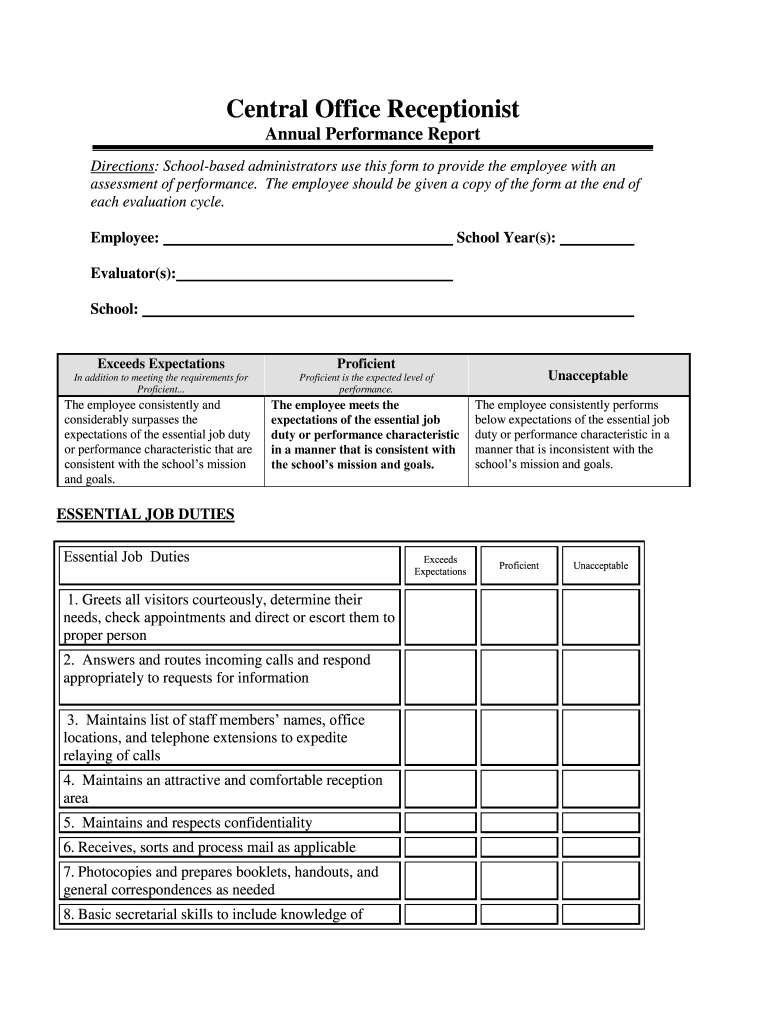







Definition and Meaning of Central Office Receptionist
A Central Office Receptionist serves as the first point of contact in an organization, primarily managing communication between clients, visitors, and staff members. This role embodies a blend of administrative duties and customer service, pivotal in maintaining a professional environment and facilitating efficient office operations. Key responsibilities include answering phone calls, managing schedules, handling inquiries, and directing visitors to the appropriate personnel or department.
- Communication Hub: The receptionist functions as a central communication hub, ensuring seamless interactions both internally and externally. This involves relaying messages and managing correspondence.
- Administration: Administrative tasks such as organizing office supplies, maintaining records, and coordinating meetings also fall within the scope of this role, contributing to overall office efficiency.
- Customer Service: Providing exceptional service to visitors and callers is critical. This includes addressing concerns, supplying information, and creating a welcoming atmosphere, which reflects positively on the organization's image.
Understanding the significance of this position highlights the essential skills and attributes necessary for effective performance, often assessed through an evaluation form for receptionists.
Key Responsibilities of a Central Office Receptionist
The Central Office Receptionist has several defined responsibilities that contribute to the overall functioning of the office. Familiarity with these tasks enhances comprehension of the role's complexity and importance.
- Handling Phone Communication: This includes answering, screening, and directing phone calls to appropriate personnel or departments while ensuring accurate messaging and courteous interaction.
- Visitor Management: Receptionists greet visitors, maintain visitor logs, and ensure all guests are signed in and directed properly within the office setting, enhancing both security and hospitality.
- Scheduling and Coordination: Organizing appointments for staff and coordinating meeting spaces are vital tasks that require attention to detail and scheduling proficiency.
- Data Management: Maintaining and updating records, handling filing systems, and ensuring that information is accessible to staff promote a well-organized work environment.
Effective performance in these areas typifies a proficient Central Office Receptionist, underscoring the value of regular performance evaluations.
Evaluation Criteria for Central Office Receptionists
To uphold the standards of this role, evaluations are often centered on specific criteria that reflect the responsibilities and customer-facing nature of the job.
Performance Levels
Performance is generally categorized into three levels:
- Exceeds Expectations: Demonstrating exceptional skill in management, efficiency in task completion, and exemplary customer service.
- Proficient: Meeting job requirements effectively while showing ongoing improvement and adaptability to changing office needs.
- Unacceptable: Failing to meet expected job standards, which can highlight areas needing significant improvement or intervention.
Key Performance Indicators (KPIs)
Using KPIs helps structure evaluations around measurable outcomes:
- Communication Skills: Assessing clarity, professionalism, and responsiveness in verbal and written communications.
- Organizational Skills: Evaluating efficiency in managing multiple tasks, scheduling accuracy, and maintenance of office systems.
- Customer Interaction: Gathering feedback on service delivered to visitors and callers to ensure satisfaction and professional representation of the organization.
Regular self-evaluation forms for receptionists can support individual growth by highlighting strengths and areas for development in line with these criteria.
Examples of Evaluation Forms for Central Office Receptionists
Utilizing structured forms for performance evaluations can streamline the review process and provide clarity on expectations. Here are various examples commonly employed in this context:
- Self Evaluation Form for Receptionist: This form allows receptionists to critique their own performance, reflecting on areas of excellence and those requiring improvement.
- Receptionist Evaluation Form: Designed for supervisors to assess staff efficiency based on predefined criteria and provide constructive feedback.
- Medical Receptionist Performance Review Template: Specifically tailored for healthcare environments, focusing on patient interaction and administrative duties unique to medical settings.
- Hotel Receptionist Self Evaluation Form: Highlights customer service elements pertinent to the hospitality industry, emphasizing guest relations and service quality.
These forms facilitate a structured evaluation process, ensuring that both receptionist and evaluator can engage in meaningful discussions about performance.
Importance of Self Evaluation for Central Office Receptionists
Self-evaluation serves a dual purpose: it provides receptionists with insights into their work practices while fostering professional growth. Self-assessment encourages reflection and accountability.
Benefits of Self Evaluation
- Professional Development: By identifying strengths and weaknesses, receptionists can focus on specific skills they need to enhance, leading to career advancement and increased job satisfaction.
- Goal Setting: Engaging in self-evaluation allows receptionists to set personal goals aligned with organizational objectives, customising their development pathway.
- Increased Engagement: Participation in the evaluation process fosters a sense of ownership over one’s work, enhancing motivation and commitment to the role.
Recommended Practices
- Regular Reflection: Encourage frequent self-reflections to track progress and adjust goals as necessary.
- Feedback Incorporation: Use insights from supervisor evaluations to inform self-assessments and identify growth opportunities.
- Documentation: Maintaining records of self-evaluations can assist in future discussions with supervisors and serve as a basis for performance reviews.
Engaging diligently in this process can significantly impact personal performance and the overall efficiency of the office environment.
Challenges in the Evaluation Process of a Central Office Receptionist
While evaluations are essential to maintaining and enhancing performance, they can come with certain challenges that both evaluators and receptionists should recognize.
Common Challenges
- Subjectivity: Evaluations can often be influenced by personal biases, which may affect the fairness of the assessment process.
- Lack of Clarity: Ambiguous criteria can lead to misunderstandings regarding job expectations and performance indicators, making it difficult for receptionists to accurately assess their performance.
- Resistance to Feedback: Some receptionists may feel defensive or discouraged by negative evaluations, potentially undermining the purpose of constructive feedback.
Strategies for Improvement
- Clear Guidelines: Establish and communicate clear evaluation criteria beforehand to set explicit expectations for performance.
- 360-Degree Feedback: Incorporating feedback from multiple stakeholders—including peers, supervisors, and even clients—can provide a more robust understanding of performance.
- Continuous Dialogue: Ongoing discussions between receptionists and evaluators can minimize misunderstandings and build a more supportive feedback culture.
By being aware of these challenges, organizations can create a more effective and constructive evaluation process.




