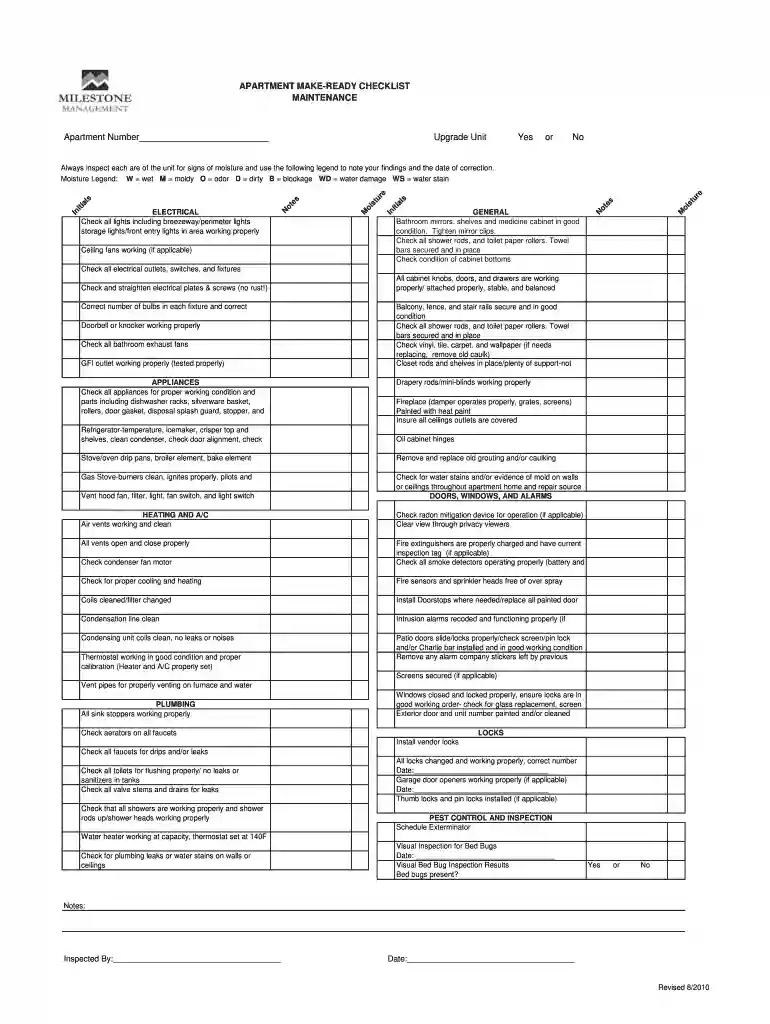
Understanding the Apartment Make-Ready Checklist
The Apartment Make-Ready Checklist is a critical tool for property management professionals and landlords preparing rental units for new tenants. This checklist ensures that all necessary maintenance and cleaning tasks are completed before a tenant moves in, thus helping to maintain the property’s value and tenant satisfaction.
The checklist encompasses a variety of elements that need to be monitored and ensured for functionality and cleanliness. These often include:
- General condition of the property, ensuring all areas meet minimal living standards.
- Inspection of electrical systems to confirm safety and functionality.
- Testing appliances to ensure they are operational.
- Checking doors and windows for seals and locks to guarantee security.
- Assessing heating and cooling systems to ensure they are in working order.
- Evaluating plumbing fixtures for leaks and proper operation.
- Performing pest control measures as necessary.
- Ensuring all locks are functional and secure.
Steps to Complete the Apartment Make-Ready Checklist
Completing the Apartment Make-Ready Checklist involves a systematic approach to ensure every crucial aspect of the apartment is evaluated. Here are the steps typically followed:
-
Initial Walkthrough
- Conduct a thorough walkthrough of the entire unit to gather general observations about any visible damage or maintenance needs.
- Take notes and attach photographs if necessary to document the state of the property.
-
Conduct Inspections
- Inspect specific systems, starting with the electrical and plumbing systems. Test outlets and fixtures and check for any leaks or blockages.
- Verify the functionality of appliances including refrigerators, ovens, and washing machines.
-
Test Climate Control Systems
- Check both heating and cooling systems to ensure they are operational. Test thermostats for accuracy.
-
Address Security Measures
- Inspect locks and window seals to confirm they are secure. Replace any faulty locks immediately to maintain tenant security.
-
Pest Control Inspection
- Assess for signs of pests. Implement pest control measures if any signs are detected, ensuring a pest-free environment for new tenants.
-
Final Cleaning
- Schedule a thorough cleaning of the unit, including carpets, walls, and all surfaces. This may involve deep cleaning services depending on the state of cleanliness observed during the initial walkthrough.
-
Document Completion
- Once all tasks are complete, document them on the checklist. This may include taking further photographs to maintain a record of the apartment's condition post-preparation.
-
Review and Sign Off
- Have the checklist reviewed by a manager or supervisor, and obtain signatures to confirm that all tasks have been completed satisfactorily.
Key Elements of the Apartment Make-Ready Checklist
The effectiveness of the Apartment Make-Ready Checklist lies in its comprehensive coverage of various crucial areas within a rental unit. Here are its key elements:
-
General Maintenance
- Inspect walls, ceilings, and floors for any damage such as holes, peeling paint, or grime accumulation.
- Check that all light fixtures and bulbs are operational.
-
Electrical Systems
- Ensure all outlets are functional and up to code.
- Inspect circuit breakers for any issues.
-
Appliances
- Confirm refrigerators, washers, dryers, and stoves are functioning properly.
- Clean appliances to remove any residues or stains.
-
Safety Features
- Verify smoke detectors and carbon monoxide detectors are installed and functional.
- Check fire extinguishers for accessibility and charged status.
-
Plumbing Integrity
- Look for leaks under sinks and around toilet areas.
- Test all faucets and showerheads for flow and temperature consistency.
-
Security Features
- Confirm all doors and windows lock securely; replace or repair as necessary.
- Inspect any outside lighting for safety.
Examples of Using the Apartment Make-Ready Checklist
Real-world applications of the Apartment Make-Ready Checklist illustrate its critical role in maintaining properties. Here are a few scenarios:
-
A New Tenant Move-In
- Before leasing an apartment to a new tenant, property managers follow the checklist to ensure the unit is ready, avoiding potential complaints or issues after move-in.
-
Periodic Inspections
- In between tenant leases, landlords can use the checklist to conduct maintenance checks and necessary repairs, ensuring the property remains attractive to potential renters.
-
Preventive Maintenance
- By routinely completing the checklist, landlords can address small issues before they develop into larger and more costly problems, ultimately preserving property value.
Who Typically Uses the Apartment Make-Ready Checklist
The Apartment Make-Ready Checklist is primarily utilized by professionals involved in property management and leasing. This includes:
-
Property Managers
- Responsible for the overall management of rental units, ensuring they meet quality standards before leasing.
-
Maintenance Staff
- Tasked with performing the physical inspections and repairs outlined within the checklist.
-
Real Estate Agents
- Often leverage the checklist to guide discussions with property owners or prospective tenants regarding unit conditions.
-
Landlords
- Independent property owners also benefit from using the checklist to maintain their rental properties effectively.
Legal Use of the Apartment Make-Ready Checklist
The Apartment Make-Ready Checklist may have legal implications, especially concerning tenant rights and property maintenance standards. It is important to adhere to local housing regulations, which may specify:
-
Habitability Standards
- Many jurisdictions have laws that require landlords to maintain units in a habitable condition. The checklist serves as a tool to verify compliance with these laws.
-
Documentation of Maintenance
- Keeping a signed copy of the completed checklist may protect landlords in case of disputes regarding the condition of the unit or security deposits.
-
Compliance with Fair Housing Regulations
- Ensuring that all units are prepared consistently can help mitigate claims of discrimination against tenants.
By incorporating these elements into practice, property managers can optimize tenant satisfaction while minimizing legal risks associated with property management.