





Definition & Meaning of the 90 Day Trial Period Clause
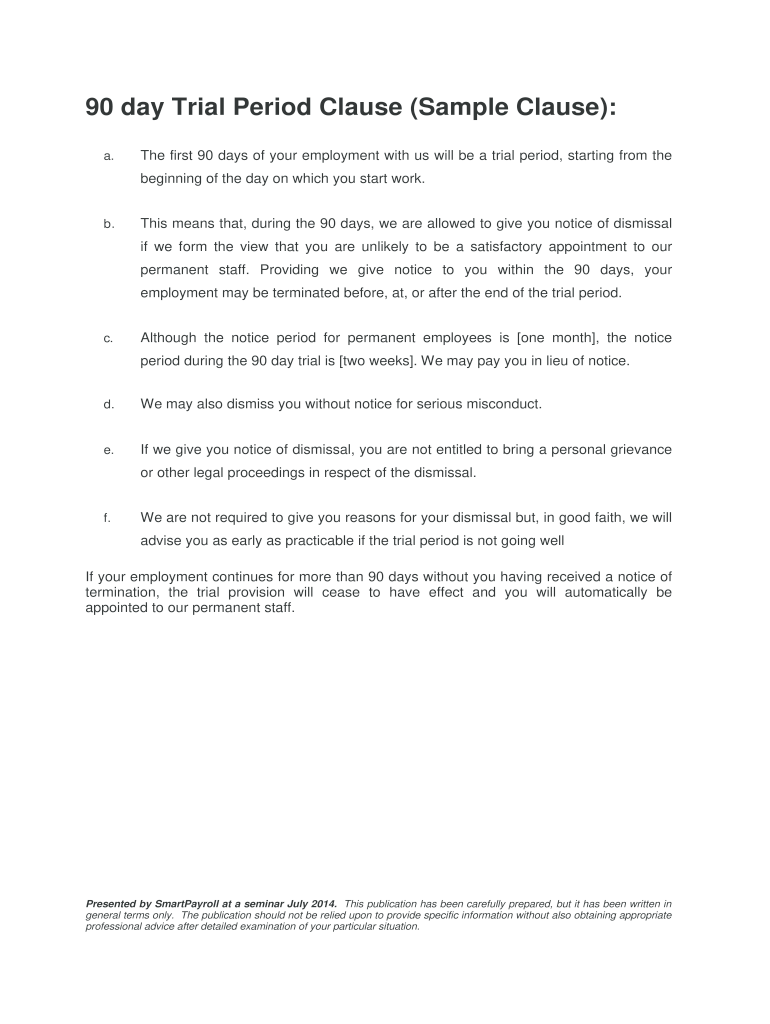
The 90 day Trial Period Clause is a provision commonly included in employment contracts, primarily to allow employers to assess the performance and suitability of a new employee within a specified timeframe. This clause establishes a probationary period lasting 90 days, during which the employer has the flexibility to terminate employment with minimal notice if the employee's performance is deemed unsatisfactory.
Key Features of the Clause
- Trial Duration: The clause explicitly states a 90-day period, ensuring all parties are clear about the timeframe for evaluation.
- Termination Conditions: It outlines the circumstances under which an employee can be dismissed, which typically includes performance issues or serious misconduct.
- Transition to Permanent Employment: If the 90 days conclude without termination, the employee is usually transitioned to a permanent status, securing job rights and benefits.
This clause is significant in setting clear expectations for both employers and employees. It allows for a trial assessment while providing a pathway to permanent employment if both parties are satisfied with the arrangement.
How to Use the 90 Day Trial Period Clause
Using the 90 day Trial Period Clause effectively involves several critical steps during the hiring and on-boarding processes. It is essential for employers to draft this clause clearly within the employment agreement and communicate expectations regarding performance, evaluation criteria, and the implications of successful or unsatisfactory completion of the trial period.
Implementation Steps
- Incorporate Clause into Employment Contract: Ensure the clause is included in all relevant employment agreements for new hires.
- Communicate Expectations: Clearly discuss job roles, performance metrics, and feedback mechanisms with the new employee during the onboarding process.
- Regular Feedback: Provide constructive feedback throughout the trial period to guide employee performance and address areas needing improvement.
- Evaluate at Conclusion: At the end of the trial period, assess the employee’s performance and make an informed decision regarding their continued employment.
Following these steps helps create a transparent environment and promotes fairness in evaluating new hires.
Important Terms Related to the 90 Day Trial Period Clause
Understanding the terminology associated with the 90 day Trial Period Clause is crucial for effective use of this employment provision. Some key terms include:
- Probationary Employee: An employee who is undergoing evaluation during the trial period.
- Notice Period: The advance time frame an employer must provide before terminating employment, typically two weeks during the trial period.
- Serious Misconduct: Actions that warrant immediate termination without notice, such as theft or violence.
- Permanent Employee Status: Employment status achieved after the successful completion of the trial period.
Familiarity with these terms aids in navigating the legal landscape related to the clause and reinforces understanding of employee rights and employer obligations.
Examples of Using the 90 Day Trial Period Clause
In practice, applications of the 90 day Trial Period Clause can vary significantly by organization and industry. Here are examples illustrating how this clause can manifest in different scenarios.
Scenario A: Corporate Hiring
A large corporation may include the 90 day Trial Period Clause in its standard employment contract for all new hires. The company regularly assesses employee performance through bi-weekly meetings and provides feedback. If an employee consistently meets performance metrics, they transition to a permanent employee after the trial period.
Scenario B: Startups
A startup may adopt the clause as a flexible way to evaluate crucial hires, ensuring they fit into the company's rapidly changing environment. If an employee demonstrates exceptional contribution during the probation period, they may receive additional benefits or a salary raise upon permanent status.
Scenario C: Seasonal Employment
In industries like hospitality, employers use the 90 day Trial Period Clause to evaluate seasonal employees. The probation period allows employers to gauge employee reliability and performance during the peak season before committing to longer-term contracts.
These examples highlight the versatility of the clause in various employment contexts, ensuring it aligns with business needs while adhering to labor laws.
Legal Use of the 90 Day Trial Period Clause
Legally, the 90 day Trial Period Clause serves to protect both the employer’s and employee's interests during the initial employment stage. It should be crafted in accordance with federal and state employment laws to ensure compliance.
Legal Considerations
- At-Will Employment: In most states, employment is presumed to be at-will unless explicitly stated otherwise. The trial period does not alter the at-will employment status unless specified.
- State Laws Variability: Employers must be aware of differing state regulations regarding termination and employee rights during probation.
- Documentation: To legally enforce the clause, documentation is essential; keep records of performance evaluations and any communications regarding termination.
Employers are encouraged to consult legal professionals when drafting the clause to ensure adherence to all applicable laws and regulations.