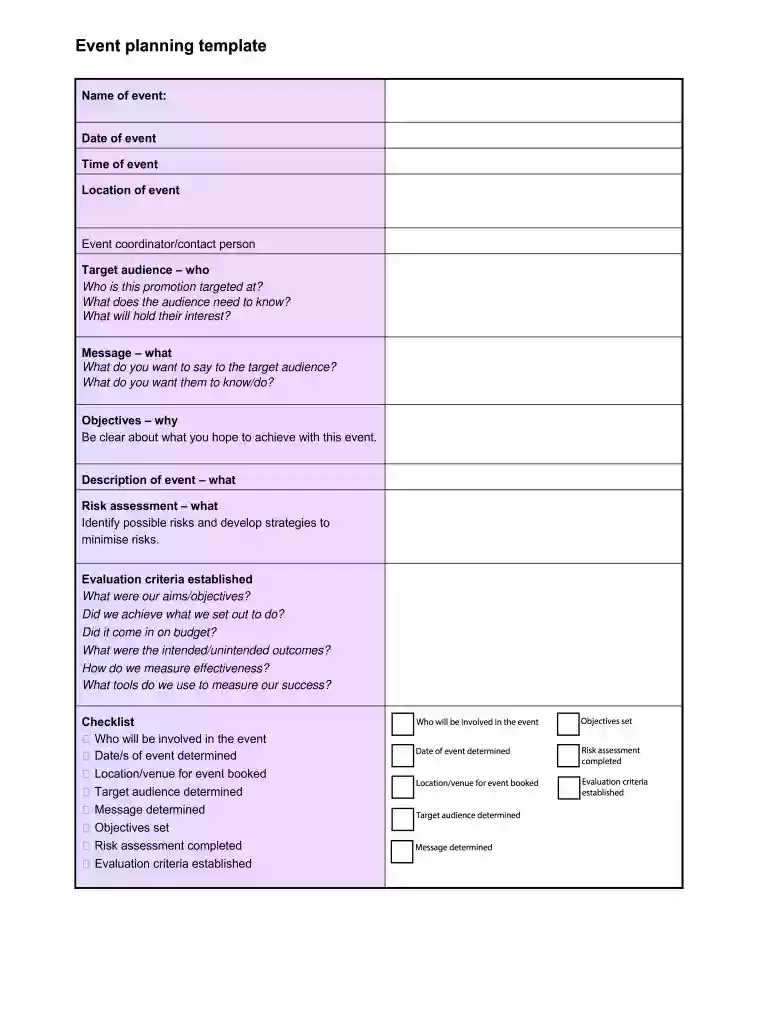
Definition and Meaning of Event Planning Template
An event planning template is a structured document designed to facilitate the organization of various types of events, including corporate gatherings, weddings, parties, conferences, and more. This template serves as a comprehensive roadmap, encompassing key details such as:
- Event Name: The official title of the event that captures its essence.
- Date and Time: The scheduled day and time when the event will take place.
- Location: The venue selected for the event, which can significantly affect attendance and logistics.
- Target Audience: Identification of the primary attendees, whether they are clients, employees, or the general public.
- Objectives: Clear goals for the event, such as promoting a product, celebrating an occasion, or fundraising.
Understanding the definition of an event planning template provides a solid foundation for efficiently managing an event, ensuring all necessary components are considered and addressed.
Key Elements of an Event Planning Template
The primary utility of an event planning template lies in its ability to streamline the planning process. Essential elements typically included are:
- Budgeting: Estimating costs associated with various aspects of the event, including venue rental, catering, decoration, and entertainment.
- Tasks Checklist: A detailed list guiding planners through pre-event preparations, such as sending invitations, confirming vendors, and arranging transportation.
- Risk Assessment: Identification of potential risks or challenges associated with the event, along with strategies to mitigate them.
- Evaluation Criteria: Metrics for assessing the success of the event, such as attendee feedback, achievement of objectives, and budget adherence.
Including these components in an event planning template enables organizers to maintain focus, manage resources effectively, and achieve a successful outcome.
How to Use the Event Planning Template
To maximize the effectiveness of an event planning template, follow these steps:
- Initial Setup: Start by filling in the basic details, including the event name, date, time, and location.
- Define Objectives: Establish clear objectives to guide the overall planning process and ensure the outcome aligns with expectations.
- Budgeting: Create a detailed budget, outlining estimated costs for each aspect of the event. This budget should be revisited regularly to monitor expenses.
- Checklist Creation: Develop a task checklist that outlines responsibilities, deadlines, and any necessary follow-ups leading up to the event.
- Risk Management Planning: Conduct a risk assessment and document potential problems, along with proposed solutions or preventive measures.
Using the template as a living document enables ongoing adjustments and refinements throughout the planning process, ultimately leading to a successful event.
Examples of Using the Event Planning Template
Demonstrating the versatility of an event planning template, consider these example scenarios:
- Corporate Launch Event: A technology company uses the template to plan a product launch, ensuring the guest list includes key stakeholders, allocating funds for promotional materials, and scheduling demonstrations.
- Wedding Coordination: A couple utilizes the template to outline their wedding day logistics, including venue arrangements, guest accommodations, and catering services, while keeping track of RSVPs and budget details.
- Conference Organization: A non-profit organization employs the template to manage a multi-day conference, ensuring speakers are booked, venues are confirmed, and necessary materials are prepared well in advance.
These examples illustrate how customizable event planning templates can be adapted to diverse needs, ensuring comprehensive and efficient planning.
Steps to Complete the Event Planning Template
Completing an event planning template requires a structured approach. Follow these detailed steps for thorough preparation:
- Gather Information: Collect all necessary details, including venue options, catering possibilities, and entertainment ideas.
- Input Event Details: Enter the basic event specifics, such as dates, times, and venues, ensuring accuracy for effective planning.
- Set a Budget: Develop a detailed financial plan outlining all anticipated expenses and allocate resources accordingly.
- Develop a Timeline: Create a timeline that includes deadlines for tasks like sending invitations, confirming vendors, and setting up at the venue.
- Assign Roles: Designate responsibilities among team members, ensuring clarity on who handles each aspect of the planning process.
- Review Regularly: Continually revisit and update the template as the event date approaches, making adjustments based on emerging needs or changes.
Implementing these steps allows for comprehensive planning and fosters collaboration among team members involved in the event.