
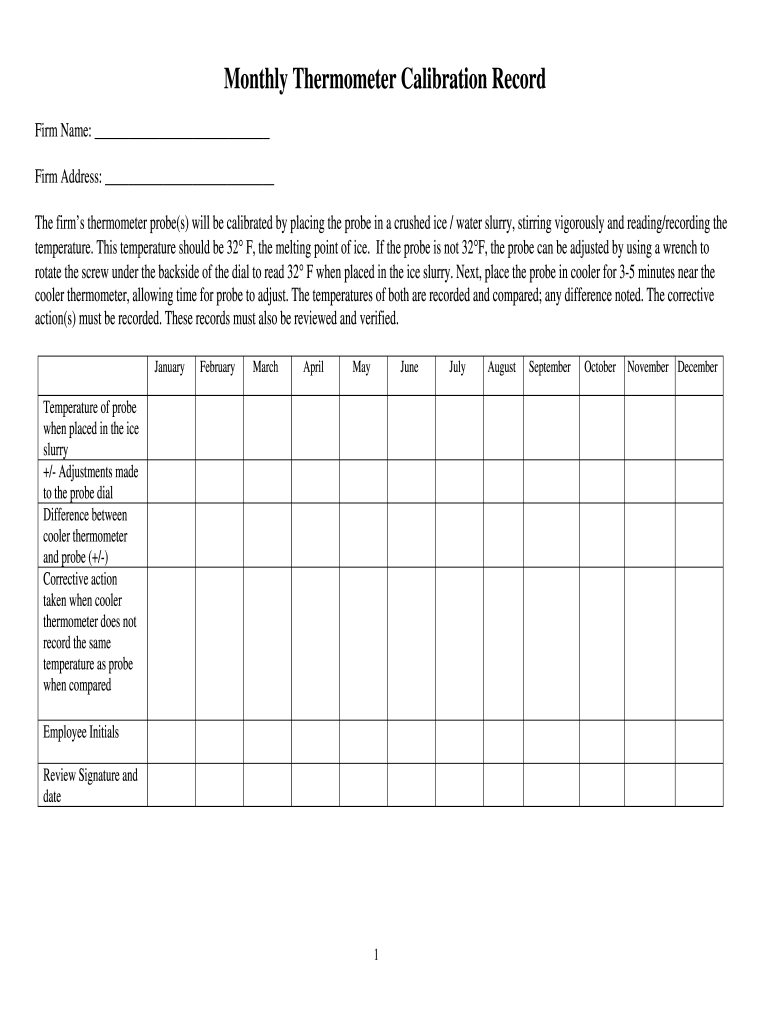







Understanding the Thermometer Calibration Record Sheet Template
The thermometer calibration record sheet template is essential for maintaining accurate temperature readings in various settings, such as food service, laboratories, and healthcare. It serves as a systematic tool to document the calibration process of thermometers, ensuring all temperature measurement devices operate within the required tolerances.
Importance of Calibration in Temperature Measurement
Calibration is critical for obtaining reliable temperature readings, which can influence safety, quality, and compliance with regulations. Regular calibration verifies that thermometers are accurate and function correctly. In fields like food safety, a precise temperature reading can prevent foodborne illness, while in laboratories, it ensures the integrity of experimental results.
- Maintaining accurate temperature readings safeguards public health.
- Compliance with industry standards and regulations is achieved through proper calibration.
- Calibration records help in audits and inspections, confirming adherence to best practices.
Steps for Calibrating a Thermometer
Calibrating a thermometer typically involves a series of precise steps to ensure accuracy. Following a consistent procedure enhances the reliability of the readings captured.
- Prepare the Calibration Environment: Gather materials such as ice, water, and a secondary thermometer. Ensure that the workspace is clean and organized.
- Create an Ice Water Slurry: Fill a container with crushed ice and water, ensuring it is packed tightly. This mixture should reach a temperature of zero degrees Celsius (32 degrees Fahrenheit).
- Submerge the Thermometer: Place the thermometer probe in the center of the ice water slurry without touching the sides of the container.
- Wait for Stabilization: Allow the thermometer readings to stabilize for at least one to two minutes.
- Record the Temperature: Write down the temperature reading on the thermometer calibration record sheet template. Adjust if necessary, comparing it to the expected value.
- Make Adjustments: If the thermometer deviates from the 32°F mark, make adjustments as per the manufacturer’s instructions, and document this process.
- Finalize Records: Complete the calibration record by noting the date, observations, and any corrective actions taken.
Key Components of the Calibration Record Sheet
A comprehensive thermometer calibration record sheet template includes several key components to ensure thorough documentation.
- Thermometer Information: Record the model number, serial number, and calibration date.
- Calibration Method: Outline the calibration method used, such as the ice water method.
- Initial Reading: Document the thermometer's initial reading before calibration.
- Adjusted Reading: Note the final reading after any adjustments made during the calibration process.
- Comments Section: Include a section for any additional comments or observations made during the calibration process.
- Technician Signature: Require the technician conducting the calibration to sign the record for accountability.
Frequency of Calibration
The frequency of calibration depends on various factors, including usage, type of thermometer, and regulatory requirements.
- Regular Use: Thermometers used frequently in high-stakes environments, such as restaurants or laboratories, should be calibrated monthly.
- Infrequent Use: Those used less often may require calibration bi-annually or annually, depending on established protocols.
- Regulatory Compliance: Adhere to any industry-specific guidelines regarding calibration frequency to maintain compliance and safety.
Examples of Calibration Logs
Maintaining consistent calibration logs can help demonstrate reliability. Here are examples of entries one could find in a thermometer calibration log:
-
Log Entry for Food Safety:
- Model: ThermoPro TP20
- Calibration Date: January 15, 2023
- Initial Reading: 34°F
- Adjusted Reading: 32°F
- Technician: John Doe
-
Log Entry for a Laboratory:
- Model: Fluke 52 II
- Calibration Date: February 2, 2023
- Initial Reading: 35°F
- Adjusted Reading: 32°F
- Technician: Jane Smith
Legal Considerations in Calibration
In the United States, certain industries may have legal requirements regarding calibration and record-keeping. Compliance with these legal frameworks not only ensures accurate measurements but also protects against liabilities.
- Food Safety Regulations: The FDA mandates proper temperature monitoring in food establishments, necessitating accurate calibration records.
- Laboratory Standards: Various laboratories must adhere to protocols established by organizations such as ISO or GLP, which often include calibration documentation.
Utilizing Digital Templates
Creating or utilizing a digital thermometer calibration record sheet template can enhance organization and accessibility.
- Digital templates allow for easy editing, formatting, and data storage.
- Automated reminders for calibration dates can help ensure timely assessments.
- Cloud storage solutions enable sharing among team members for collaborative access to calibration records.
This comprehensive overview of the thermometer calibration record sheet template provides a clear picture of its significance, usage, and essential components, fostering better practices and compliance in various fields.




