







Understanding the High School Suspension Form
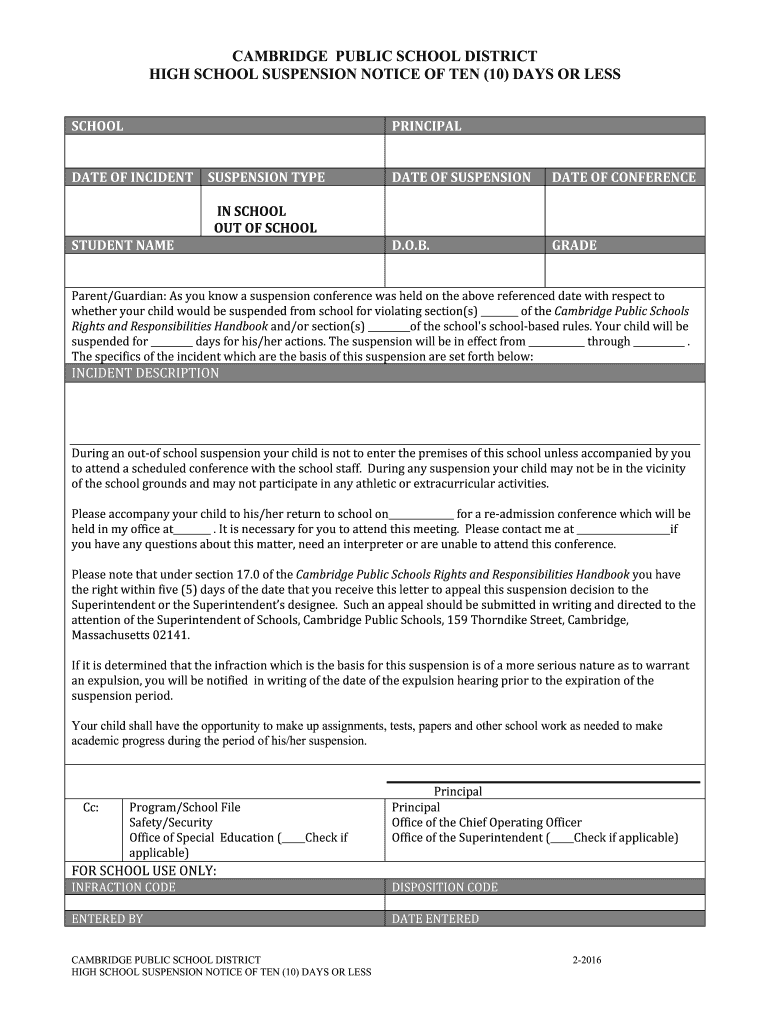
The High School Suspension Form (Form 3) serves as an essential document for schools within the United States, specifically designed to notify parents and guardians about a student's suspension of ten days or less. This structured form outlines significant information related to the incident leading to the suspension, ensuring compliance with educational policies and academic standards.
Essential Components of the Suspension Notice
The notice typically includes several critical elements:
- Student Information: Name, grade, and identification number of the student.
- Reason for Suspension: A clear description of the incident or behavior that led to the suspension, ensuring transparency in the disciplinary process.
- Duration of Suspension: Exact dates starting and ending the suspension period, allowing parents to understand their child's time away from school.
- Parent/Guardian Information: Contact details to ensure direct communication regarding the situation and subsequent steps.
This section provides parents with a comprehensive understanding of what has occurred and what actions are required.
Instructions for Parents and Guardians
The form details specific instructions for parents or guardians concerning their child's return to school:
- Conditions for Return: Guidelines on what is needed for the student to return post-suspension, such as a parent meeting or completion of a reflective assignment.
- Appeal Process: Information regarding how to contest the suspension, including deadlines and appropriate channels for submitting an appeal.
- Support Resources: Access to counseling or academic support during the student's time out of school, ensuring they remain engaged with their education.
Providing explicit directions helps clarify expectations and empowers parents to support their child through the process.
Legal Considerations and Rights
The form outlines rights afforded to students and their families under local and federal laws:
- Due Process: Explanation of the student's right to an appeal and representation during disciplinary actions.
- Educational Rights: Students' entitlement to ongoing educational support and resources while suspended, emphasizing that learning continuity should not be interrupted.
By articulating these rights, schools promote accountability and a fair approach to discipline.
Completing the High School Suspension Form
Schools must adhere to a specific protocol when filling out the suspension form:
- Documentation of Incident: All disciplinary actions must reference factual, unbiased accounts of the events leading to the suspension.
- Signatures: Required signatures from both administration and the notifying parent, ensuring all parties acknowledge the suspension.
- Submission Procedures: Clear guidance on how and where the form should be submitted within the school or district administrative structure.
Adhering to these procedures ensures that the form is valid and that all records are properly maintained.
Variations of the Suspension Form
Different versions of suspension forms may exist depending on the school district or state regulations. Possible variants may include:
- Short-Term vs. Long-Term Suspension Forms: Distinctions between forms based on the duration of the suspension.
- In-School vs. Out-of-School Suspension Forms: Separate forms delineating whether the suspension involves attendance on school property with restrictions or absence from school altogether.
Understanding these variants ensures users select the appropriate document for their specific situation.
Examples of Situations Requiring the Suspension Form
Utilizing examples helps clarify when the High School Suspension Form may be enacted:
- A student engaged in disruptive behavior during class, leading to a three-day suspension.
- A student caught violating school policies regarding substance use, receiving a ten-day out-of-school suspension.
- Incidents of bullying or harassment warranting a formal suspension for student safety and wellbeing.
These scenarios illustrate the diverse applications of the suspension form within the school environment.
Documentation and Record Keeping
Accurate documentation is crucial for maintaining official records regarding student behavior and disciplinary actions:
- Retention of Forms: Schools are typically required to keep suspension records for a specified duration to uphold accountability within the educational system.
- Confidentiality: Ensuring that all information within the suspension notice remains private and is only shared with authorized personnel and involved parties.
Proper management of documentation signifies a commitment to both legal compliance and the protection of student rights.
Conclusion: The Role of the High School Suspension Form
The High School Suspension Form is an integral tool for educational institutions in managing discipline and ensuring transparency. It acts as a communication bridge between schools and families while safeguarding students' legal rights. By understanding its components, importance, and applications, stakeholders can navigate the complexities of school discipline effectively, which supports a fair and constructive educational environment.




