






Definition and Purpose of the Medical Director Agreement Form
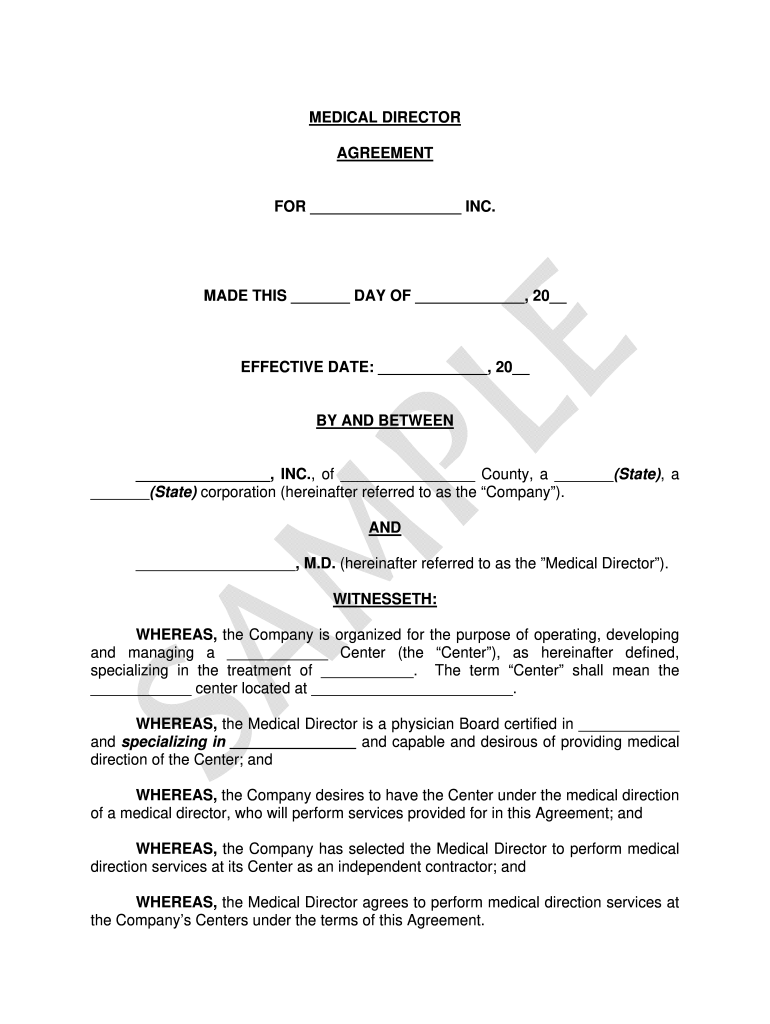
The medical director agreement form is a crucial document that outlines the relationship between a medical director and a healthcare organization, particularly within specialized practices such as medical spas. It serves to clarify the roles, responsibilities, and expectations of the medical director, ensuring that both parties have a mutual understanding of their obligations.
- Legal Framework: At its core, this agreement establishes the legal parameters within which the medical director operates, specifying the duties that may include overseeing clinical procedures, ensuring compliance with state and federal regulations, and maintaining high professional standards.
- Compensation Structure: This form typically stipulates the financial compensation arrangement, detailing how the medical director will be compensated for their services, whether on a salary basis or through incentive payments linked to performance.
- Protection of Interests: The agreement also includes clauses for confidentiality, indemnification, and restrictive covenants that protect the organization’s interests. These provisions ensure that sensitive information remains secure and that the medical director’s actions align with the organization’s objectives.
By providing a well-defined framework, the medical director agreement form helps prevent disputes and ensures clarity in the operational dynamics of the practice.
Key Elements of the Medical Director Agreement Form
Several essential components must be detailed in a medical director agreement form to ensure that it comprehensively covers expectations and responsibilities.
Roles and Responsibilities
- Clinical Oversight: The medical director is responsible for the clinical operations of the facility, which involves supervising staff, reviewing clinical protocols, and ensuring that services provided meet applicable standards and regulations.
- Compliance and Risk Management: They must ensure that the medical spa adheres to legal and ethical guidelines, managing risk and protecting the facility from potential legal issues.
- Training and Quality Assurance: The director is often tasked with providing ongoing training for staff members to enhance the quality of services offered and ensure compliance with industry best practices.
Compensation and Payment Terms
- Fixed Salary vs. Performance-Based Pay: The agreement should clearly outline whether the medical director will receive a fixed salary or if they will have the potential to earn bonuses based on performance metrics.
- Benefits and Reimbursements: Additional components may include professional development benefits, health insurance, retirement contributions, and reimbursements for business-related expenses.
Termination Clauses
- Contract Duration: The typical agreement specifies the length of the contract, which might range from one to five years, with provisions for renewal.
- Grounds for Termination: It must list the grounds on which either party can terminate the agreement, detailing notice periods and any required steps to finalize the termination.
Steps to Complete the Medical Director Agreement Form
Completing a medical director agreement form requires several steps to ensure that all parties are adequately represented and protected.
- Drafting the Agreement: Begin with a thorough outline that includes all key elements, such as responsibilities, compensation details, and compliance obligations. It may be beneficial to consult with legal counsel to ensure that the draft meets all legal requirements.
- Reviewing the Details: Both the healthcare organization and the medical director should review the draft carefully to ensure that all terms and conditions align with their expectations.
- Negotiation: If discrepancies arise during the review phase, negotiations may be necessary. This may involve discussing compensation rates, responsibilities, or terms of termination until a mutually agreeable contract is established.
- Signing the Agreement: Once both parties agree on the terms, the document must be signed. Consider using electronic signature solutions to streamline this step while ensuring the agreement is legally binding.
- Maintaining Records: After signing, both parties should retain copies of the signed agreement for their records, as it may be necessary for future reference or to resolve any disputes.
Important Considerations When Using a Medical Director Agreement Form
Understanding the legal implications and requirements associated with the medical director agreement form is vital for both parties.
Compliance with State Regulations
Each state in the U.S. has specific laws governing medical services, medical directors, and their agreements. It is important to ensure that the agreement complies with state-specific laws and regulations to avoid legal challenges.
Confidentiality and Non-Disclosure
Confidentiality clauses within the agreement are essential to protect sensitive information about the organization, its operations, and clientele. This protection is crucial for maintaining trust and professionalism.
Renewal and Amendments
The agreement should specify procedures for renewal and amendments. This includes outlining how updates to the terms of the agreement can be executed and what conditions must be met for a renewal to occur.
Examples of Using the Medical Director Agreement Form
In practice, the medical director agreement form can be applied in various scenarios to manage relationships in medical facilities effectively.
- Medical Spas: In a medical spa setting, the form is used to establish the director's responsibilities, such as overseeing aesthetic treatments, ensuring adherence to safety protocols, and coordinating staff training.
- Clinics and Hospitals: It is also applicable in larger clinical settings where the medical director might manage multiple departments, focusing on operational efficiency and compliance with healthcare regulations.
- Telemedicine Practices: As telehealth becomes more prevalent, medical director agreements can detail the unique responsibilities associated with overseeing remote care, ensuring that providers meet legal criteria for patient safety and privacy.
By utilizing the medical director agreement form appropriately, healthcare organizations can foster clear communication and mutual accountability, ultimately leading to improved patient care and operational success.