




01. Edit your sample ach letter to vendors online
Type text, add images, blackout confidential details, add comments, highlights and more.

Type text, add images, blackout confidential details, add comments, highlights and more.

Draw your signature, type it, upload its image, or use your mobile device as a signature pad.

Send ach letter to vendors via email, link, or fax. You can also download it, export it or print it out.
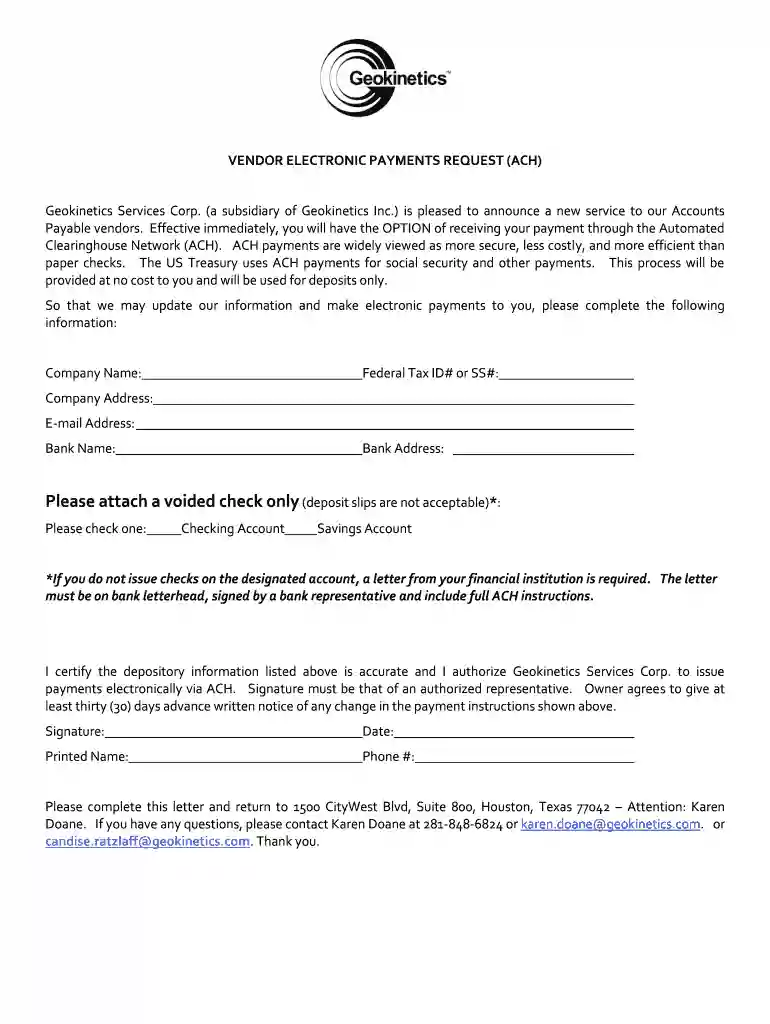
An ACH letter to vendors is a formal document used to authorize the transfer of funds electronically through the Automated Clearing House (ACH) network. This letter signifies the vendor's agreement to receive payments via electronic methods, which provides advantages such as improved security and faster transaction processing compared to traditional paper checks. The ACH network is a highly efficient means for businesses and government entities to process payments and deposits, effectively reducing the risks of check fraud and the handling of physical cash.
Using ACH payments can significantly streamline the accounting processes for businesses. With automatic transfers, cash flow management becomes more predictable, as invoices are settled on a predetermined timeline. Additionally, such payments eliminate the need for constant communication regarding payment issues, as both parties have clarity on the payment schedule. Therefore, having a clear understanding of the ACH letter and its significance is vital for effective vendor management.
An effective ACH letter should include several critical components to ensure both clarity and legal compliance. Here are the elements that should be featured:
Each of these elements plays a vital role in ensuring that not only is the payment process more streamlined, but also that there is a thorough record of the agreed-upon terms.
Creating an ACH letter involves several straightforward steps, ensuring the document is accurate, detailed, and legally binding. Below is a step-by-step guide for drafting an ACH letter to vendors:
Collect Required Information:
Draft the Letter:
Include Essential Details:
Review and Sign:
Distribute Copies:
Following these steps ensures that both parties have clarity on the payment method and that the process adheres to banking practices.
To better understand the application of an ACH letter, consider the following scenarios:
Scenario 1: A company may implement ACH payments to streamline their accounts payable process. They issue ACH letters to all recurring vendors, enabling direct deposit payments on specific dates.
Scenario 2: A vendor may change their banking information and would thus send an updated ACH letter reflecting the new banking details. This ensures ongoing payments are routed correctly to avoid service disruptions.
These scenarios illustrate the practical benefits and applications of the ACH letter within real-time business transactions.
Legally, the ACH letter to vendors serves as an authorization document that complies with the Electronic Fund Transfer Act (EFTA) and must be handled with due diligence. The signed authorization grants payment rights to the payer while ensuring protection for both parties involved:
Following these legal guidelines ensures that organizations are compliant with regulations and reduces potential risks that may arise from incorrect or unauthorized payments.
At DocHub, your data security is our priority. We follow HIPAA, SOC2, GDPR, and other standards, so you can work on your documents with confidence.
This form is used for Automated Clearing House (ACH) payments. The information being collected on this form will be used by the State Comptrollers office toRead more
ACH offers an immediate cash flow benefit to the recipient; there is no waiting for checks to arrive. In addition, if there is no check, it cannot be lost orRead more


