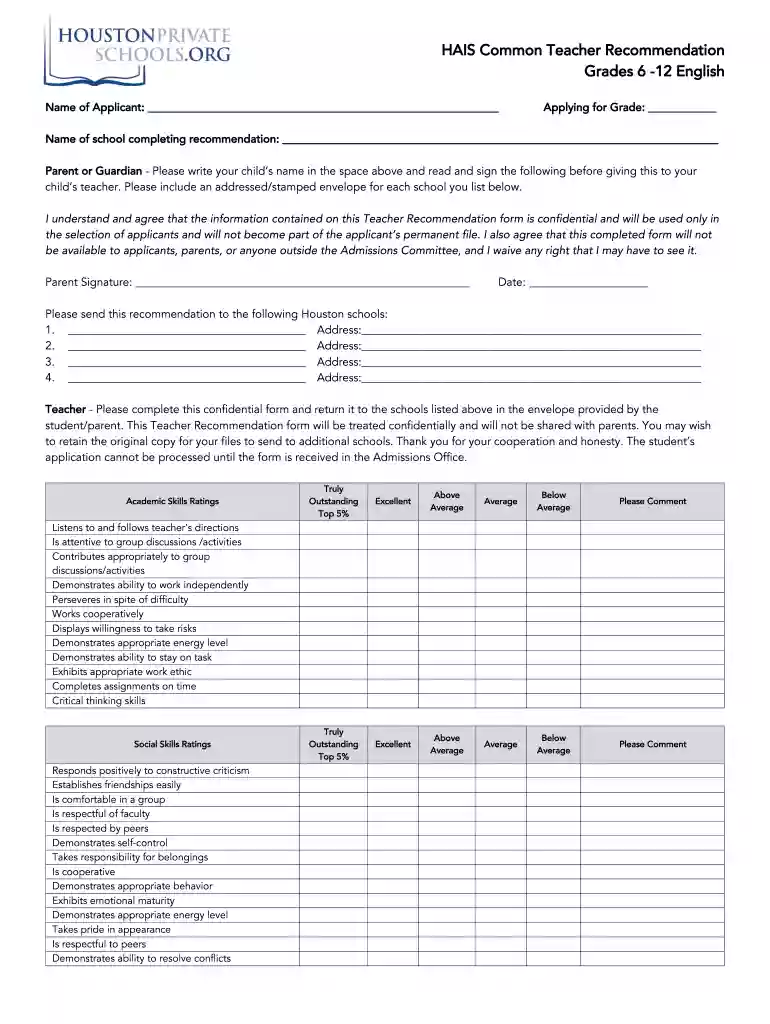
Definition and Meaning of the Common Teacher Recommendation
The common teacher recommendation is a vital document used in the college admissions process, primarily for students applying to secondary education institutions. This form allows educators to provide insights into a student's academic abilities, character traits, and potential for success in a college environment. By issuing a recommendation, teachers endorse the applicant based on their interactions and observations, which may include classroom performance, engagement levels, and social skills.
The recommendation form typically requires teachers to evaluate students in several areas, including academic achievements, personal qualities, and any unique circumstances that may have influenced the student's educational journey. The content submitted via this recommendation aims to give colleges a deeper understanding of the student beyond grades and test scores.
Key Functions of the Common Teacher Recommendation
- Support Academic Ratings: Along with personal assessments, the recommendation includes academic ratings, which provide colleges with quantifiable measures of a student's performance in various subject areas.
- Highlight Unique Strengths: Teachers often comment on divergent strengths and challenges faced by students, helping admissions teams see the individual in the context of a classroom setting.
- Facilitate a Holistic Evaluation: The recommendation contributes to a well-rounded view of applicants, offering insight into their personalities, goals, and readiness for higher education.
How to Use the Common Teacher Recommendation
The common teacher recommendation process can seem daunting for both educators and students; however, understanding its intricacies can streamline the experience. Teachers must complete the recommendation form carefully, ensuring a thorough evaluation of the student being recommended.
Educators typically access the common teacher recommendation through the Common Application portal, which is widely used by many higher education institutions in the United States. Here are steps that might help educators navigate the process effectively:
- Access the Teacher Recommendation Form: Educators log into the Common Application system and find the section designated for recommendations.
- Review Student Materials: Before completing the recommendation, teachers should review the student's academic history and personal statements to gain context.
- Complete the Evaluation: Fill out the required academic ratings and provide qualitative feedback in the comments section. Offer specific examples to substantiate your evaluations.
- Submit the Recommendation: After reviewing the completed form for accuracy, teachers submit it directly through the Common Application system, ensuring a timely addition to the student's application portfolio.
Important Elements of the Common Teacher Recommendation
When completing the common teacher recommendation, specific elements must be addressed to ensure comprehensiveness and effectiveness.
- Academic Ratings: Teachers are asked to provide ratings on a scale that reflects the student's performance in specific subjects, focusing on categories such as creativity, challenge, and engagement.
- Personal Attributes: Recommendations should delve into the applicant’s personal qualities, such as leadership, teamwork, and resilience, which might not be evident through grades alone.
- Contextual Considerations: Educators may include context about the student's circumstances, which may explain certain academic challenges or highlight extracurricular achievements.
Tips for Effective Recommendations
- Be Specific: Instead of merely stating that a student is "good" or "great," provide specific anecdotes that demonstrate these characteristics, enhancing the credibility of your remarks.
- Tailor Comments to the Institution: Highlight attributes that align with the values and mission of the institution to which the student is applying. This tailored approach can resonate well with admissions committees.
- Encourage Open Communication: Teachers should remind students to maintain open lines of communication regarding their applications, so they can ask questions and provide updates about any relevant experiences.
Examples of Using the Common Teacher Recommendation
Practical scenarios can further illustrate how the common teacher recommendation is applied in different contexts:
- High School Students Applying to Colleges: A student applying to a selective university may ask a math teacher to describe their perseverance in overcoming challenging concepts, while also noting participation in math competitions that demonstrate additional expertise.
- Students with Special Circumstances: For a student who may have faced significant hurdles, such as health issues or family challenges, teachers can address these issues sensitively in their recommendations, describing how the student managed to maintain academic performance and positive relationships despite adversity.
Benefits of Effective Teacher Recommendations
- Differentiation Among Candidates: In competitive admissions processes, a compelling recommendation can set a student apart, highlighting their individuality and commitment to learning.
- Contextualizing Performance: Educators help admission committees understand how external factors may have influenced grades and involvement, providing a broader picture of the student.
State-Specific Rules for the Common Teacher Recommendation
While the common teacher recommendation operates under a national framework, some states may have specific rules regarding its use. Understanding these can help educators and students comply with local requirements.
- Documentation Standards: Certain states may require additional documentation or specific formats for recommendations to be considered official.
- Privacy Regulations: Educators must be aware of state laws regarding student privacy, ensuring that confidential information is managed according to legal standards.
Variations in State-Specific Requirements
- Different Criteria: Some states might emphasize different criteria based on education standards and college preparedness metrics, guiding how teachers shape their recommendations.
- Additional Forms: Certain educational jurisdictions might require supplemental forms alongside the common teacher recommendation, addressing local admission requirements.
Summary of Key Elements in Common Teacher Recommendations
In concluding the discussion on the common teacher recommendation, it’s essential to remember the core components that contribute to its effectiveness. Teachers globally, especially in the U.S., should focus on:
- Thorough Evaluations of academic and personal qualities.
- Relevance and Context when addressing student backgrounds.
- Clarity and Specificity in presenting ratings and anecdotes.
Being strategic and informed about the common teacher recommendation process maximizes its effectiveness and enhances the student's chances of achieving their academic goals.