
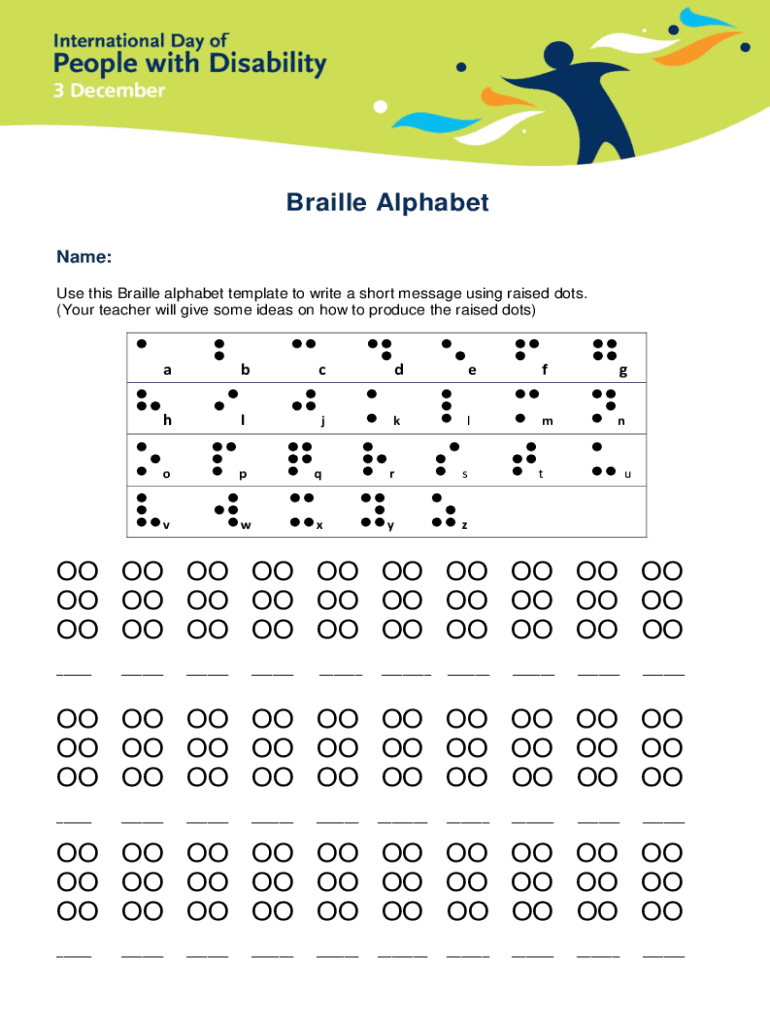







Definition and Meaning of Blank Braille Cells Printable
Blank braille cells printable refer to templates that include small grids, enabling users to create braille text. Each cell in Braille consists of six dots arranged in two columns of three dots each. The blank templates allow for the design and printing of educational materials, facilitating the learning of Braille for both children and adults. They serve as important resources for individuals aiming to transcribe standard text into Braille or develop materials for teaching purposes.
Braille cells can be created on various formats, including individual sheets or whole pages, depending on the specific learning objectives. These templates can often be customized, allowing educators and parents to include specific content relevant to their lessons or personal needs.
Uses of Blank Braille Cells Printable
- Educational Purposes: Teachers use these templates to create tests, quizzes, and reading materials for visually impaired students.
- Personal Learning: Individuals looking to learn or practice Braille can use these templates for writing exercises.
- Communication Tools: Families of visually impaired members can craft custom notes or reminders using the printable templates to enhance communication.
- Creative Projects: Artists and authors may use blank Braille cell templates in their work to address themes of accessibility.
How to Use the Blank Braille Cells Printable
Using blank braille cells printables involves several straightforward steps tailored to maximize learning and practical application.
-
Download the Template: Locate a reliable source to download a blank braille cell template. These templates are often available for free and can be in PDF, DOC, or similar formats.
-
Print the Template: After downloading, print the template on suitable paper. It’s recommended to use textured or thicker paper so that the Braille dots can be created distinctly, making it easier for touch reading.
-
Creating Braille Text: Using a stylus or Braille writer, fill in the cells to create the necessary text. Each set of dots corresponds to specific letters or punctuation marks, so familiarity with the Braille alphabet is required.
-
Use for Learning Activities: Incorporate the templates into educational exercises. For example, you can create flashcards for vocabulary words or practice writing simple sentences for tactile reading.
-
Customization: Adjust the templates as necessary, whether for language practice, storytelling, or other educational environments.
Using these steps effectively enhances the learning experience and ensures a productive engagement with Braille.
How to Obtain the Blank Braille Cells Printable
Acquiring blank braille cells printable templates can be achieved through various means:
-
Online Resources: Numerous educational websites and organizations focused on blindness and visual impairment offer free downloads of blank braille cell templates. These platforms ensure that materials are accessible and support Braille literacy.
-
Libraries and Schools: Local libraries or schools specializing in special education may have printable resources available or can direct users to reliable online sources.
-
Community Organizations: Many organizations that advocate for the rights and education of visually impaired individuals often provide resources, including blank Braille templates.
-
Custom Requests: In some cases, educators may develop customized templates based on specific curriculum needs. Using software compatible with Braille creation can help streamline this process.
Steps to Complete the Blank Braille Cells Printable
Completing blank Braille cell templates requires a systematic approach to ensure accuracy in creating readable Braille.
-
Familiarization with Braille: Before filling out the templates, ensure you have a basic understanding of Braille dot configurations and their respective letters.
-
Prepare Your Materials:
- Ensure you have a good quality stylus or Braille embosser.
- Use appropriate paper that can withstand pressing for the dot formation.
-
Creating Braille Text:
- Start at the top left cell and proceed in rows.
- For each letter, carefully press the dots required to create the Braille character.
- Use consistent pressure to ensure legibility across the document.
-
Review Completed Work:
- After filling in all necessary cells, read through the created Braille text to confirm accuracy.
- Check for potential errors in dot placement before finalizing the document.
-
Use for Studying or Teaching: Share your completed Braille document with learners or incorporate it into your educational activities to promote practice and knowledge retention.
Importance of Blank Braille Cells Printable
The availability of blank Braille cell printables plays a crucial role in promoting Braille literacy and accessibility. These tools help bridge communication gaps for individuals who are visually impaired, fostering inclusion in educational settings.
-
Support for Learning: They enable teachers to create custom materials tailored to the individual needs of students, enhancing the teaching and learning experience.
-
Encouraging Interaction: Family members can engage with visually impaired loved ones by utilizing these templates for everyday communication, reinforcing family bonds.
-
Promoting Independence: Learning Braille through the use of these printable templates helps to enhance self-sufficiency among visually impaired individuals, providing them with tools for navigation in both academic and personal contexts.
Typical Users of Blank Braille Cells Printable
Several groups utilize blank Braille cell printables for a range of purposes:
-
Educators: Teachers and special educators employ these resources to engage visually impaired students effectively in learning environments.
-
Parents and Guardians: Families of visually impaired children create or use blank Braille templates to assist in the literacy development of their children.
-
Students: Individuals, both young and adult learners, use these templates to practice and perfect their Braille reading and writing skills.
-
Advocacy Groups: Organizations dedicated to supporting the visually impaired community often produce and distribute these templates to promote accessibility and education on Braille.
Important Terms Related to Blank Braille Cells Printable
Understanding key terminology connected with blank Braille cells enhances the overall grasp of Braille literacy and application.
-
Braille: A tactile writing system used by people who are blind or visually impaired, represented by raised dots.
-
Embosser: A device used to create Braille text by pressing dots into material.
-
Tactile Learning: A learning style that involves using touch to gather information; critical for Braille literacy.
-
Transcription: The process of converting written language into Braille format, often using blank Braille cell templates as a guide.
-
Accessibility: The design of products, devices, services, or environments that are usable by people with various disabilities.
Using these terms effectively can improve communication about Braille and its educational resources.




