Type text, add images, blackout confidential details, add comments, highlights and more.
02. Sign it in a few clicks
Draw your signature, type it, upload its image, or use your mobile device as a signature pad.
03. Share your form with others
Send it via email, link, or fax. You can also download it, export it or print it out.
How to use or fill out get creditunion docs with our platform
Ease of Setup
DocHub User Ratings on G2
Ease of Use
DocHub User Ratings on G2
Click ‘Get Form’ to open it in the editor.
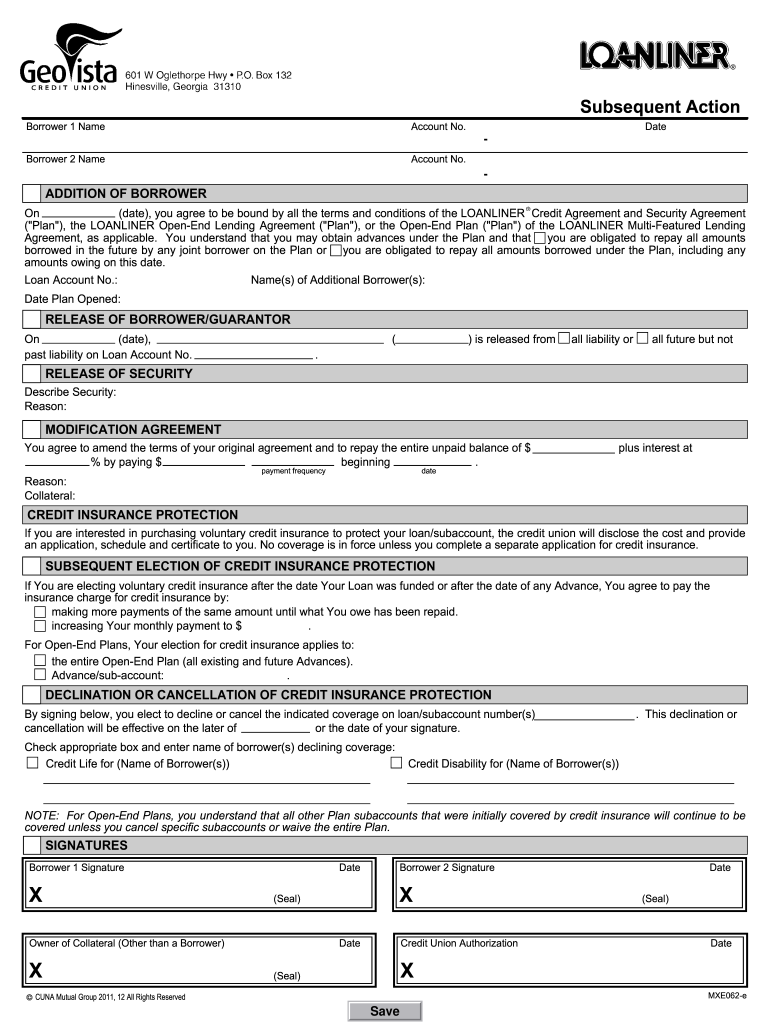
Begin by entering the names and account numbers for Borrower 1 and Borrower 2 in the designated fields. Ensure accuracy as this information is crucial for identification.
Fill in the date of the agreement at the top of the form, which marks when you are agreeing to the terms outlined.
For the 'Addition of Borrower' section, specify any additional borrower's name(s) and their corresponding loan account number. This ensures all parties are recognized under the loan agreement.
In the 'Release of Borrower/Guarantor' section, indicate if any borrower is being released from liability by checking the appropriate box and providing necessary details.
Complete sections regarding modifications, credit insurance protection, and subsequent elections by filling in amounts, reasons, and collateral as applicable.
Finally, ensure all signatures are collected at the bottom of the form. Each borrower must sign and date where indicated to validate the document.
Start using our platform today to fill out your get creditunion docs easily and for free!
A Federal credit union must maintain documentation for each investment transaction for as long as it holds the investment and until the documentation has beenRead more
6 days ago A web-based program used by credit unions and state supervisory agencies to submit and DocHub operational and quarterly financial information to the NCUA.Read more
Edition notice. This edition applies to Version 9 Release 5 of IBM Content Manager OnDemand for Multiplatforms (program number 5724-J33) and IBM ContentRead more
Cookie consent notice
This site uses cookies to enhance site navigation and personalize your experience.
By using this site you agree to our use of cookies as described in our Privacy Notice.
You can modify your selections by visiting our Cookie and Advertising Notice.