






Definition & Meaning
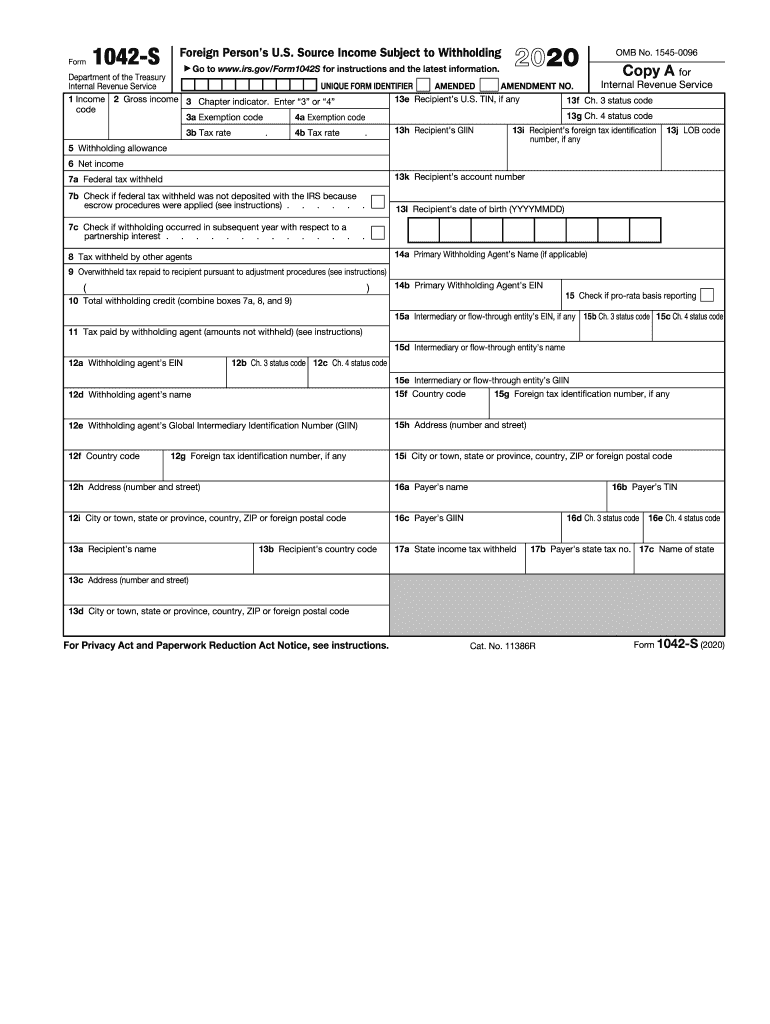
IRS Form 1042-S is a tax document used to report U.S. source income that is subject to withholding and paid to foreign persons. It plays a crucial role in ensuring compliance with U.S. tax laws by documenting various income types—such as interest, dividends, and royalties—along with the applicable withholding tax rates. The form effectively serves as a record for both the IRS and the foreign individual or entity receiving U.S. income. Understanding Form 1042-S is essential for anyone dealing with cross-border financial transactions to ensure proper tax reporting and withholding compliance.
How to Use the IRS Form 1042-S
Foreign persons receiving U.S. income must understand how to utilize Form 1042-S for their tax reporting. This form provides detailed information essential to filing U.S. income tax returns. Specifically, it should be used to summarize all U.S. income received, the corresponding withholding amounts, and to determine any potential refunds or additional payments required. Users should carefully review every section, as inaccuracies may lead to tax discrepancies, which could result in penalties.
Steps to Complete the IRS Form 1042-S
-
Gather Required Information: Collect information regarding the payer, the type of income received, the gross income amount, and the applicable tax rate.
-
Fill Out Payer and Recipient Details: Accurately enter the payer's and recipient's names, addresses, and taxpayer identification numbers (TIN).
-
Specify Income Type and Amount: Indicate the type of income (e.g., dividend, interest) and the exact amount in dollars.
-
Indicate Withholding Information: Record the tax withheld and the relevant percentage rate applied during payments.
-
Review and Verify Entries: Cross-check all entries for accuracy to prevent errors, which could complicate tax filing processes.
-
Submit the Form: Ensure timely submission, following IRS deadlines, either electronically or by mail.
Important Terms Related to IRS Form 1042-S
-
Withholding Agent: The individual or entity responsible for withholding the applicable tax from the income.
-
Gross Income: The total income amount before any deductions.
-
Nonresident Alien: A foreign individual who is not a U.S. citizen and does not pass the green card or substantial presence tests.
-
Replacement Proceeds: Income that replaces principal income, like dividends or interest, and is also subject to withholding.
Understanding these terms can aid in accurately completing and interpreting the form, thereby avoiding misclassification or misreporting of income and taxes.
Key Elements of the IRS Form 1042-S
-
Income Type Codes: Classify the income based on IRS-specified codes that identify the nature of the income.
-
Amount Subject to Withholding: Clearly state the income amount subject to withholding, ensuring that it aligns with IRS guidelines.
-
Tax Rate and Code: Include the applicable tax rate and its corresponding code, as mandated by tax treaties or general IRS stipulations.
These key components are crucial for ensuring compliance and accurate tax reporting, facilitating smooth audits or reviews by the IRS.
Filing Deadlines / Important Dates
Typically, the due date for Form 1042-S submissions is March 15 of the year following the calendar year in which the income was paid. Ensuring adherence to this deadline is critical as late filing or submission errors might incur penalties. It's important to regularly check for any changes or extensions announced by the IRS, particularly in unique circumstances or tax years affected by policy amendments.
Penalties for Non-Compliance
Failing to file Form 1042-S accurately or on time can lead to significant penalties. The IRS may impose fines based on the duration of non-compliance and the gravity of errors. For example, failing to report income accurately could lead to understated tax liabilities, incurring penalties and interest. It is therefore imperative to take all necessary steps to ensure compliance, from understanding the penalties associated with non-compliance to implementing processes to avoid them.
Digital vs. Paper Version
The IRS allows for both digital and paper submission of Form 1042-S. Digital submission through the IRS's FIRE (Filing Information Returns Electronically) System offers a faster, more efficient process for those who are computer-savvy. Meanwhile, paper submissions might be preferable for those more comfortable with traditional methods, although they may face longer processing times. Each method has its requirements, including specific forms for submission and deadlines that must be adhered to, ensuring that the preferred option aligns with organizational capabilities and resources.