




01. Edit your mobile home purchase agreement online
Type text, add images, blackout confidential details, add comments, highlights and more.

Type text, add images, blackout confidential details, add comments, highlights and more.

Draw your signature, type it, upload its image, or use your mobile device as a signature pad.

Send used mobile home purchase agreement via email, link, or fax. You can also download it, export it or print it out.
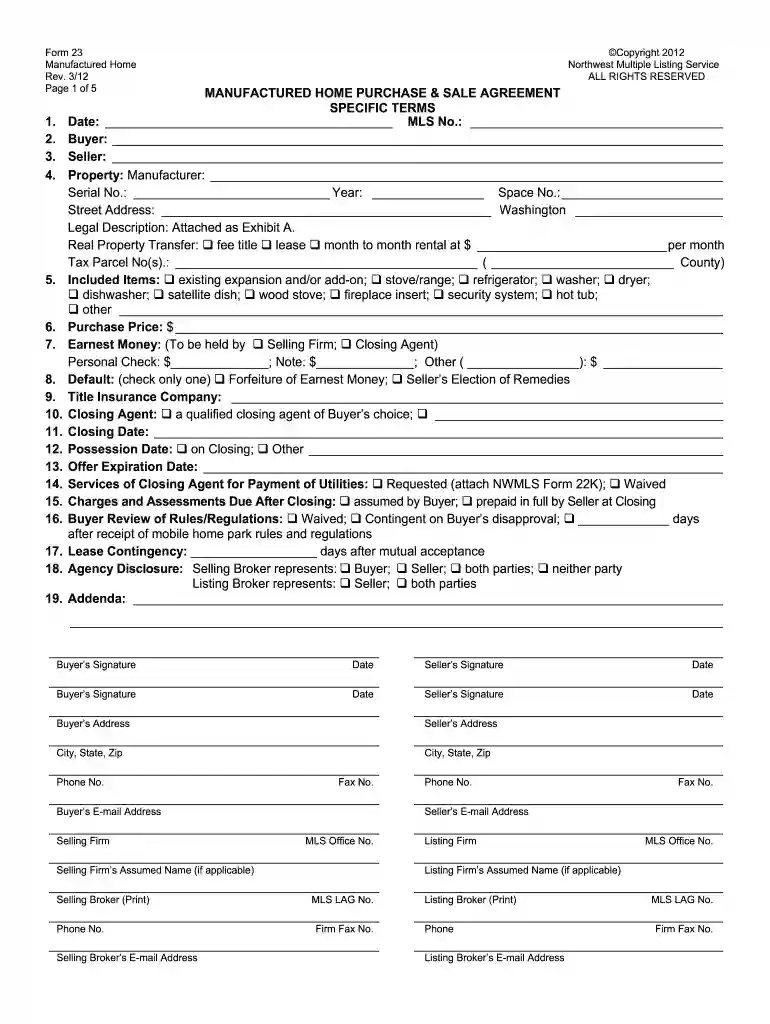
The Manufactured Home Purchase and Sale Agreement, commonly referred to as Form 23, serves as a formal contract between buyers and sellers in the transaction of a manufactured home. This document outlines essential terms and conditions governing the sale, including details regarding the buyer’s and seller’s identities, property specifics, the purchase price, earnest money requirements, and other critical elements pertaining to the transaction.
This agreement typically includes the following critical elements:
Each party has specific duties outlined in the agreement:
Contingencies are essential clauses included in the agreement to protect both parties:
The agreement specifies remedies if a party defaults on its obligations.
The agreement advises parties to seek professional advice prior to signing to ensure full understanding of obligations and legal implications. It also includes provisions for delivering notices between parties, ensuring communication is documented throughout the transaction process.
The Manufactured Home Purchase and Sale Agreement has various applications:
The understanding and proper execution of Form 23 are crucial in safeguarding the interests of both buyers and sellers in the manufactured home market. Each component of the agreement must be carefully considered to ensure a smooth transaction that adheres to all local and federal guidelines.
At DocHub, your data security is our priority. We follow HIPAA, SOC2, GDPR, and other standards, so you can work on your documents with confidence.
It is determined in the same manner as a capital asset: The original cost of a property plus the value of any capital expenditures for improvements to the
Feb 28, 2026 Indicate by check mark if the registrant is a well-known seasoned issuer, as defined in Rule 405 of the Securities Act. ☒ Yes ☐ No.Read more


