







Definition and Overview of the Release and Cancellation of Contract
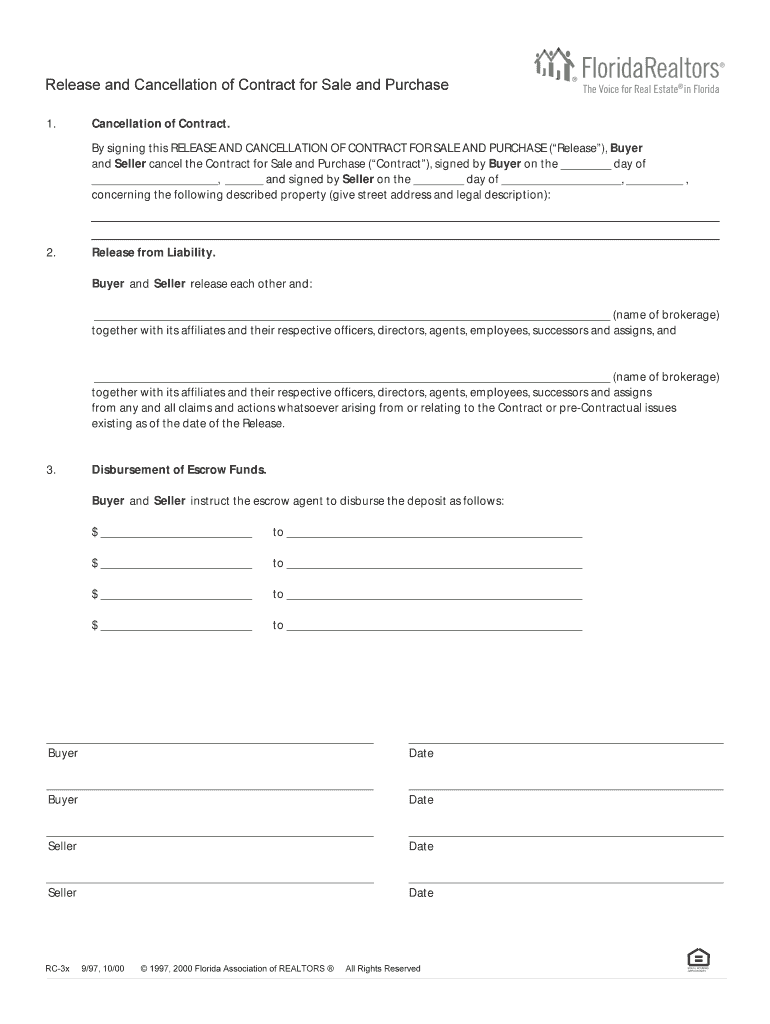
The Release and Cancellation of Contract for Sale and Purchase is a legal document utilized primarily in real estate transactions. It serves as a formal agreement between the Buyer and the Seller to annul a previously signed contract related to the sale of property. This document not only cancels the contract but also releases both parties from liabilities that might arise from the contract itself.
Understanding this document is crucial for both Buyers and Sellers, as it provides clarity on the obligations and rights associated with the cancellation process. The document will typically include essential details such as the property address, the names of the parties involved, and any relevant escrow arrangements.
Key components of this release may include:
- Identifying Information: Names and contact details of both parties.
- Agreement to Cancel: A clear statement that both parties agree to cancel the original contract.
- Liability Release: Terms indicating that neither party can hold the other liable for any issues arising from the cancellation.
- Signatures: Both parties must sign the document to make it legally binding.
How to Use the Release and Cancellation of Contract
To effectively utilize the Release and Cancellation of Contract for Sale and Purchase, follow these steps:
-
Complete the Document:
- Fill in all required fields, including both parties' names, addresses, and the details of the original contract.
- Specify the date of the original contract to avoid confusion.
-
Review the Terms:
- Both parties should read through the document carefully to ensure understanding of the cancellation terms.
- Discuss any points that may require clarification.
-
Sign the Document:
- Both the Buyer and Seller must sign and date the release to validate the cancellation. This ensures that all parties acknowledge the cancellation and agree to the release of liability.
-
Distribute Copies:
- After signing, provide copies of the signed document to each party and retain a copy for your records.
-
Notify Related Parties:
- Inform any real estate agents involved and other relevant parties about the cancellation.
Steps to Complete the Release and Cancellation of Contract
Completing the Release and Cancellation of Contract for Sale and Purchase involves a few structured steps that ensure the document is filled out and executed properly:
-
Obtain the Form:
- You can access a blank release form through various platforms or legal document services.
-
Fill in Required Information:
- Enter the Buyer’s and Seller’s names.
- Include the property address and the date of the original contract.
- If applicable, note any escrow details pertaining to the transaction.
-
Clarify Terms:
- Clearly state that the contract is being released and specify any provisions regarding the return or disbursement of deposits or other funds.
-
Legal Review:
- It is often advisable to have a real estate attorney review the document to ensure compliance with state laws and regulations.
-
Signing Process:
- Arrange for both parties to sign the document in the presence of a notary if required in your jurisdiction, although not always necessary.
-
Finalization:
- Ensure that both parties keep a signed copy for their records, and consider mailing a copy to any financial institutions or escrow companies involved.
Important Terms Related to the Release
Familiarity with specific terms in the Release and Cancellation of Contract for Sale and Purchase will enhance understanding and clarity during the process:
- Buyer: The individual or entity purchasing the property who seeks to release from the contract.
- Seller: The individual or entity selling the property who also agrees to the cancellation.
- Escrow: A financial arrangement where a third-party holds funds until the cancellation process is complete.
- Liabilities: Obligations or responsibilities that may arise from the original contract.
- Covenant: An agreement or promise made in the context of the initial sales contract.
Each of these terms plays a critical role in understanding the implications of the release document.
Examples of Using the Release and Cancellation of Contract
Understanding practical scenarios in which the Release and Cancellation of Contract for Sale and Purchase is used can provide additional clarity. Here are a few examples:
-
Change in Buyer’s Circumstances: A Buyer’s financing falls through last minute. After discussing options with the Seller, both agree to cancel the contract to avoid further liabilities.
-
Unforeseen Property Issues: During the inspection period, significant issues arise with the property that deter the Buyer from proceeding. The Buyer signs the release, allowing for the return of their deposit.
-
Mutual Agreement: Both parties may find that the terms of the sale have become untenable due to market changes. They decide to mutually cancel the contract and issue a release to formally end their obligations to each other.
Such examples illustrate the underlying flexibility and utility of the release document in real estate transactions.
Legal Use of the Release and Cancellation of Contract
The Release and Cancellation of Contract for Sale and Purchase is a legally binding document recognized under U.S. law, specifically adhering to the regulations set forth under state contract law.
Key legal considerations include:
- Legitimacy: For the document to be considered valid, it must be signed by both parties involved in the original contract.
- Compliance with State Regulations: Each state may have specific legal requirements, including guidelines for notarization or filing, which must be adhered to.
- Enforceability: The release protects both parties from future claims or disputes related to the original contract, ensuring that once they have signed, they cannot impose additional claims against each other.
By ensuring adherence to legal standards, the cancellation and release becomes an effective tool for terminating contracts securely and efficiently.




