




01. Edit your food waiver form online
Type text, add images, blackout confidential details, add comments, highlights and more.

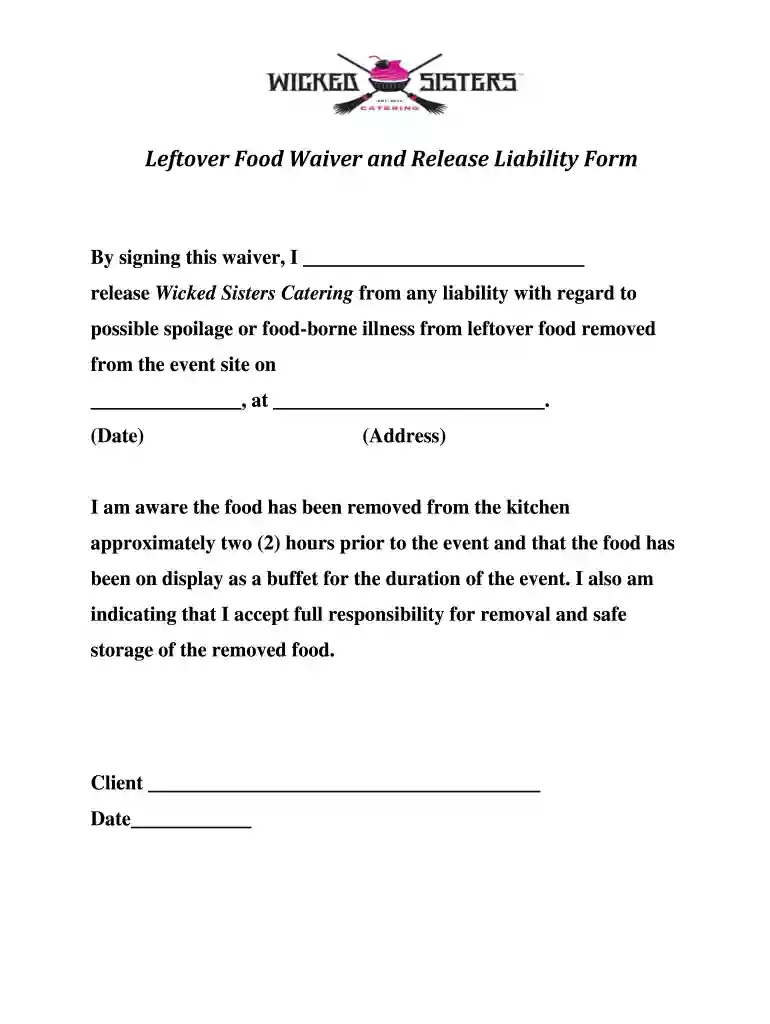
Type text, add images, blackout confidential details, add comments, highlights and more.

Draw your signature, type it, upload its image, or use your mobile device as a signature pad.

Send food waiver via email, link, or fax. You can also download it, export it or print it out.
A leftover liability waiver is a legal document utilized primarily in the catering and food service industry. It acknowledges that clients accept responsibility for any potential risks associated with consuming leftover food taken from events. By signing this waiver, clients release food service providers from liability regarding food spoilage or foodborne illnesses related to the consumption of leftover items. This form is crucial for businesses that allow patrons to take food home, ensuring that both parties understand the inherent risks involved.
A leftover food waiver serves several key purposes:
A well-structured leftover liability waiver should include the following essential components:
Creating an effective leftover liability waiver involves several straightforward steps:
Leftover liability waivers are typically employed in various scenarios, including but not limited to:
The legal landscape around food-related liability waivers can be complex. A few critical considerations include:
By understanding these aspects, both clients and service providers can engage in a more informed and responsible manner concerning the handling of leftover food.
At DocHub, your data security is our priority. We follow HIPAA, SOC2, GDPR, and other standards, so you can work on your documents with confidence.
Mar 16, 2026 At its core, this formula shows that everything a university owns (assets) comes from obligations (liabilities) or net resources (fund balance).Read more
Oct 12, 2021 Profitability Ratios, also known as Performance Ratios, help investors evaluate the ability of a business to generate profit considering its sales, assets, andRead more


