Logo release form 2026

Get Form
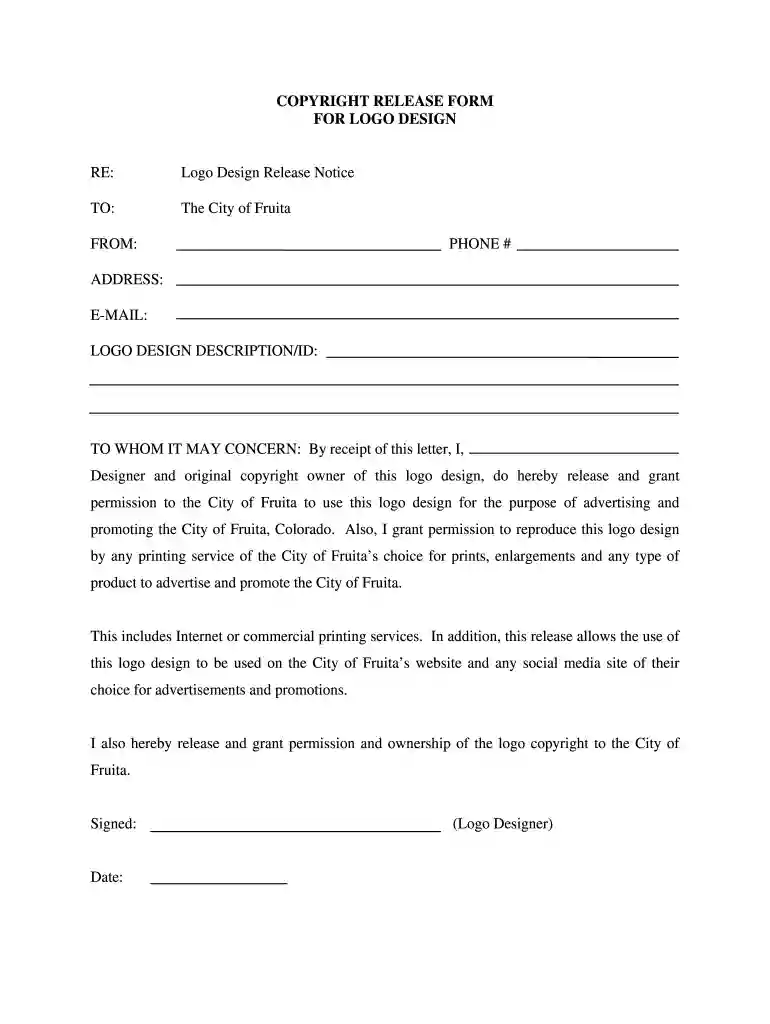
logo release form Preview on Page 1

Here's how it works

01. Edit your logo release form online
Type text, add images, blackout confidential details, add comments, highlights and more.

02. Sign it in a few clicks
Draw your signature, type it, upload its image, or use your mobile device as a signature pad.

03. Share your form with others
Send logo release form template via email, link, or fax. You can also download it, export it or print it out.

Definition and Purpose of a Logo Release Form

A logo release form is a legal document that grants permission for the use of a specific logo by a designated party. This form is essential in graphic design, branding, and marketing contexts, ensuring that the designer or copyright owner relinquishes control over the logo, allowing the recipient to utilize it for various purposes such as advertising, promotional materials, or merchandise. By signing the form, the designer confirms that they transfer the copyright of the logo to the organization or individual, freeing them from any future claims regarding its use.

  • Intellectual Property Consideration: When a logo is created, it is protected under copyright law as an intellectual property. The creator holds exclusive rights, but a logo release form clarifies and transfers these rights to another party.
  • Purpose: This form serves to legally document the transfer of ownership and usage rights, mitigating potential disputes between designers and users.

How to Use the Logo Release Form

Using a logo release form is straightforward, but it requires careful consideration of the information included. The following steps should be followed to ensure proper use:

  1. Identify the Parties: Clearly state the names of both the logo creator (designer) and the entity receiving rights (business/client).
  2. Specify the Usage Rights: Clearly define how the logo can be used. This could include formats (digital, print), locations (websites, social media), and duration of use (indefinitely, for a specific period).
  3. Signatures: Both parties must sign the form to validate the agreement. This is crucial, as the signatures indicate that both the designer and the user agree to the terms outlined in the document.

Including a detailed description of the logo within the form helps prevent uncertainty about which design is being authorized for use.

Important Terms Related to the Logo Release Form

Understanding the terminology associated with a logo release form can aid in its effective implementation. Key terms include:

  • Copyright: A legal right that grants the creator of original work exclusive control over the use and distribution of that work.
  • Transfer of Rights: The process through which the original creator offers their rights to another individual or organization, often outlined in the terms of the release form.
  • Usage Agreement: This outlines specific terms under which the logo may be used, including limitations and expected context for its application.

Having clarity on these terms ensures that all parties are on the same page regarding their rights and responsibilities concerning the use of the logo.

Legal Use of the Logo Release Form

The logo release form serves a critical legal function. It is vital for ensuring that all transactions regarding the logo's use comply with copyright laws. Legality hinges on several key factors:

  • Ethical Considerations: By using a logo release form, both parties engage in ethical practices by clearly defining usage rights and expectations.
  • Enforceability: The document is legally binding when properly executed, meaning that in case of disputes, the signed form can serve as evidence of the agreement.
  • State and Federal Laws: Depending on jurisdiction, specific legal requirements may apply regarding intellectual property rights and contracts. It is advisable for parties to familiarize themselves with relevant laws to ensure compliance.

Understanding the legal ramifications underscores the importance of having a well-drafted logo release form.

Steps to Complete the Logo Release Form

Completing a logo release form requires attention to detail to ensure that it accurately represents both parties' intentions. Follow these steps:

  1. Fill In the Header: Include the title "Logo Release Form" at the top of the document.
  2. Identify the Parties: List the full legal names, contact information, and addresses of the logo creator and the recipient.
  3. Describe the Logo: Provide a detailed description of the logo, including any files, designs, or accompanying artwork.
  4. Outline the Usage Rights: Include a clause that specifies how and where the logo may be used.
  5. Set the Duration: Define whether the rights are granted indefinitely or for a specified time frame.
  6. Sign and Date: Both parties should sign and date the document to finalize the agreement.

Following these steps ensures clarity and can help avoid disputes in the future.

Examples of Using the Logo Release Form

A variety of scenarios illustrate the practical use of a logo release form:

  • Marketing Campaigns: A graphic designer creates a logo for a coffee shop. The coffee shop requests an official logo release form, allowing them to use the logo on their packaging and advertising materials.
  • Merchandising: An educational institution commissions a logo for merchandise like t-shirts and hats, necessitating a signed logo release form to enable the use of the design on various products.
  • Corporate Branding: A small business hires a freelancer to develop a logo and, prior to the project's conclusion, ensures a logo release form is signed to prevent any legal issues regarding ownership of the design.

These examples showcase the versatility and necessity of logo release forms across various industries and uses.

be ready to get more

Complete this form in 5 minutes or less

Get form

Got questions?

We have answers to the most popular questions from our customers. If you can't find an answer to your question, please contact us.
Contact us
A short-form letter agreement authorising a third party to reproduce a registered trade mark for specific and limited purposes such as illustrative use in a textbook; to identify the user as a client of the trade mark owner; incidental inclusion within a film; or other uses that are unlikely to affect the functions of
If you prefer to write your own consent document, you may do so, but be sure to include all required elements of informed consent.
While creating your own release forms is possible, its important to consider a few things before you decide to do so. Consent forms involve intricate legal considerations that have to be specifically tailored to the situation at hand and adhere to certain laws and regulations.
Key form fields typically include: Names and contact details of the individual giving consent. Description of the media being released. Intended use of the media. Specific terms and conditions or limitations. Duration of the consent. Signature.
Easily create, share, and sign digital waivers and release forms, directly from your mobile device or computer. Accelerate the completion of digital waivers and release forms with form sharing and electronic signature capture.

People also ask

Signing a release of liability without consulting a lawyer can have long-lasting consequences. By speaking with a personal injury lawyer first, you can fully understand the terms of the agreement, ensure that you are not settling for less than what you deserve, and protect your rights against unforeseen complications.
Logos that consist of a simple typeface (Helvetica for example) cannot be copyrighted and copyrights apply mostly to artistic work, not names. Company names and tag-lines are better protected through trademarks.
Is notarization required for a Vehicle Release of Liability Form? It depends on your state. In California, notarization isnt typically required by the DMV but may be requested for added protection in private sales.

logo release