Is CLIA certification required for all labs?
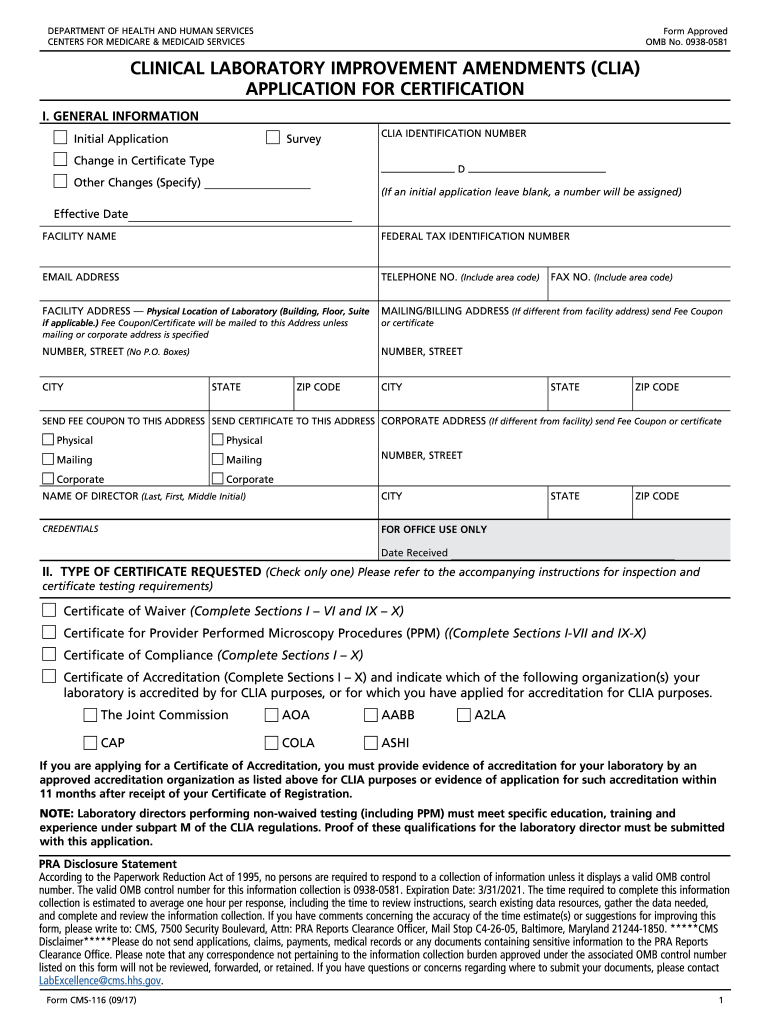
Yes, CLIA certification (Clinical Laboratory Improvement Amendments) is generally required for all labs in the U.S. that test human specimens for diagnosis, prevention, or treatment, including physician office labs and those not billing Medicare, with some narrow exceptions for forensic, some research, or specific state-regulated testing. Even labs doing simple waived tests need a Certificate of Waiver, as it covers all testing on human samples for health assessment. Who Needs CLIA Certification? Any facility: examining human body materials (blood, tissue, etc.) for health or disease information. Labs in physician offices: (POLs). Labs performing waived tests: (like some rapid strep or pregnancy tests) must get a Certificate of Waiver. Key Exceptions (Where CLIA May Not Apply) Forensic testing only: (e.g., criminal investigations). Research labs: that test human specimens but never report patient-specific results for clinical decisions. Some state-specific situations, like New Yorks partial exemption, requiring contact with the state agency. In essence, if your lab touches human samples for health-related results, you need a CLIA certificate of some kind; the complexity of your tests determines the type of certificate needed. AI can make mistakes, so double-check responsesCLIA Certification - CMSIf a facility performs even one test on human samples to assess health or to diagnose, prevent, or treat any disease, its consideCenters for Medicare Medicaid Services | CMS (.gov)MLN006270 CLIA Program Medicare Lab Services - CMSAccording to 42 CFR 493.2, CLIA applies to all labs examining materials derived from the human body for the purpose of providing Centers for Medicare Medicaid Services | CMS (.gov)
What is CLIA in immunology?
Chemiluminescence Immunoassay (CLIA) CLIA is an assay where a chemiluminescence system (light emission due to a molecule emits a photon in an excited state) is combined with immunoreactions to indicate the concentration of a specific sample according to the luminescence of the chemical reaction.
What kind of tests require CLIA certification?
CLIA Certification Requirements research testing that does not report patient-specific results for clinical use. forensic testing. employment-related drug testing performed by Substance Abuse and Mental Health Services Administration-certified laboratories. Jan 2, 2026
Is LabCorp a CLIA lab?
The DNA identity laboratory of Labcorp is accredited by: Clinical Laboratory Improvement Amendments (CLIA)
What is CLIA and what is its purpose?
CLIA (Clinical Laboratory Improvement Amendments of 1988) is a U.S. federal program that sets quality standards for all laboratory testing on human specimens to ensure accurate, reliable, and timely patient results for diagnosis, prevention, and treatment. Its purpose is to oversee clinical laboratories, implement quality assurance, and ensure consistent testing quality, regardless of where the test is performed, with oversight primarily by the Centers for Medicare Medicaid Services (CMS). What it is: Federal Regulations: CLIA establishes federal regulations (42 CFR Part 493) for clinical lab testing. Broad Scope: It applies to any facility testing human samples, from hospitals and clinics to physician offices, for health assessment purposes. Oversight: CMS implements CLIA, working with the CDC and FDA for support. Its purpose: Quality Assurance: To guarantee the accuracy, reliability, and timeliness of patient test results. Standardization: To establish consistent quality standards for testing procedures and personnel. Certification: To require labs to obtain a CLIA certificate before performing tests, with requirements varying by test complexity (waived, moderate, or high). Patient Safety: By ensuring high-quality testing, CLIA helps prevent errors that could lead to inappropriate treatment or diagnosis. AI can make mistakes, so double-check responsesClinical Laboratory Improvement Amendments (CLIA) | CDCSep 11, 2024Centers for Disease Control and Prevention | CDC (.gov)Information About the CLIA program administered by HFC - TN.govWhat is CLIA? The Clinical Laboratory Improvement Amendments of 1988 (CLIA) is a federal program governed by the Centers for MedicTN.gov