






Understanding the BPI Remittance Form
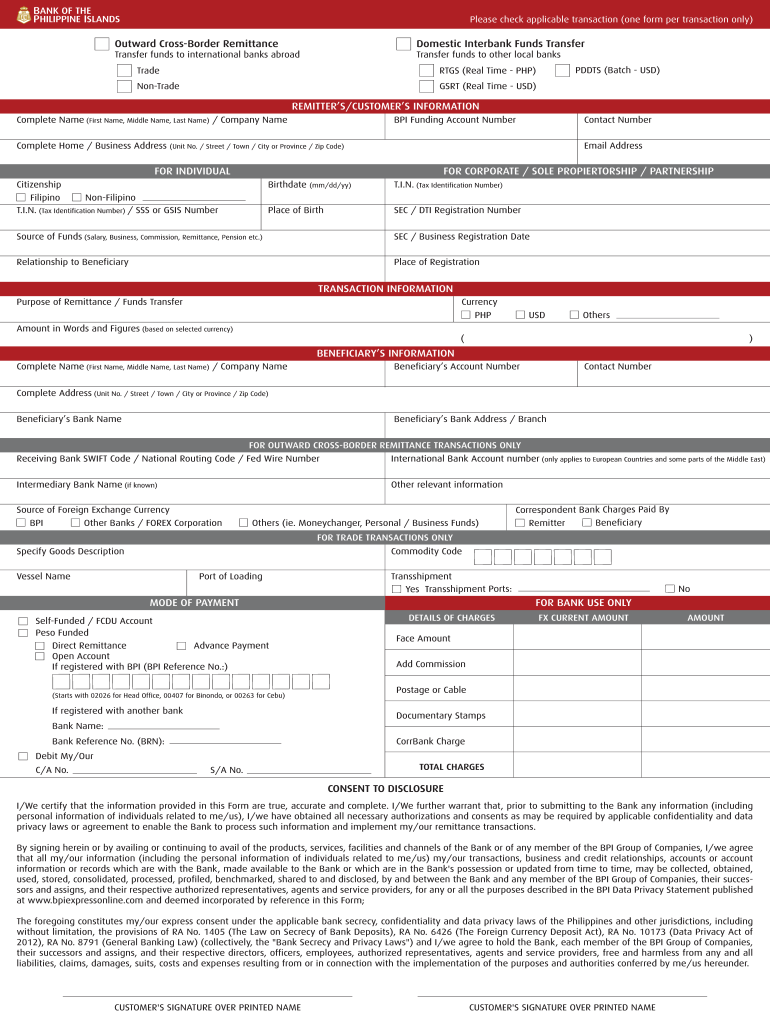
The BPI remittance form is essential for processing various types of fund transfers, including inward and outward remittances. This form captures necessary information, ensuring that transactions are executed smoothly while adhering to legal requirements and banking regulations. It primarily includes details about the remitter and the beneficiary, transaction specifics, and consent for data processing.
Key Information Required on the BPI Remittance Form
To successfully fill out the BPI remittance form, certain critical details are mandatory. Users must provide the following information:
- Remitter's Personal Information: Includes name, address, and contact number.
- Beneficiary's Information: The recipient's name, address, banking details, and any identification required.
- Transaction Details: Amount to be transferred, currency type, and payment method (e.g., telegraphic transfer).
- Purpose of Remittance: This helps in reporting to regulatory bodies, ensuring compliance with anti-money laundering laws.
- Consent for Data Processing: The form typically includes a section where the sender agrees to the processing of their data by the bank for transaction purposes.
Steps to Complete the BPI Remittance Form
Filling out the BPI remittance form involves several key steps to ensure accuracy and compliance:
- Gather Required Information: Collect all necessary identification and transaction details before starting to fill out the form.
- Fill in Personal Information: Start with the remitter's details, making sure to provide accurate information that matches identification documents.
- Enter Beneficiary Details: Carefully input the recipient's information to avoid transaction errors or delays.
- Specify Transaction Information: Indicate the amount being sent and select the appropriate currency. Include details regarding the transaction method, such as international transfer or local remittance.
- Sign and Date the Form: The remitter must sign the form, acknowledging their consent to the data processing and confirming that the information provided is true and accurate.
- Submit the Form: Deliver the completed form to the bank, which could be done physically at a branch or, depending on your location, through online channels if available.
Important Terms Related to BPI Remittance Form
Familiarizing yourself with key terms related to the BPI remittance process can enhance understanding and compliance:
- Outward Remittance: Refers to funds being sent from the sender’s country to a foreign country.
- Telegraphic Transfer (TT): A method for sending money electronically, typically used for international transfers.
- Remittance Tracker: A tool provided by the bank for tracking the status of sent funds.
- Fees and Charges: Understand the applicable charges on transactions, as these can vary based on the amount and destination.
- Compliance Regulations: Familiarity with local and international regulations concerning money transfers is crucial to avoid legal issues.
Options for Submitting the BPI Remittance Form
The BPI remittance form can typically be submitted through various methods, accommodating user preferences and technological capabilities:
- In-Person Submission: Visit a bank branch and hand over the completed form to a bank representative.
- Online Banking: Many banks offer the option to fill in and submit remittance forms online, streamlining the process.
- Mobile Banking Apps: The BPI outward remittance mobile app lets users complete and submit their remittance forms directly from their smartphones for added convenience.
- Mail Submission: For some services, mailing the form to a bank branch may also be an option, although this can result in delays.
Tracking Your BPI Remittance
The BPI remittance tracker is an invaluable feature for users to monitor the progress of their transactions. It includes:
- Transaction Status: Users can view whether their remittance is pending, in transit, or completed.
- Estimated Delivery Time: The tracker provides estimates on when the funds will reach the beneficiary.
- Notification Alerts: Some banks send notifications once the transaction has been processed or if there are issues.
Understanding the BPI remittance form and its components ensures that both remitters and beneficiaries have a smooth transaction experience. Familiarity with the essential details, submission options, and tracking services can minimize errors and delays, making the remittance process straightforward and efficient.