




01. Edit your intent to rent form bc online
Type text, add images, blackout confidential details, add comments, highlights and more.

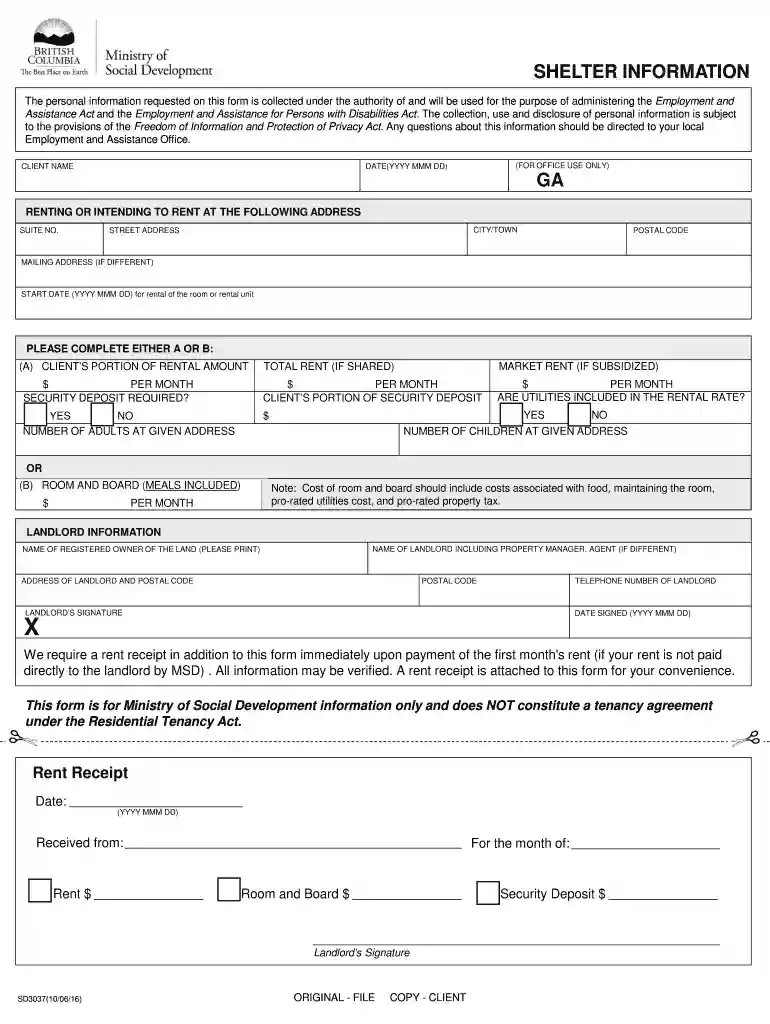
Type text, add images, blackout confidential details, add comments, highlights and more.

Draw your signature, type it, upload its image, or use your mobile device as a signature pad.

Send intent to rent form pdf via email, link, or fax. You can also download it, export it or print it out.
The intent to rent form BC is a crucial document used by individuals seeking to secure rental assistance through the Ministry of Social Development in British Columbia. This form serves various purposes, primarily indicating a tenant's intention to occupy a rental unit in exchange for payment. It is vital for applicants and recipients of income assistance to demonstrate their housing situation accurately for eligibility verification.
In particular, the intent to rent form includes personal details like the applicant's name, contact information, and rental unit address. It also captures essential financial information, such as the rental amounts and landlord details. This information helps the Ministry assess the applicant’s housing needs and eligibility for assistance programs. Understanding the intent to rent form BC's role can significantly impact the effectiveness of an individual's application for rental aid.
Using the intent to rent form BC requires careful attention to detail to ensure all necessary information is provided correctly. Follow these steps to effectively utilize the form:
Gather Required Information: Before filling out the form, collect personal information, including your full name, Social Insurance Number (SIN), and current address. You will also need information regarding the rental unit, including the address, rent amount, and landlord details.
Complete the Form: Accurately fill in all sections of the form, ensuring that your entries match any supporting documents. This includes writing clearly and legibly. Use the designated spaces for your text, ensuring nothing is left incomplete.
Attach Necessary Documentation: If applicable, include additional supporting documents, such as proof of income, a rent receipt, or any previous correspondence with the Ministry regarding assistance.
Review and Sign: After completing the form, review it thoroughly to confirm that all supplied information is accurate. Sign and date the document to confirm your intent to rent.
Submit the Form: You have the option to submit the form electronically, via mail, or in person, depending on your preference. Ensure you are aware of any deadlines to avoid delays in processing.
By understanding how to use the intent to rent form BC effectively, you can enhance the chances of receiving the rental assistance you need.
Completing the intent to rent form BC involves a systematic approach. Follow these outlined steps for a successful completion:
Obtain the Form: Access the intent to rent form BC online through the Ministry of Social Development's website or request a physical copy from a local office.
Fill in Personal Information:
Detail Rental Information:
Attach Documentation:
Finalize the Form:
Submit the Form:
By adhering to these steps, you can ensure that your intent to rent form BC is completed accurately and submitted on time.
Understanding the key elements of the intent to rent form BC can help streamline the application process for rental assistance. Some critical aspects to consider include:
Applicant Information: This section gathers your personal details, including your full name, current address, and contact number.
Rental Unit Details: Here, you specify the address of the rental property, the monthly rental amount, and whether the rental agreement is formalized by a lease.
Landlord Information: This segment requires you to provide details about your landlord, including their name and contact information.
Intent Statement: The form contains a statement asserting your intention to rent the specified property, which serves as a legal basis for the assistance request.
Supporting Documentation Requirement: Clear instructions outline the documents you must submit alongside the form, such as proof of income and rent receipts.
Signature and Date Section: Signing and dating the form is crucial, as it confirms the authenticity of the information provided.
By comprehensively understanding these key elements, applicants can accurately fill out the form, thereby increasing their chances of receiving necessary assistance.
The intent to rent form BC holds significant legal value within the framework of rental assistance provided by the Ministry of Social Development. It serves as an official document that indicates your intent to occupy and pay for housing. Understanding its legal implications is essential:
Eligibility Verification: The information disclosed on the form is used to assess your eligibility for rental assistance programs. Providing false information may result in penalties or disqualification from aid.
Binding Agreement: While the form itself does not act as a rental agreement, it affirms your commitment to renting a specific unit. This intent can also facilitate communication with your landlord regarding any assistance received.
Data Protection: Privacy laws govern the handling of your personal information on the intent to rent form. The Ministry is required to protect this data and use it solely for the purpose intended.
Audit and Compliance: The Ministry may conduct audits to ensure compliance with rental assistance regulations. Keeping accurate records and documentation will be paramount in case of audits.
Being informed about the legal use of the intent to rent form BC is crucial for applicants to navigate the rental assistance landscape responsibly and lawfully.
We've got more versions of the intent to rent form bc form. Select the right intent to rent form bc version from the list and start editing it straight away!
| Versions | Form popularity | Fillable & printable |
|---|---|---|
| 2016 | 4.9 Satisfied (312 Votes) |
At DocHub, your data security is our priority. We follow HIPAA, SOC2, GDPR, and other standards, so you can work on your documents with confidence.




This End User License Agreement (Agreement) is an agreement between. FUJIFILM Corporation (FUJIFILM) and you, which sets forth the terms and conditions ofRead more
intent to rent the apartment if your application is accepted. This deposittypically one months rentshould not be released to the landlord until after youRead more
Feb 27, 2024 Approve and authorize the Chair of the Board to execute three copies of each of the following: a). Amendment No. 10 (Amendment), a copy ofRead more


