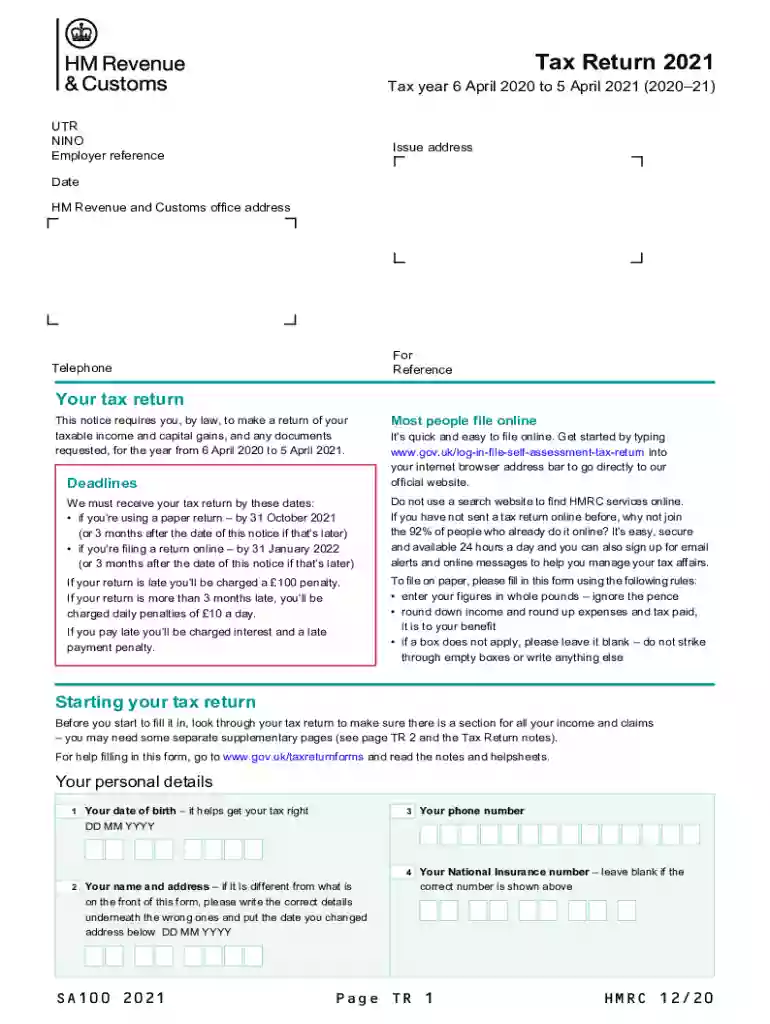
Uk hmrc sa100 tax 2026

Get Form
sa100 form download Preview on Page 1

Here's how it works

01. Edit your sa100 form download online
Type text, add images, blackout confidential details, add comments, highlights and more.

02. Sign it in a few clicks
Draw your signature, type it, upload its image, or use your mobile device as a signature pad.

03. Share your form with others
Send sa100 via email, link, or fax. You can also download it, export it or print it out.

Definition and Purpose of the UK HMRC SA100 Tax

The UK HMRC SA100 tax form is a critical document used for self-assessment tax returns in the United Kingdom. This form is primarily for individuals who have income that is not automatically taxed through Pay As You Earn (PAYE). This includes self-employed individuals, partners in partnerships, and those with rental income, among others.

The SA100 form captures essential financial information from taxpayers, ensuring they meet their tax obligations. It allows the HM Revenue and Customs (HMRC) to assess the total amount of income earned, deductions applicable, and the overall tax liability for the tax year. Proper completion ensures compliance with UK tax laws, helping to avoid penalties and fines.

Key Features of the SA100 Form

  • Personal Information: Basic details such as your name, address, and Unique Taxpayer Reference (UTR) number are required.
  • Income Reporting: Various income types must be reported, including employment income, dividends, and other sources.
  • Deductions and Expenses: Taxpayers can claim relevant deductions, which may reduce their taxable income and overall tax liability.
  • Calculation of Tax Due: The form facilitates the calculation of how much tax the individual owes based on reported income and deductions.

Steps to Complete the UK HMRC SA100 Tax Form

Completing the SA100 form involves several straightforward steps. Ensuring accuracy is vital, as errors can lead to delays or penalties.

  1. Gather Necessary Information:

    • Collect all relevant financial documents, including payslips, P60s, and records of self-employment income.
    • Ensure you have your UTR and National Insurance number on hand.
  2. Access the SA100 Form:

    • Download the SA100 form from the HMRC website or from trusted sources providing an SA100 form download.
  3. Fill Out Personal Information:

    • Enter your personal details at the beginning of the form, including your UTR and National Insurance number.
  4. Declare All Sources of Income:

    • Accurately report all income received for the tax year, ensuring that each source is documented accurately.
  5. Claim Eligible Deductions:

    • Identify and claim any allowable deductions related to your personal or business expenses.
  6. Review and Submit the Form:

    • Carefully review all entries before submission to avoid errors.
    • Submit the completed form online through HMRC's portal or by mailing a paper version to the appropriate address.
  7. Retain Supporting Documents:

    • Keep copies of your submitted forms and supporting documents for your records, as these may be required for tax audits or future reference.

Important Deadlines for Filing the SA100 Tax Form

Filing deadlines for the SA100 form are essential to note, as late submissions can result in penalties. The following key dates apply:

  • Paper Submission: The deadline for submitting a paper version of the SA100 is usually October 31 following the end of the tax year (April 5).
  • Online Submission: For those submitting online, the deadline extends to January 31 of the following year.
  • Payment of Tax: Any tax owed must also be paid by January 31, alongside the online submission of the SA100.

Potential Penalties for Non-Compliance

Failing to meet these deadlines can lead to penalties, which include:

  • Automatic Penalty: A fixed penalty for late submission, with additional fines accruing for continued delays.
  • Interest on Late Payments: Interest may apply to any unpaid tax, potentially increasing the amount owed.
  • Further Action: Repeated non-compliance could result in further enforcement actions from HMRC.

Required Documents for the SA100 Tax Form

When completing the SA100 form, several documents are integral to providing accurate information. Necessary documentation includes:

  • P60 and P45 Forms: These forms show income and tax deductions from employment.
  • Records of Self-Employment Earnings: Documents such as invoices or receipts that detail income from self-employed work.
  • Rental Income Statements: Evidence of income earned from rental properties, including maintenance expenses.
  • Dividend Statements: Information related to dividend income from shares.
  • National Insurance Number: Essential for identifying your tax obligations.

Who Typically Uses the UK HMRC SA100 Tax Form?

The SA100 tax return form is predominantly utilized by individuals who have income that is not taxed at source. Common users of the SA100 form include:

  • Self-Employed Individuals: Those who operate their own businesses and report income directly to HMRC.
  • Freelancers and Contractors: Individuals engaged in short-term work who do not fall under traditional employment tax arrangements.
  • Renters: Individuals earning rental income, making reporting necessary for accurate taxation.
  • Investors: Those who receive dividends or interest from investments requiring tax assessment.
  • Partnership Members: Individuals involved in business partnerships where income is shared and must be reported manually.

Understanding the usage of the SA100 form helps taxpayers recognize their obligations and seek guidance if needed.


decoration image ratings of Dochub

See more uk hmrc sa100 tax versions

We've got more versions of the uk hmrc sa100 tax form. Select the right uk hmrc sa100 tax version from the list and start editing it straight away!
Versions Form popularity Fillable & printable
2023 4.3 Satisfied (43 Votes)
2021 4.8 Satisfied (125 Votes)
2020 4.1 Satisfied (65 Votes)
2019 4.2 Satisfied (102 Votes)
2018 4.4 Satisfied (163 Votes)
2016 4 Satisfied (28 Votes)
2014 4.4 Satisfied (278 Votes)
2011 4 Satisfied (55 Votes)
2010 4 Satisfied (48 Votes)
be ready to get more

Complete this form in 5 minutes or less

Get form

Security and compliance

At DocHub, your data security is our priority. We follow HIPAA, SOC2, GDPR, and other standards, so you can work on your documents with confidence.

Learn more
ccpa2
pci-dss
gdpr-compliance
hipaa
soc-compliance
be ready to get more

Complete this form in 5 minutes or less

Get form