




01. Edit your bir 2307 form online
Type text, add images, blackout confidential details, add comments, highlights and more.

Type text, add images, blackout confidential details, add comments, highlights and more.

Draw your signature, type it, upload its image, or use your mobile device as a signature pad.

Send bir income tax return form via email, link, or fax. You can also download it, export it or print it out.
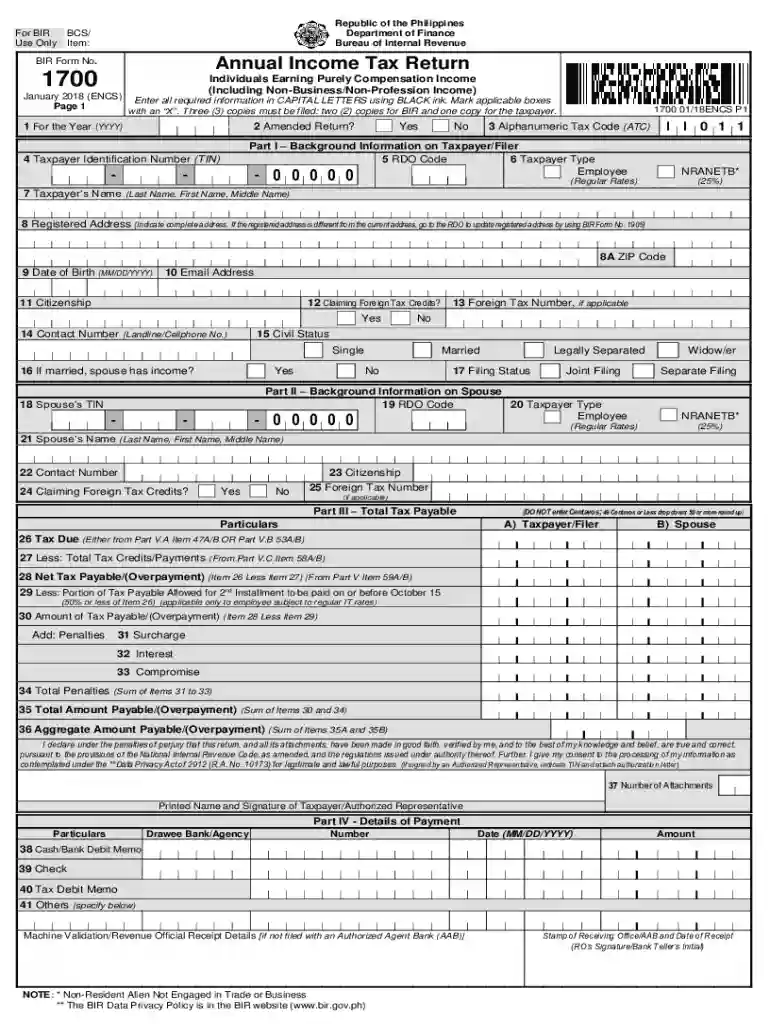
BIR Form 1700 is the Annual Income Tax Return used by individuals earning solely from compensation in the Philippines. This document serves as a comprehensive report for taxpayers detailing their income, deductions, tax credits, and tax liability for the year. It is specifically designed for residents who derive their income purely from employment sources.
The form consists of several essential sections that require accurate completion:
When filling out BIR Form 1700, it is essential to follow a methodical approach to ensure accuracy and completeness. Below are the detailed steps involved:
Several documents are required to support your submission of BIR Form 1700, ensuring that all information provided is verifiable and compliant with tax regulations:
Understanding filing deadlines is crucial to avoid penalties related to late submission or payment. Here are the primary dates to remember:
Failure to file or pay on time can lead to penalties, including fines and interest accrued on any outstanding amounts. It's recommended to stay informed about updates from the Bureau of Internal Revenue (BIR) regarding any changes that may affect filing procedures and deadlines.
Taxpayers have the flexibility to choose between digital and paper filing options when submitting BIR Form 1700. Each method has specific advantages and considerations:
Regardless of the method chosen, ensure that all information is entered accurately to facilitate a smooth filing experience.
BIR Form 1700 is typically used by various types of individual taxpayers with compensation income. Understanding these scenarios helps clarify its relevance:
These scenarios illustrate the breadth of applicability surrounding BIR Form 1700 within the realm of individual taxation in the Philippines.


We've got more versions of the bir 2307 form form. Select the right bir 2307 form version from the list and start editing it straight away!
At DocHub, your data security is our priority. We follow HIPAA, SOC2, GDPR, and other standards, so you can work on your documents with confidence.
Feb 3, 2025 BIR Form 1700, together with the required attachments and your payment. o Receive your copy of the duly stamped and validated form from theRead more
Safety Guidelines. This manual contains notices which you should observe to ensure your own personal safety, as well as to protect the product and connectedRead more


