
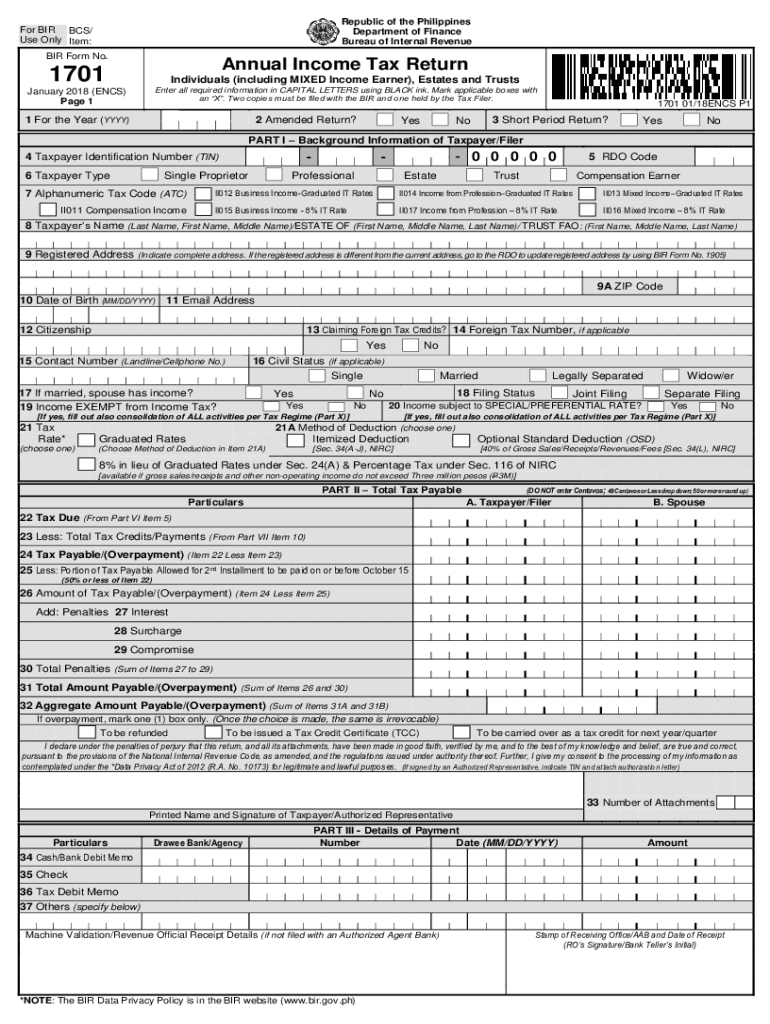







Understanding BIR Form 1701 for 2018
BIR Form 1701, the Annual Income Tax Return for individuals, includes important sections for reporting personal details, income sources, deductions, and tax computations. Designed for self-employed individuals and estates, the 2018 version is crucial for accurately fulfilling tax obligations.
Key Sections of BIR Form 1701
BIR Form 1701 encompasses various sections that guide taxpayers through the reporting process. Understanding each section helps ensure compliance.
- Personal Information: This section requires filers to input details such as name, address, and taxpayer identification number.
- Income Sources: Individuals must declare various income sources, including wages, business income, and capital gains.
- Deductions: Taxpayers can itemize exemptions and deductions, allowing them to reduce taxable income.
- Tax Computation: This segment aids in calculating the tax due based on reported income and applicable rates.
How to Download BIR Form 1701 for 2018
Accessing the BIR Form 1701 is straightforward. Simply visit the official BIR website to find downloadable PDF versions or look for reliable platforms that host official tax documents.
- Visit the Download Page: Navigate to a trusted website or the BIR official site.
- Select the 2018 Version: Locate the specific version for 2018, ensuring it matches the year's tax requirements.
- Download the PDF: Ensure the document is in PDF format for ease of printing and submission.
Completing BIR Form 1701
Filling out the BIR Form 1701 correctly is crucial for compliance and avoiding penalties. Here’s a step-by-step process:
- Gather Required Documents: Collect all necessary financial documents, including income statements and proof of deductions.
- Fill in Personal Information: Enter complete personal details, including taxpayer identification numbers.
- Report Income Sources: Detail all income, ensuring accuracy to prevent any discrepancies.
- Claim Deductions: Include all eligible deductions, which can significantly lower tax liability.
- Calculate Total Tax Due: Ensure that the calculations are correct, aligning with the tax tables provided by the BIR.
File Submission Options
Taxpayers have various methods to submit BIR Form 1701. Each method has specific procedures and potential benefits:
- Online Submission: Visit the BIR’s online platform for electronic filing, enabling easy adjustments and immediate confirmation.
- Mail Submission: Print the completed form and send it via postal service to the designated BIR office.
- In-Person: Submit the form directly at local BIR offices during business hours for immediate assistance.
Important Filing Dates and Deadlines
Awareness of filing dates is critical for avoiding penalties. Here are the key deadlines for BIR Form 1701 for 2018:
- Initial Filing Deadline: Generally, the form must be filed on or before the 15th day of April for the taxable year.
- Amendments: If errors are discovered post-filing, amendments can be made within a specified timeframe without incurring penalties.
Legal Consequences of Non-Compliance
Failure to file BIR Form 1701 on time or inaccuracies in reporting can lead to penalties. Understanding these consequences can help motivate timely and accurate filing:
- Monetary Penalties: Late fees could accumulate if the form is not filed by the deadline.
- Legal Actions: Continued negligence can result in further legal consequences from the BIR.
Variants and Updates of BIR Form 1701
Occasionally, forms undergo revisions. It is essential to use the correct version to ensure compliance with the latest tax regulations. Check for any recent updates or changes to the form before filing.
Examples of Common Taxpayer Scenarios
Different scenarios require specific considerations when filling out the BIR Form 1701.
- Self-Employed Individuals: Must detail income from various projects and ensure all deductions related to business expenses are accounted for.
- Estates and Trusts: Filers need to represent income distributed to beneficiaries properly and adhere to specific compliance rules.


Conclusion
Mastery of BIR Form 1701 for 2018 is foundational for effectively managing tax obligations. By understanding its structure, submitting accurately, and adhering to deadlines, taxpayers can navigate their tax filings confidently, ensuring compliance with the BIR's regulations while optimizing their tax liabilities.




